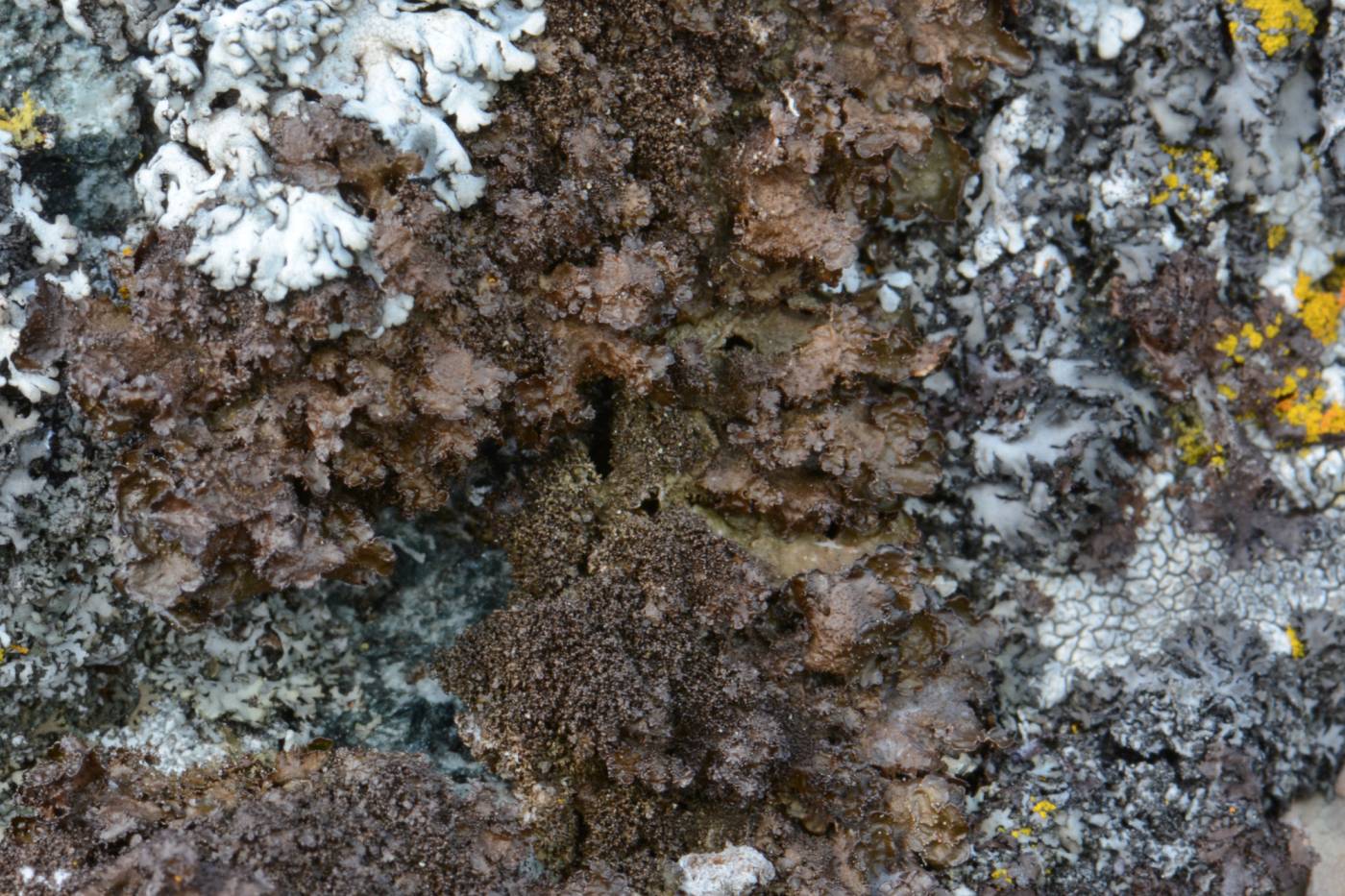
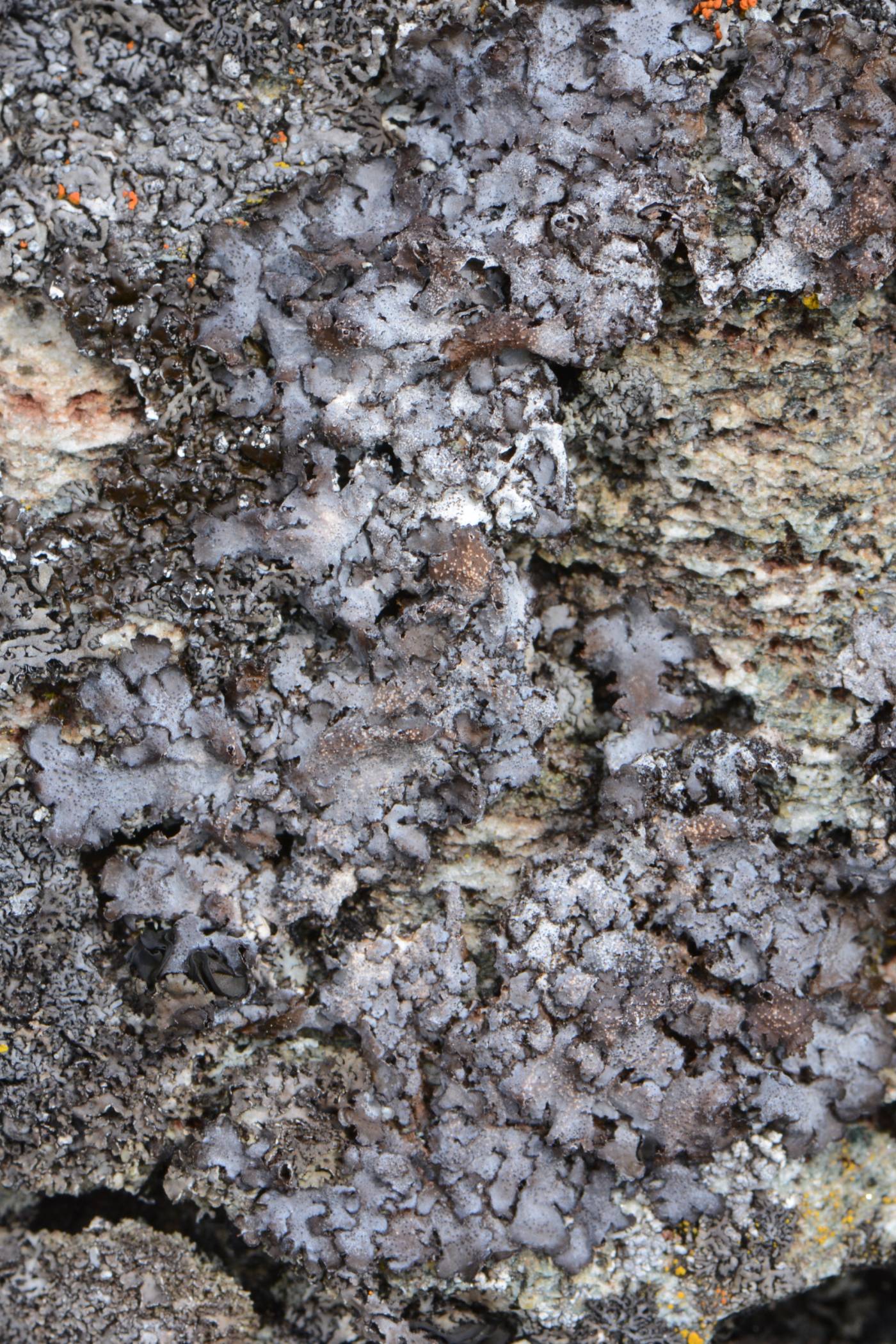
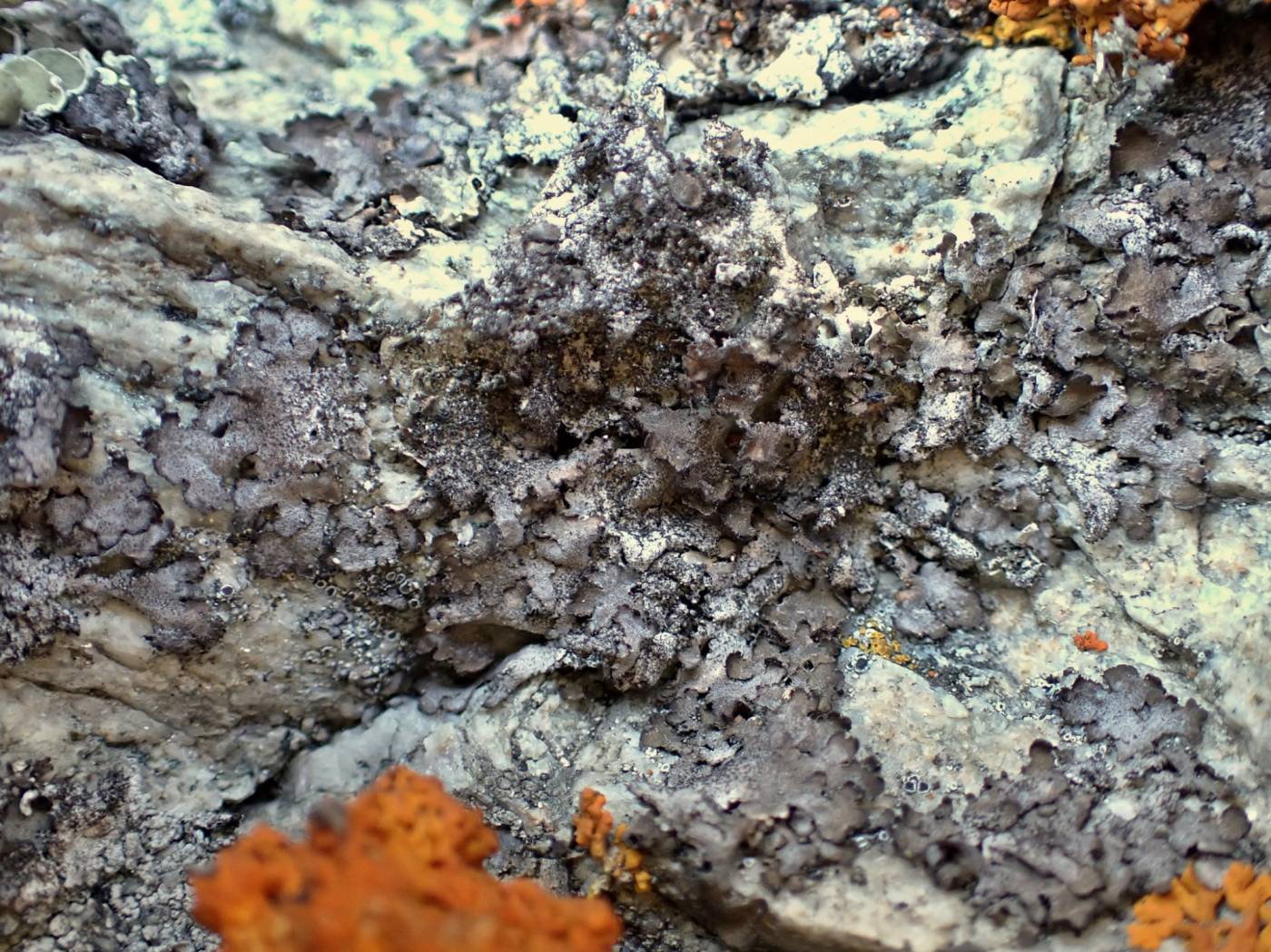
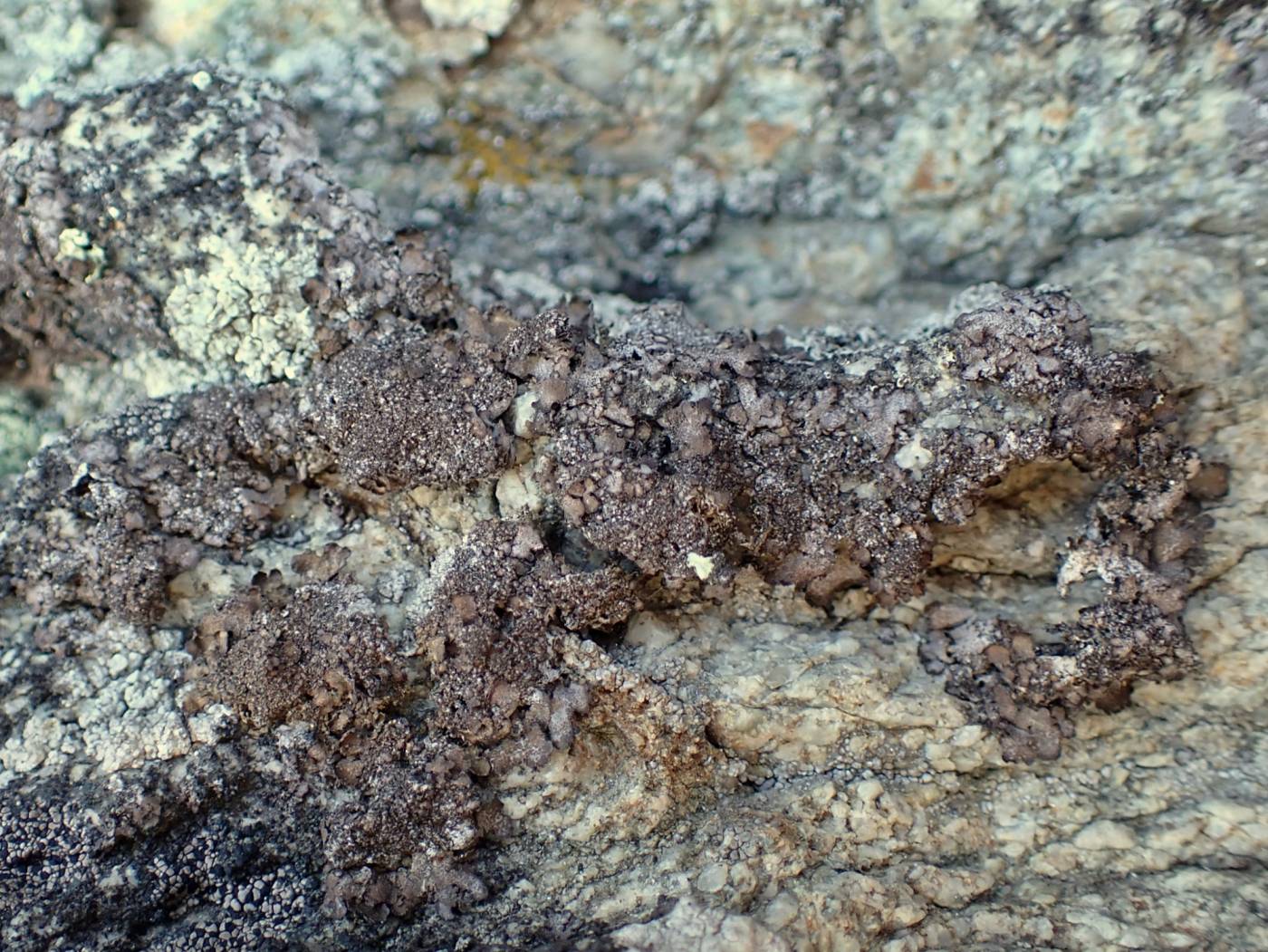
One of the rarest parmelioid lichen in the Czech Republic. It is a saxicolous species, morphologically distinguished from the epiphytic M. elegantula only by the presence of pruina on its thallus. Melanohalea infumata has an Arctic–alpine distribution and grows on siliceous rocks in Scandinavia, the mountains of Central Europe and North America. In the Czech Republic, it has been known since the first half of the 20th century from a single locality at Petrovy kameny in the Hrubý Jeseník Mts, where it still occurs today. A small population grows there on a vertical face of calcareous phyllite.
According to the authors of the latest checklist of Alpine lichens, true M. infumata probably does not occur in the Alps and has been confused by Central European authors with a saxicolous lineage of the M. elegantula aggregate (Nimis et al. 2018). This group therefore requires further study.
Literature: Šoun J., Bouda F., Kocourková J., Malíček J., Palice Z., Peksa O., Svoboda D. & Vondrák J. (2017): Zajímavé nálezy lišejníků z čeledi Parmeliaceae v České republice. – Bryonora 60: 46–64. /// Nimis P. L., Hafellner J., Roux C., Clerc P., Mayrhofer H., Martellos S. & Bilovitz P. O. (2018): The lichens of the Alps – an annotated checklist. – Mycokeys 31: 1–634.
taxonomic classification:Ascomycota → Lecanoromycetes → Lecanorales → Parmeliaceae → Melanohalea
most frequented synonyms:Melanelia infumataRed List (Liška & Palice 2010):CR – critically endangered
Red List (Malíček 2023):C1 – critically endangered
Occurrence in the Czech Republic
All records: 3, confirmed 2. One click on a selected square displays particular record(s), including their source(s).