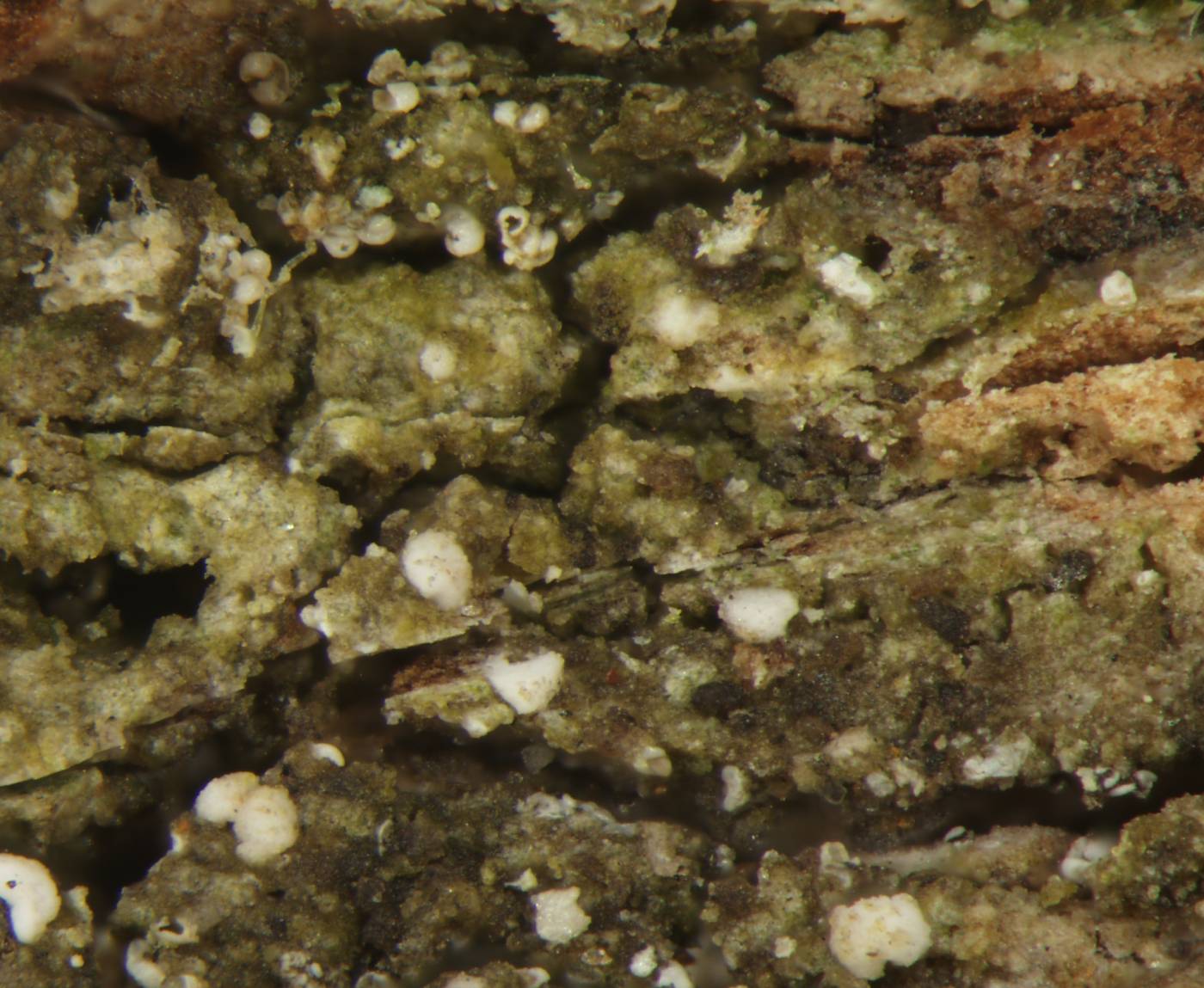
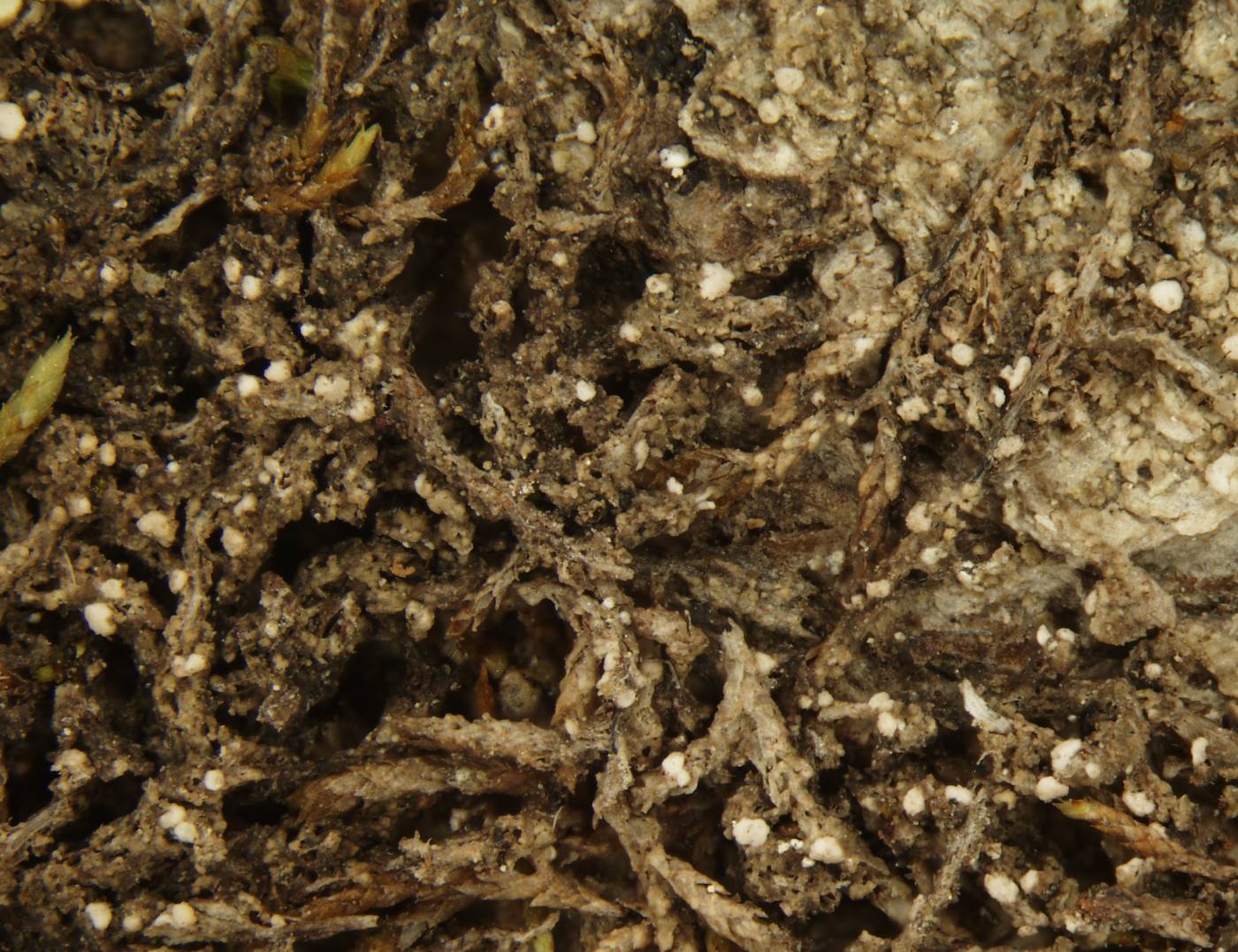
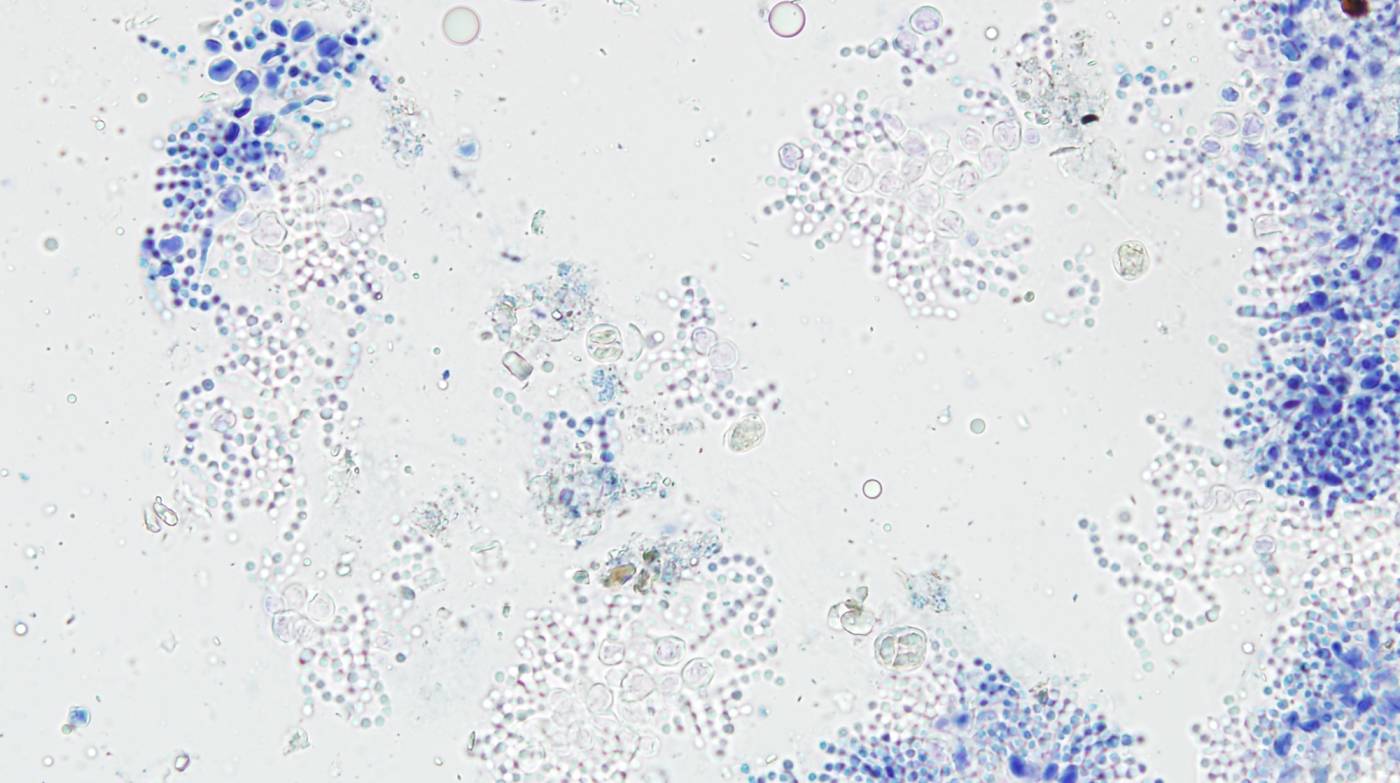
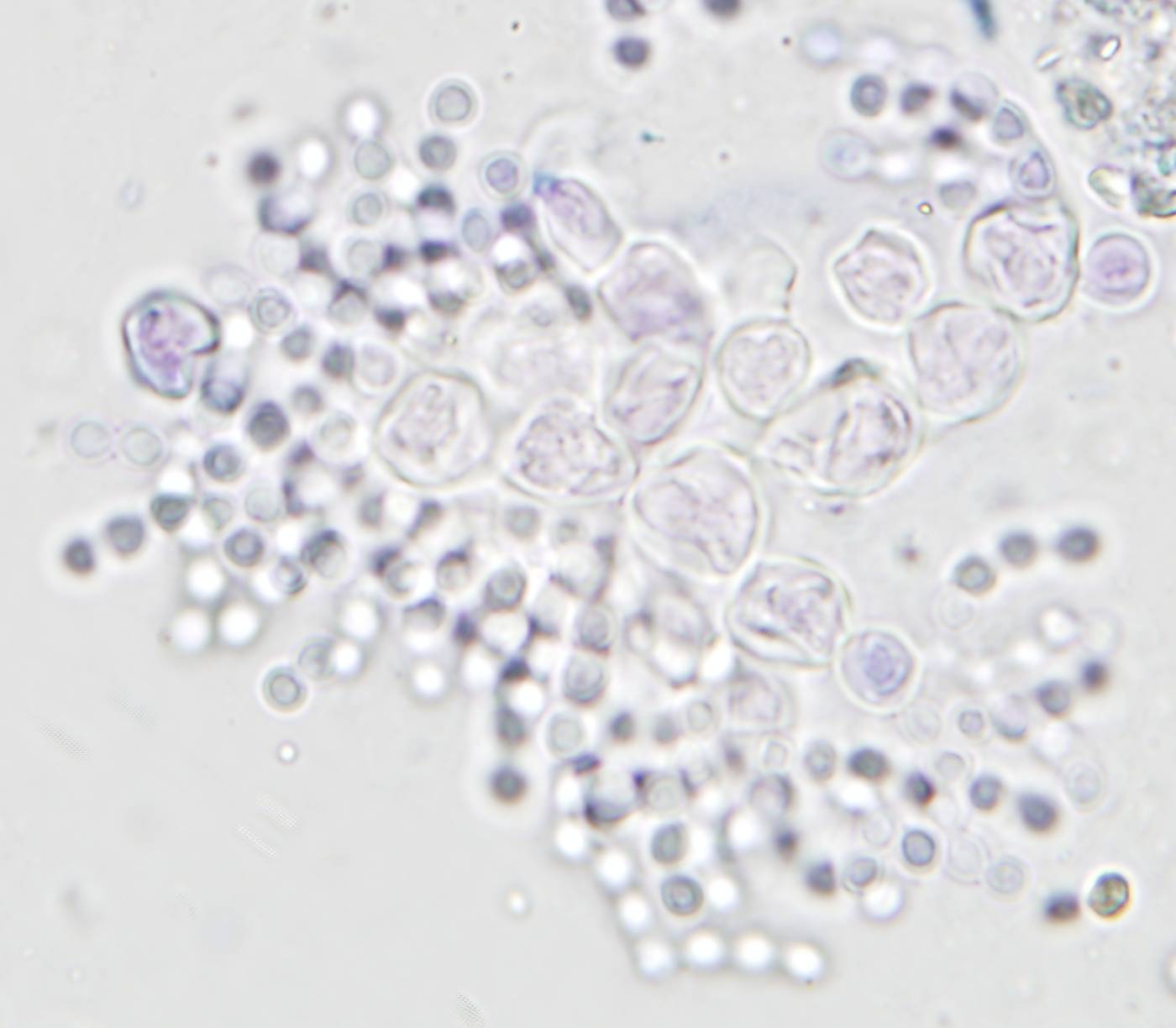
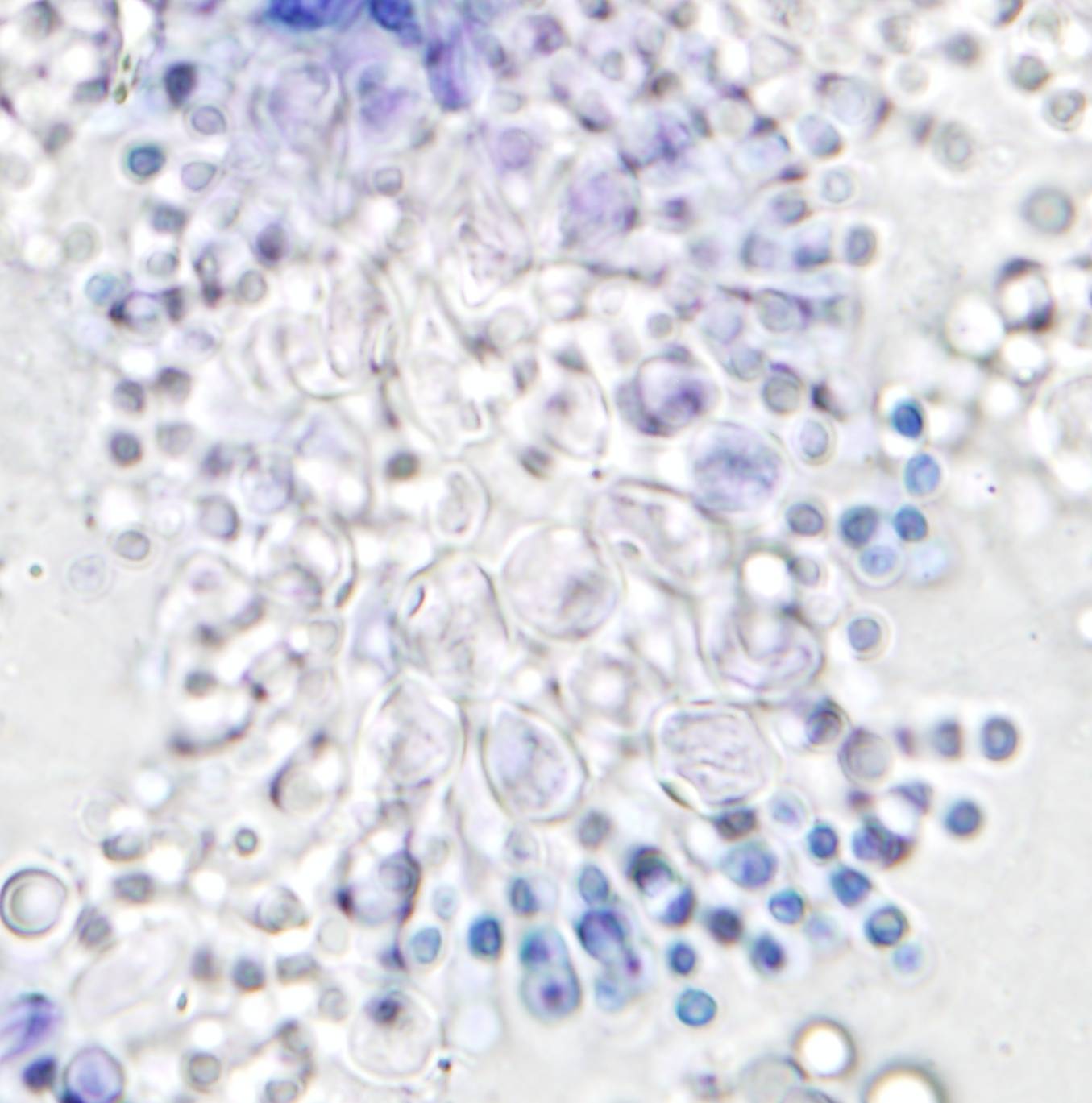
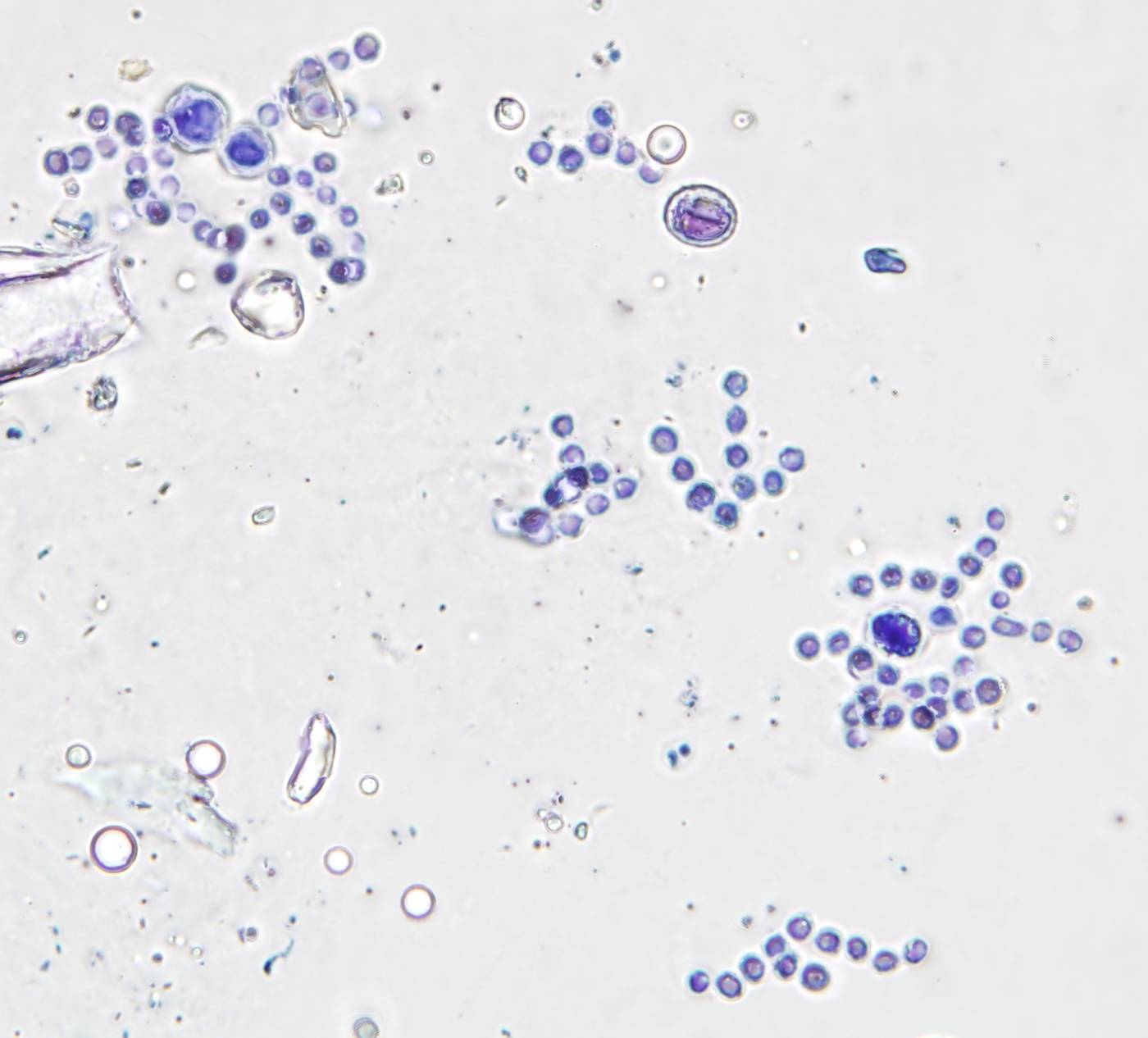
This lichen forms white, spherical to hemispherical sporodochia, 0.1–0.2 mm in diameter, resembling species of Cheiromycina. It differs from them in branched moniliform chains of globose cells 1.5–2.5 µm in diameter. From the similar, poorly known and nitrophilous taxon C. globosa it differs mainly in ecology and in the release of conidia singly. Monilibrachium splendens also has a very thin, pale grey thallus with a trebouxioid photobiont.
The species grows most often on the bark of firs and beeches, and also on wood and bryophytes overgrowing bark. Most records come from montane old-growth forests, often beech-dominated; it probably prefers humid sites with long-lasting snow cover. The majority of voucher specimens are known from the Caucasus, with additional records from the Ukrainian Carpathians, Sweden and Switzerland. The only record from the Czech Republic comes from an old-growth mixed montane forest on the Radvanovický hřbet ridge in the Šumava Mts, where it was found on beech together with Lecanora argentata.
Literature: Vondrák J., Svoboda S., Malíček J., Šoun J., Košnar J., Svensson M., Timdal E., Machač J. & Palice Z. (2024): Combining environmental DNA data and taxonomic surveys provides an unprecedented understanding of lichen diversity and accelerates the discovery of new species. – Preslia 96: 351–417. Dietrich M., Blaise P., Keller C., Lebreton E., Scheidegger C., von Hirschheydt G., Vust M. & Westberg M. (2025): Beiträge zur lichenologischen Erforschung der Schweiz – Folge 7. – Meylania 76: 5–20.
taxonomic classification:Ascomycota → Lecanoromycetes → Ostropales → incertae sedis Ostropales → Monilibrachium
Occurrence in the Czech Republic
All records: 1, confirmed 1. One click on a selected square displays particular record(s), including their source(s).