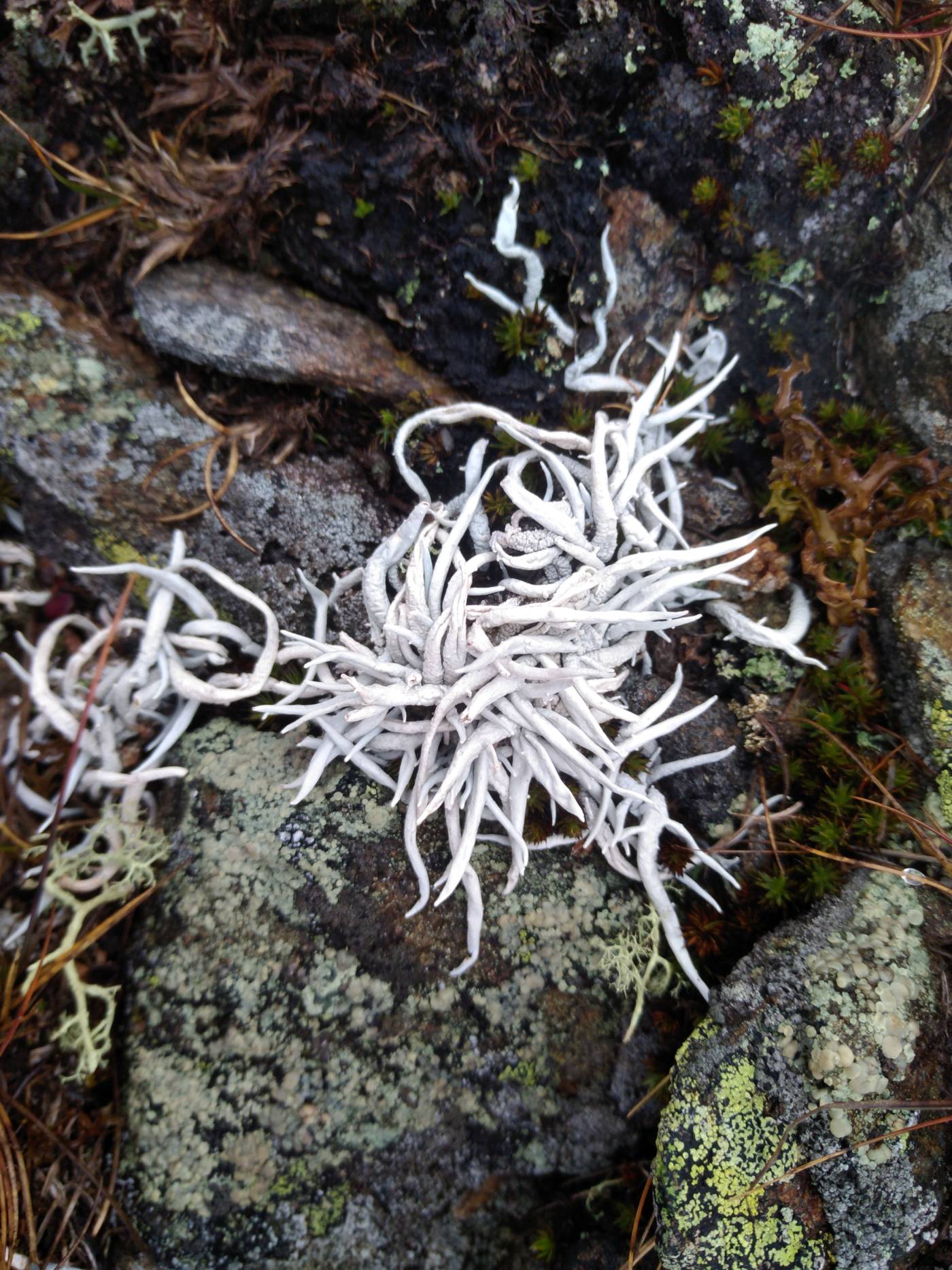
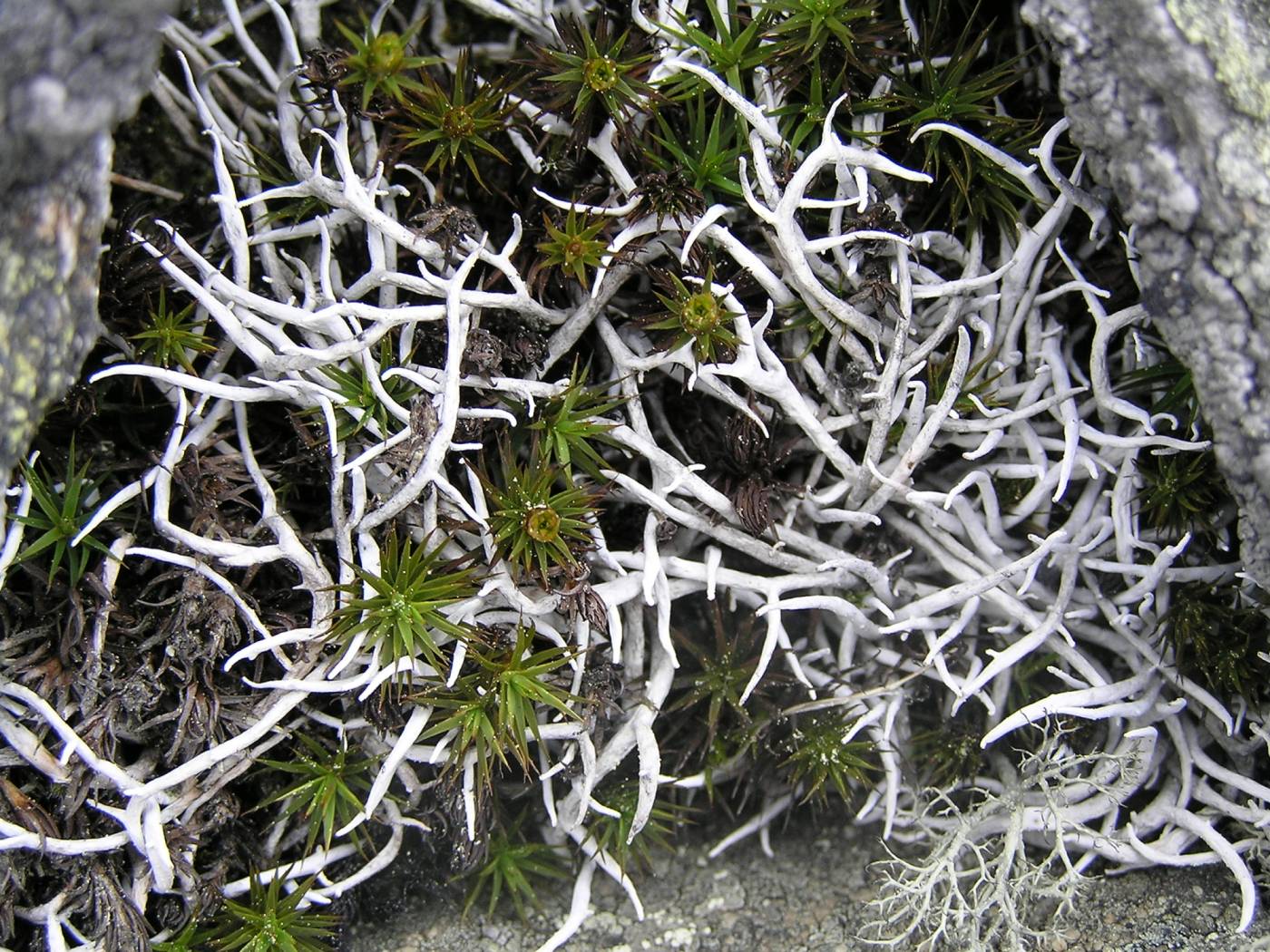
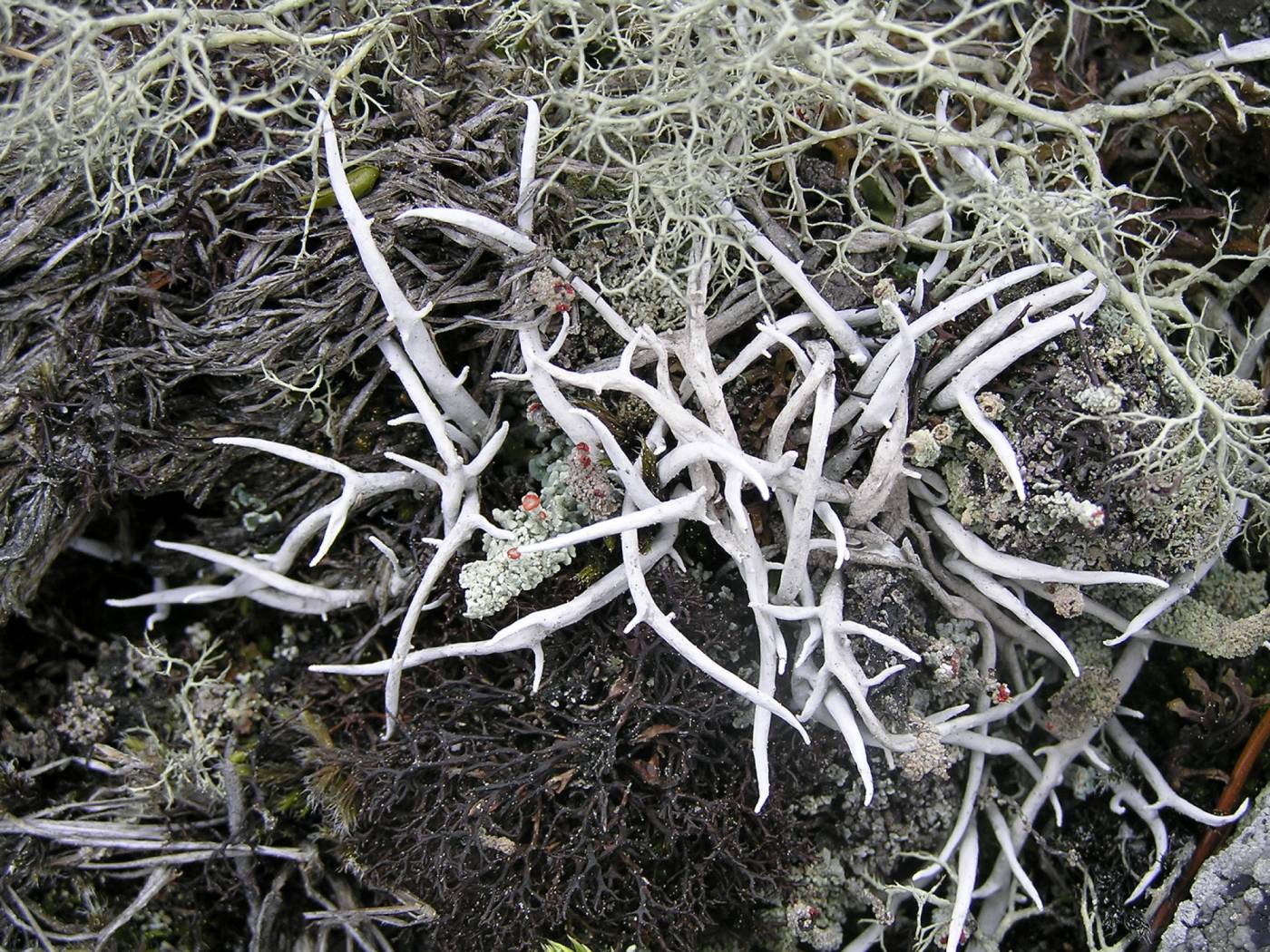
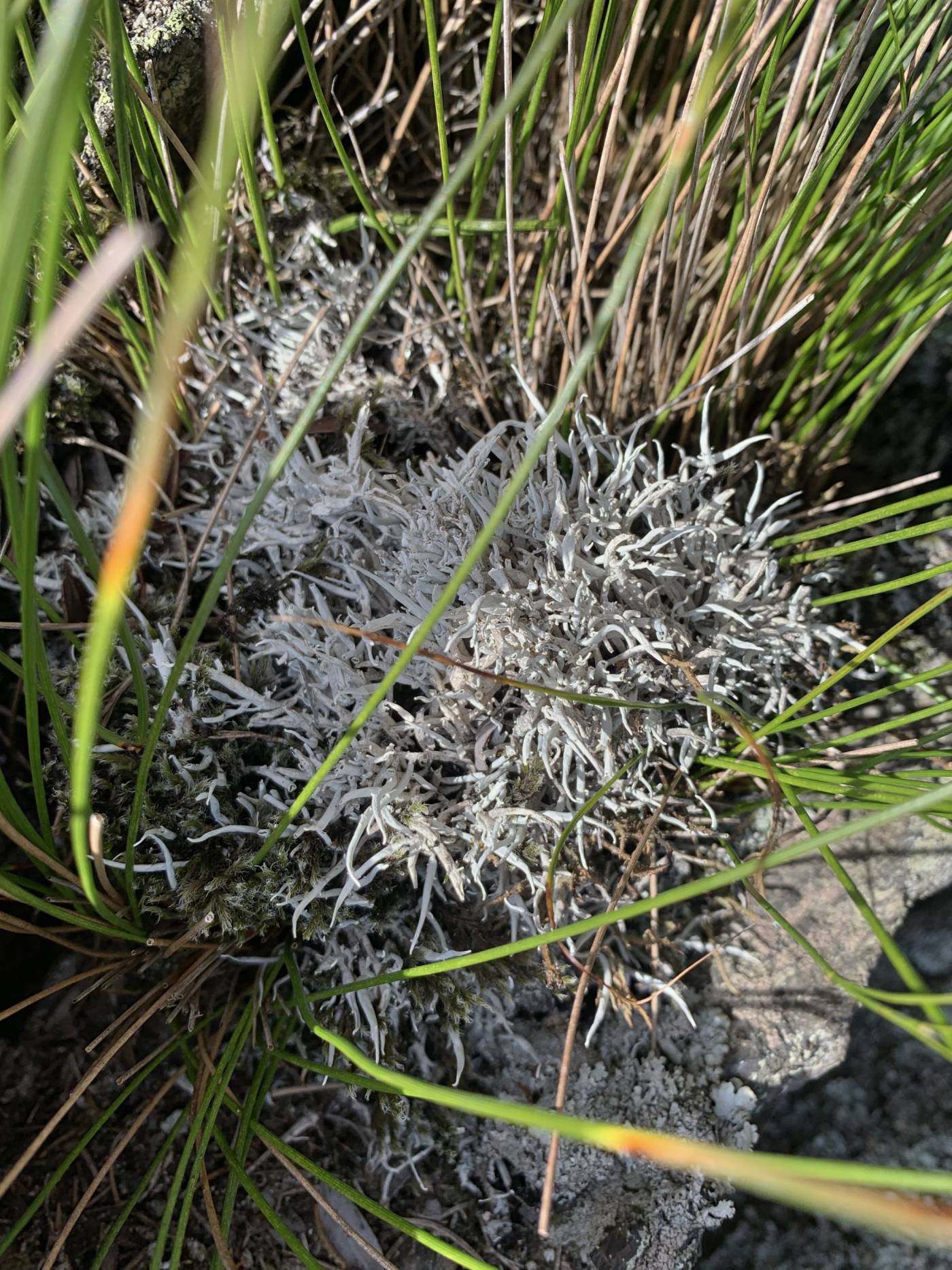
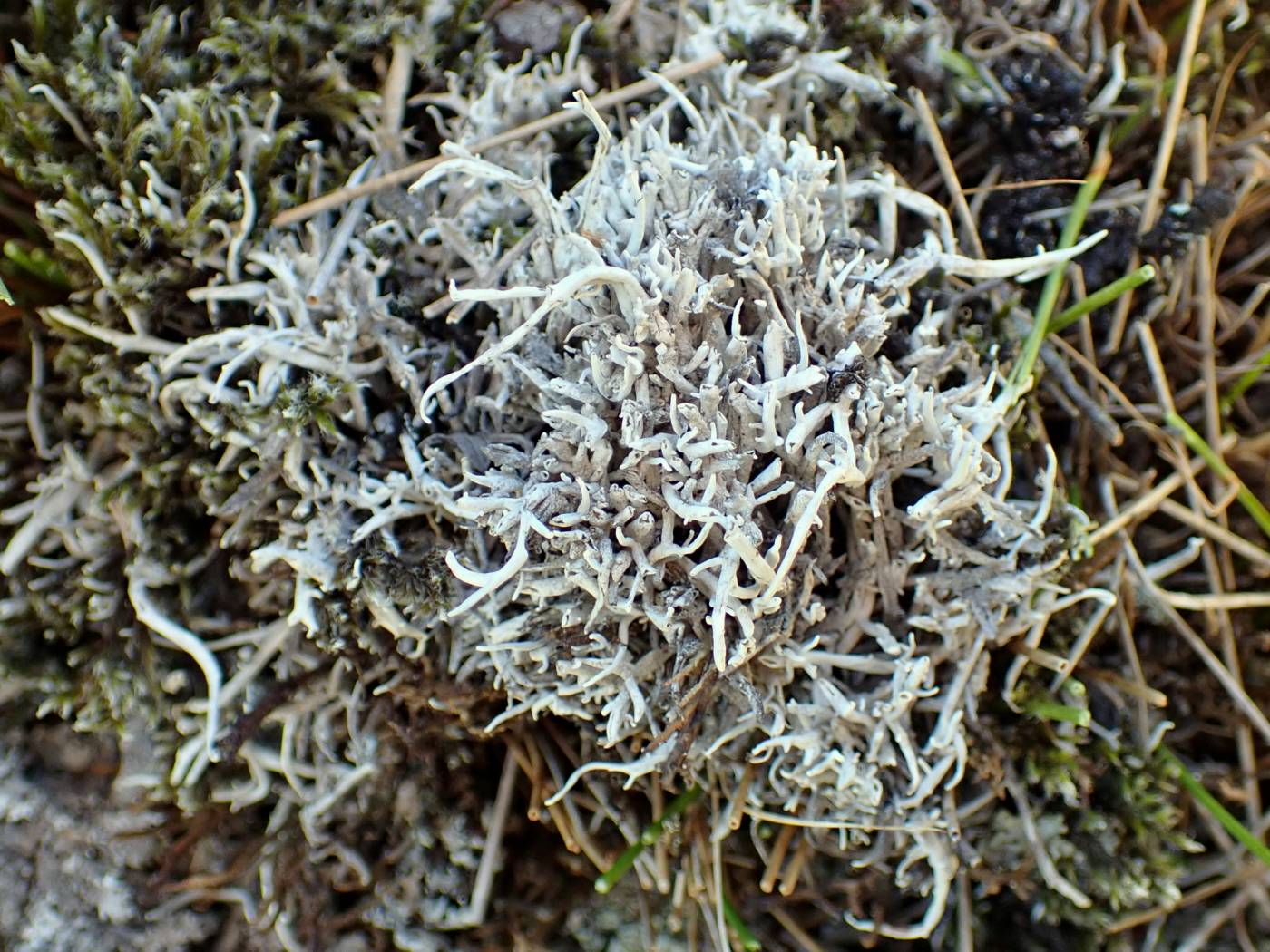
Thamnolia is a conspicuous lichen with thalli resembling scattered, bleached “little bones”. It produces two chemotypes: (1) with baeomycesic and squamatic acids (UV+ white) and (2) with thamnolic acid (UV–). Thamnolia vermicularis s. str. produces only the thamnolic-acid chemotype (UV–); otherwise, the two species can be distinguished practically only using molecular methods (Onut-Brännström et al. 2018). In the Czech Republic, only T. subuliformis has been confirmed with certainty.
Thamnolia species are among the most distinctive and iconic lichens of the Arctic–alpine tundra. They grow mainly on acidic soil and, in Central Europe, are characteristic of exposed mountain habitats above the treeline. In the Czech Republic, they are known from the summit areas of the Krkonoše, Hrubý Jeseník, Šumava and Králický Sněžník Mts. In the Krkonoše Mts, they remain locally abundant on Mt Sněžka and also occur rarely on Mt Studniční hora and Mt Luční hora. In the Hrubý Jeseník Mts, only a small patch was confirmed on the summit of Mt Vozka in 2026. It appeared to be in very poor condition and will probably die out in the coming years. On the Czech side of the Šumava Mts, this lichen was recorded only at Jezerní stěna above Černé jezero (Hilitzer 1929), while only a single historical record is known from the Králický Sněžník Mts (Flotow 1850). Habitats of Thamnolia subuliformis are threatened primarily by climate change and eutrophication, which together promote the encroachment of sparse alpine grasslands by vascular plants. Heavy trampling by tourists may also have contributed to the decline of suitable habitats.
Literature: Flotow J. (1850): Lichenes Florae Silesiae. – Jahresbericht der Schlesischen Gesellschaft der Vaterländische Kultur 27 (1849): 98–135. /// Hilitzer A. (1929): Addenda ad lichenographiam Bohemiae. Series III. (Species in Bohemia novae asterisco notatae sunt.). – Acta Botanica Bohemica 8: 104–118. /// Grünwaldová V. (1970): Beitrag zur Problematik der Gattung Thamnolia Ach. in der Tschecholowakei. – Biológia 25: 49–55. /// Onut-Brännström I., Johannesson H. & Tibell L. (2018): Thamnolia tundrae sp. nov., a cryptic species and putative glacial relict. – Lichenologist 50: 59–75. /// Malíček J. & Steinová J. (2025): Contribution to lichen biota of the Krkonoše Mountains, the highest Czech mountain range. – Herzogia 38: 308–335.
taxonomic classification:Ascomycota → Lecanoromycetes → Pertusariales → Icmadophilaceae → Thamnolia
Occurrence in the Czech Republic
All records: 56, confirmed 38. One click on a selected square displays particular record(s), including their source(s).