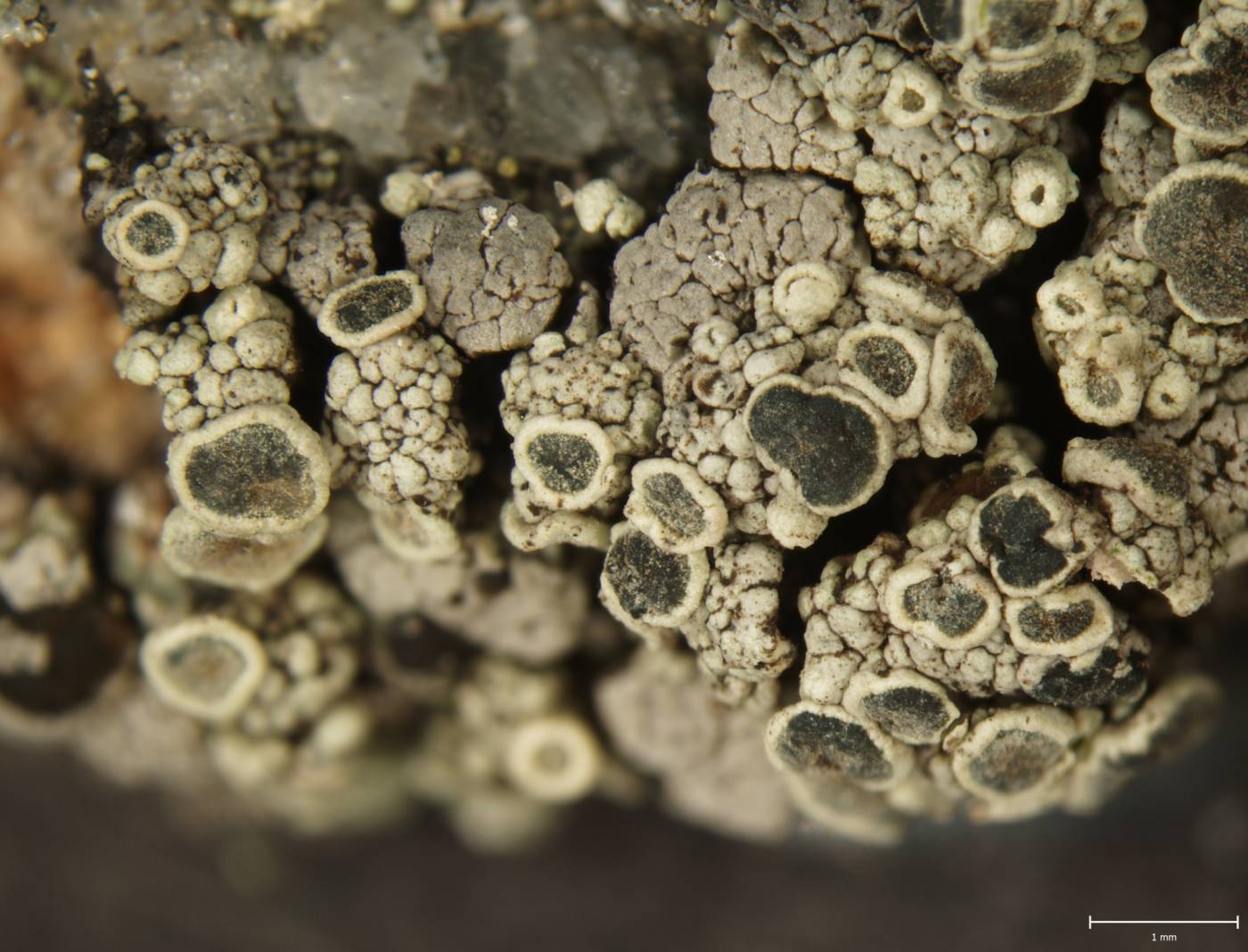
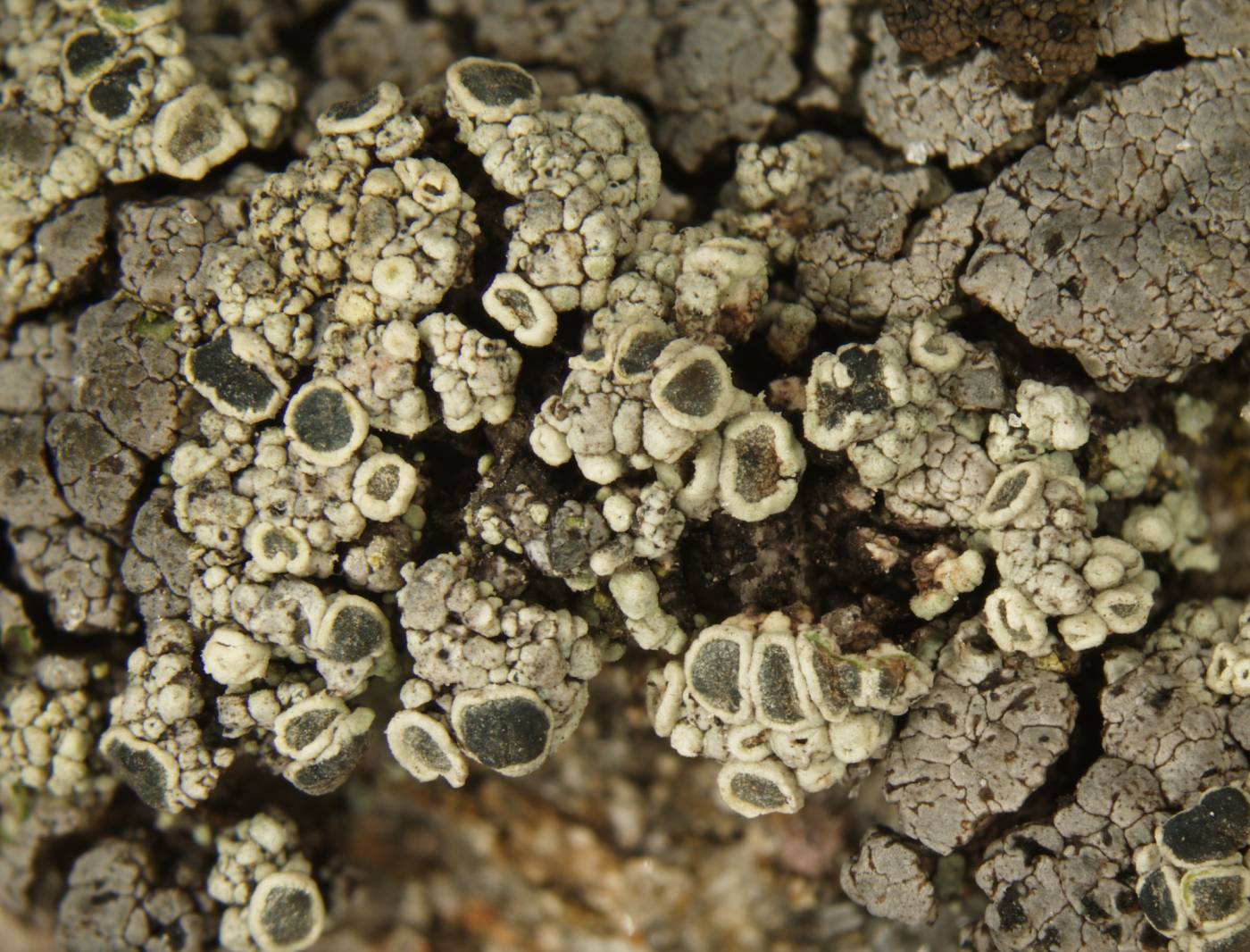
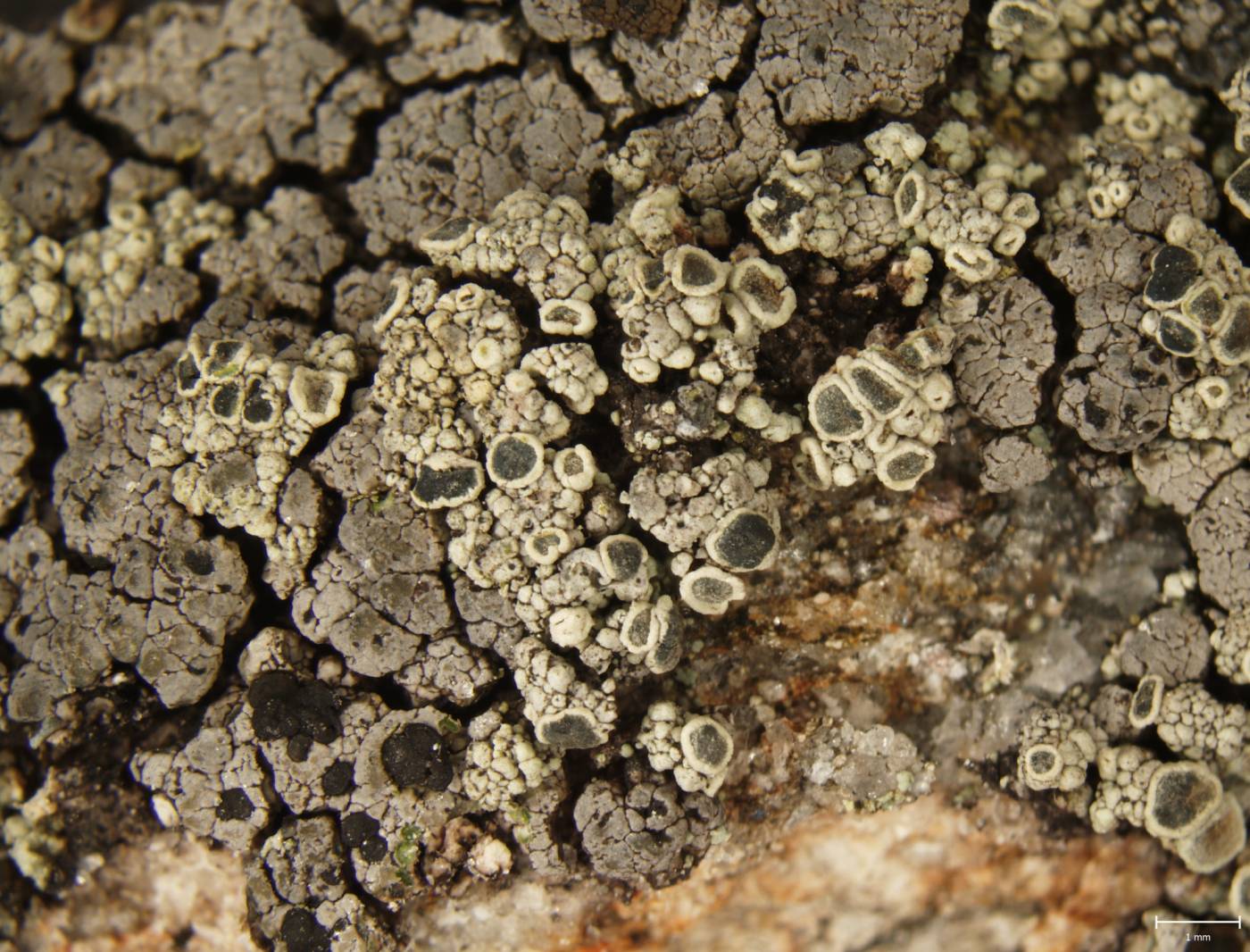
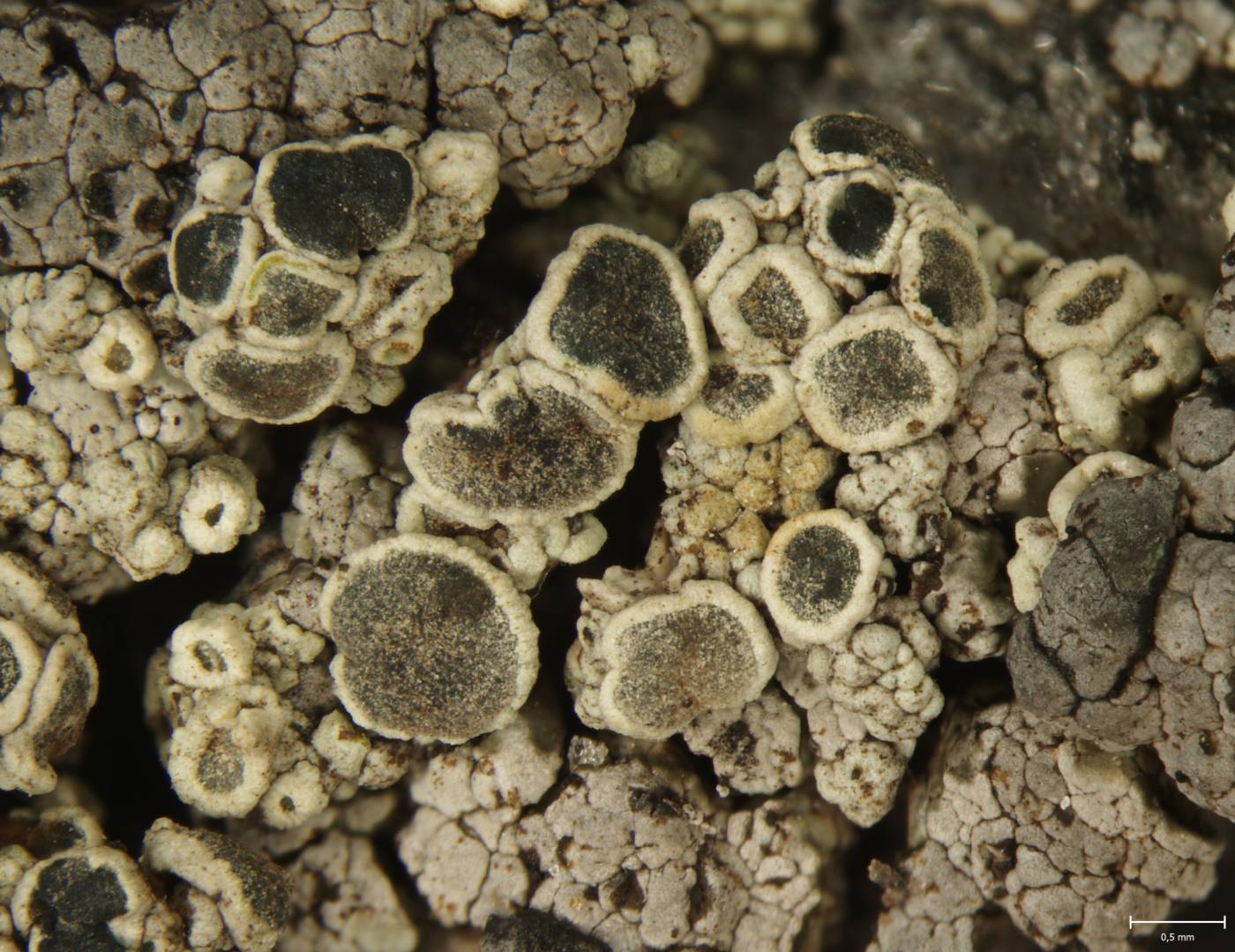
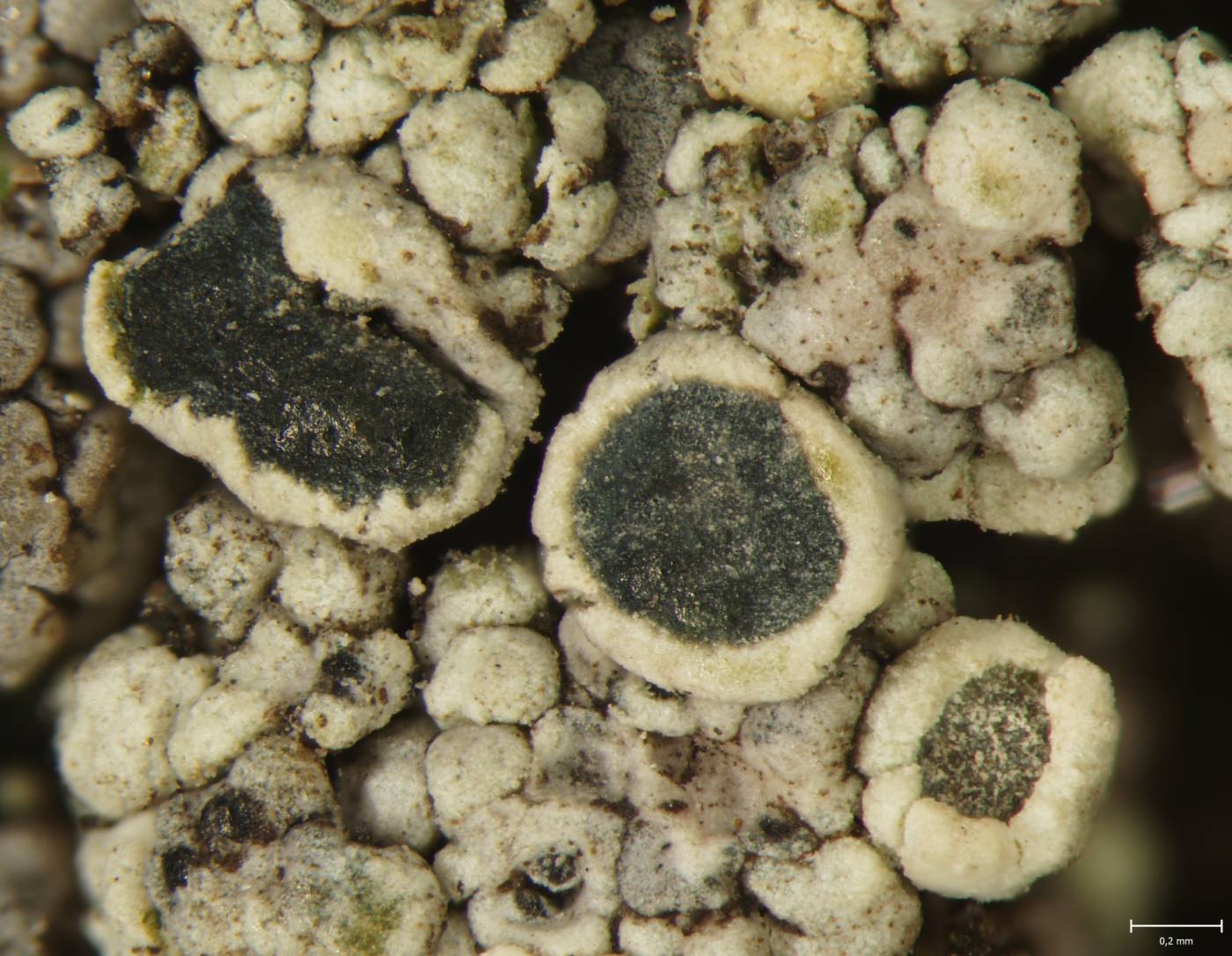
This rare arctic-alpine species is known as an obligate parasite of Miriquidica nigroleprosa (Poelt 1962). Surprisingly, the host lichen is much more widespread than L. latro. The only two historical records from the Czech Republic originate from Mt Sněžka and Mt Malý Šišák, where it was collected in 1969 (Wirth 1972, Vězda 1978). The occurrence of L. latro on Mt Sněžka was confirmed in 2022, but as a parasite of Miriquidica subplumbea on phyllite rocks above the treeline.
Molecular data indicate that it represents merely an ecotype of L. leptacina Sommerf. (Malíček & Steinová 2025), an arctic-alpine lichen growing on mosses (Andreaea, Grimmia) and plant debris in sites with long-lasting snow cover above the treeline in areas with siliceous bedrock (Nimis et al. 2018).
Literatura: Poelt J. (1962): Parasitische Flechten III. − Österreichische Botanische Zeitschrift 109: 521−528. /// Wirth V. (1972): Die Silikatflechten−Gemeinschaften im ausseralpinen Zentraleuropa. – Dissertationes Botanicae 17: 1−306. /// Vězda A. (1978): Neue oder wenig bekannte Flechten in der Tschechoslowakei. II. – Folia Geobotanica et Phytotaxonomica 13: 397–420. /// Nimis P. L., Hafellner J., Roux C., Clerc P., Mayrhofer H., Martellos S. & Bilovitz P. O. (2018): The lichens of the Alps – an annotated checklist. – Mycokeys 31: 1–634. /// Malíček J. & Steinová J. (2025): Contribution to lichen biota of the Krkonoše Mountains, the highest Czech mountain range. – Herzogia 38: 308–335.
taxonomic classification:Ascomycota → Lecanoromycetes → Lecanorales → Lecanoraceae → Lecanora
Red List (Liška & Palice 2010):DD – data deficient
Red List (Malíček 2023):C1 – critically endangered
Occurrence in the Czech Republic
All records: 3, confirmed 3. One click on a selected square displays particular record(s), including their source(s).