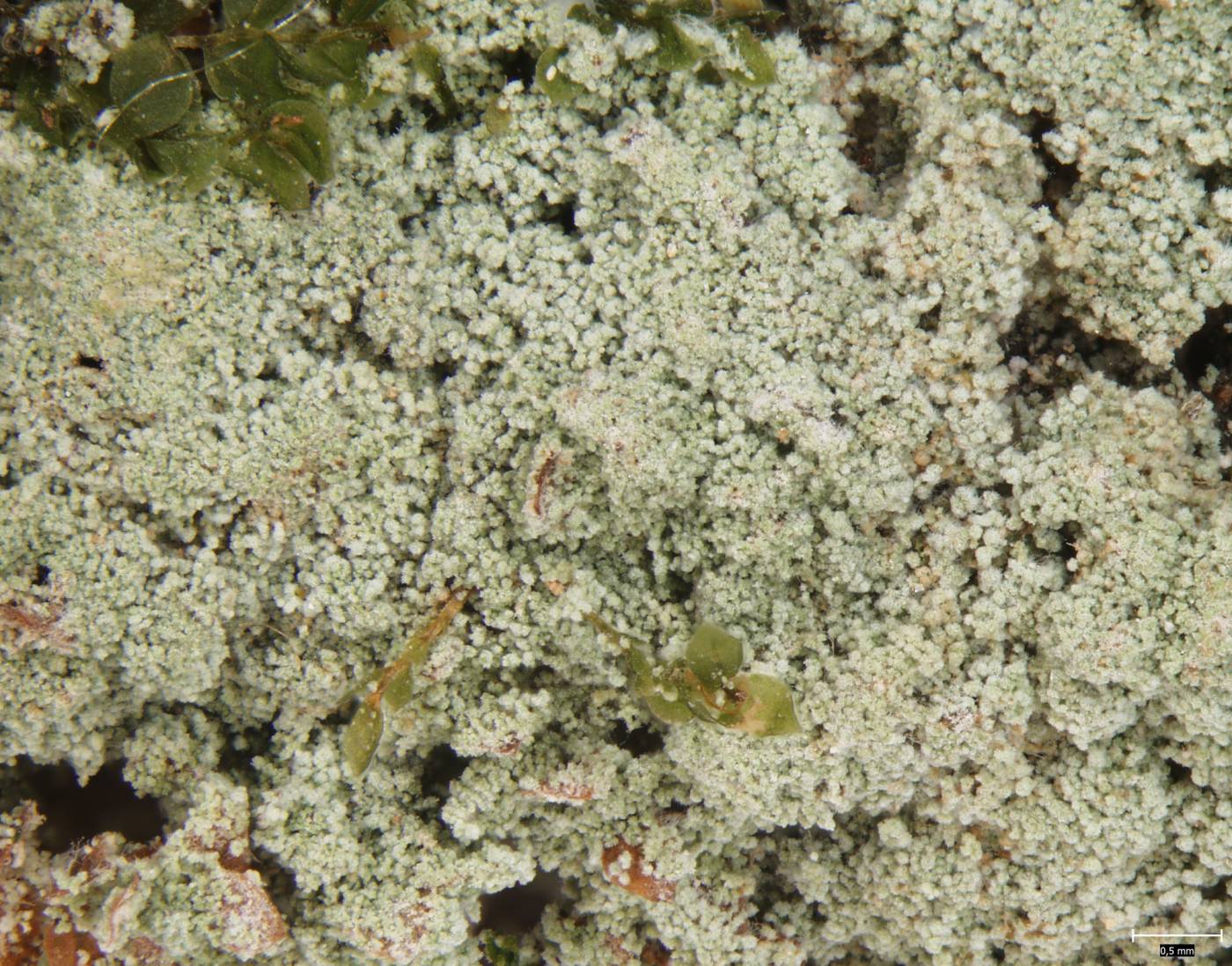
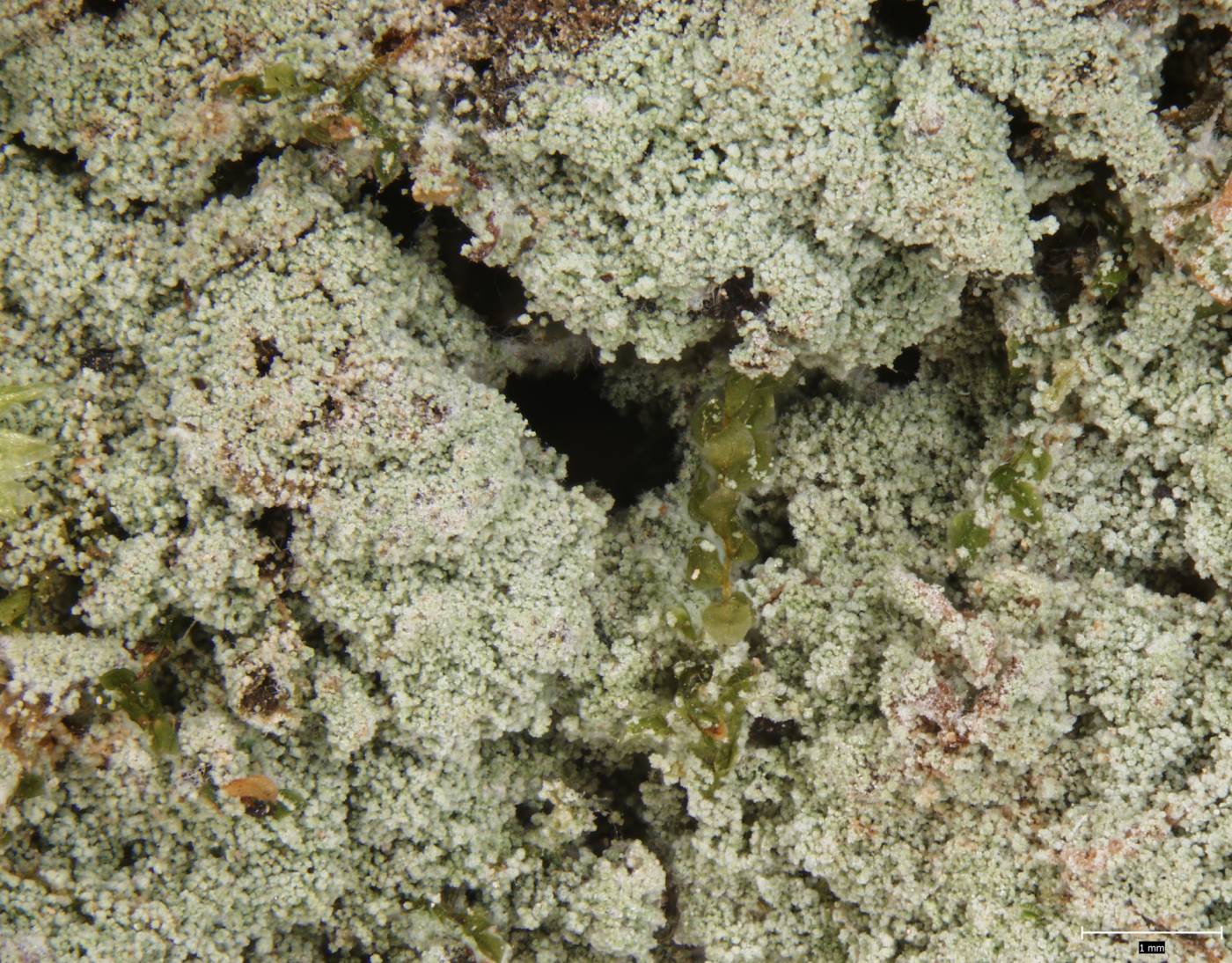
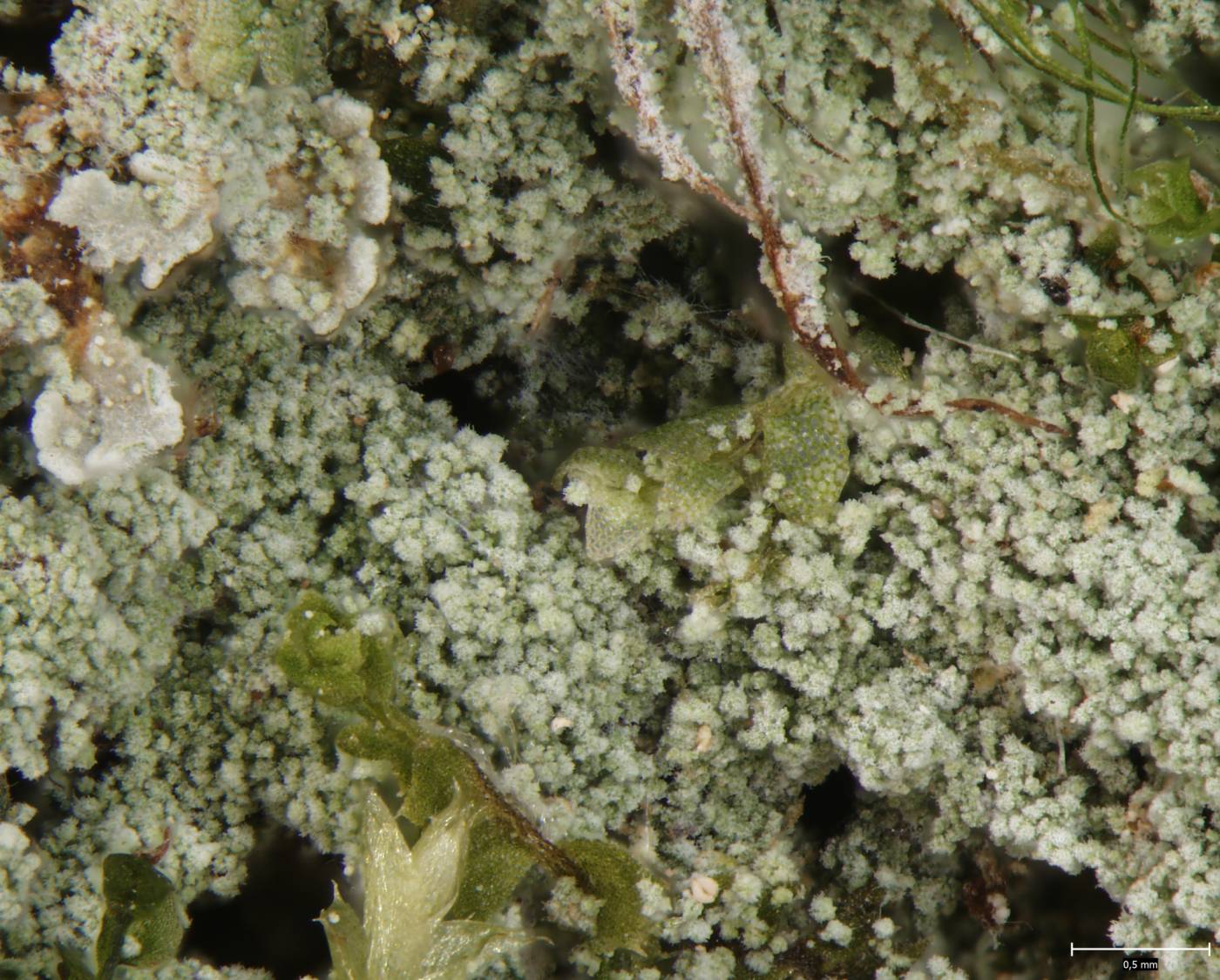
This lichen species is very similar to L. jackii and was formerly regarded as its chemotype (Leuckert et al. 1995). It produces angardianic/roccellic acid (Bayerová et al. 2006), in contrast to L. jackii, which contains jackinic and usually also roccellic acids, or toensbergianic acid in var. toensbergiana (Śliwa & Kukwa 2012). Lepraria celata apparently is not restricted to any particular substrate. It was described from montane regions in Ukraine and Bulgaria (Bayerová et al. 2006) and later reported from several other countries. The only Czech record was collected on bryophytes at the base of Sorbus aucuparia trunk in the Bílé Labe valley (Krkonoše Mts) at 1230 m a.s.l. (Malíček & Steinová 2025).
Literature: Leuckert C., Kümmerling H. & Wirth V. (1995): Chemotaxonomy of Lepraria Ach. and Leproloma Nyl. ex Crombie, with particular reference to Central Europe. – Bibliotheca Lichenologica 58: 57–62. /// Slavíková-Bayerová Š. & Orange A. (2006): Three new species of Lepraria (Ascomycota, Stereocaulaceae) containing fatty acids and atranorin. – The Lichenologist 38: 503–513. /// Śliwa L. & Kukwa M. (2012): New distribution data for sterile crustose lichens in the Polish Tatra Mts and its surroundings. – Polish Botanical Journal 57: 259–278. /// Malíček J. & Steinová J. (2025): Contribution to lichen biota of the Krkonoše Mountains, the highest Czech mountain range. – Herzogia 38: 308–335.
taxonomic classification:Ascomycota → Lecanoromycetes → Lecanorales → Stereocaulaceae → Lepraria
Occurrence in the Czech Republic
All records: 1, confirmed 1. One click on a selected square displays particular record(s), including their source(s).