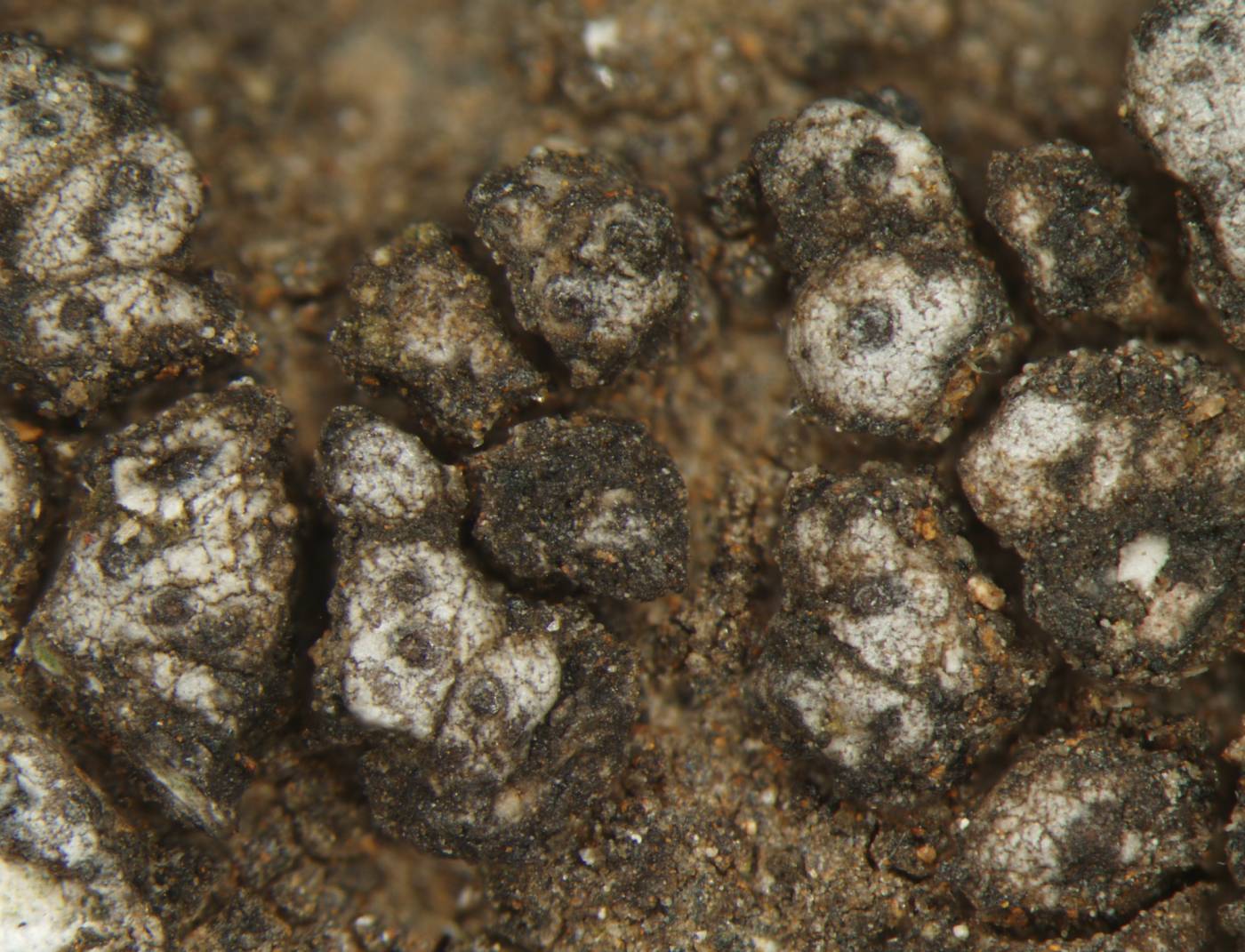
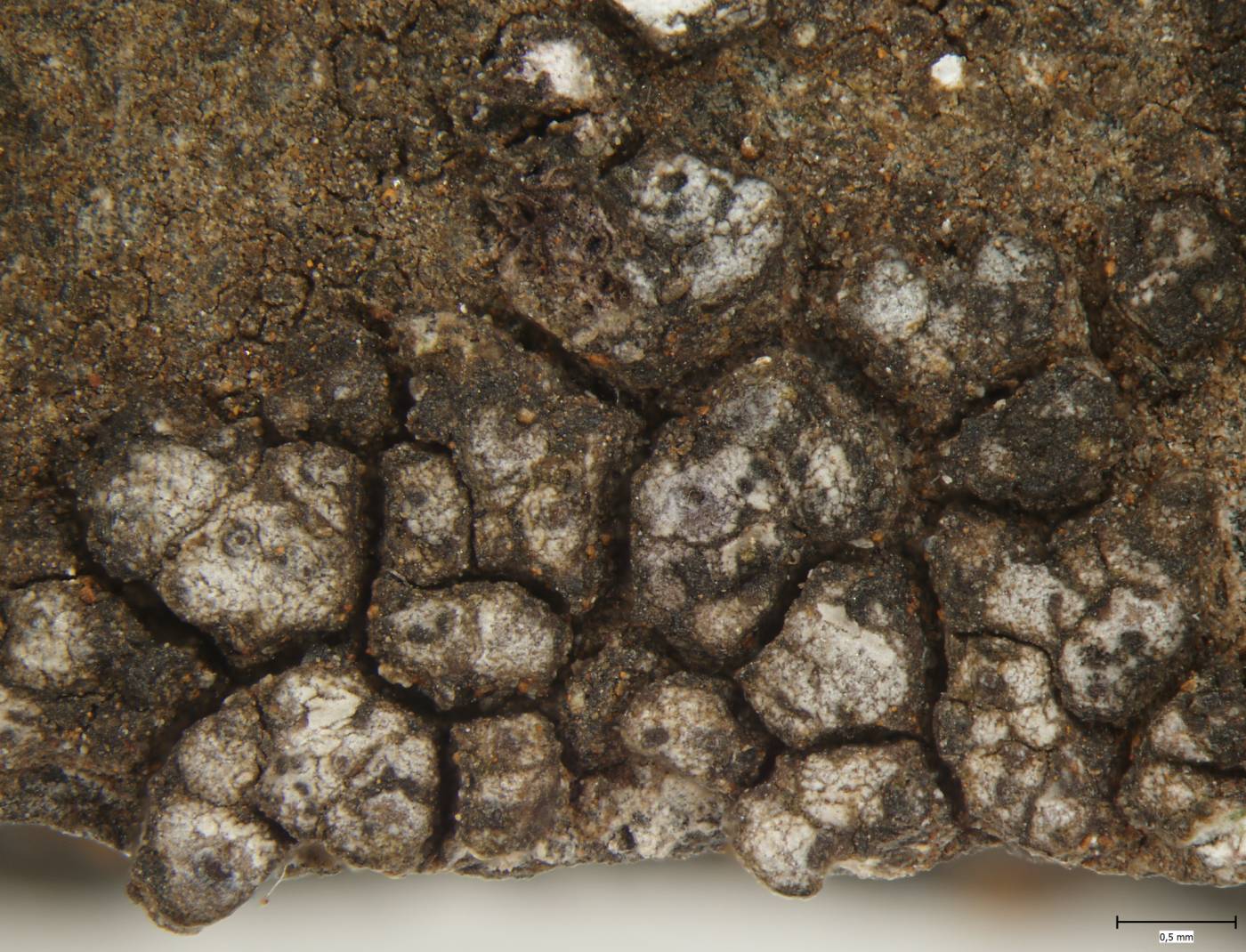
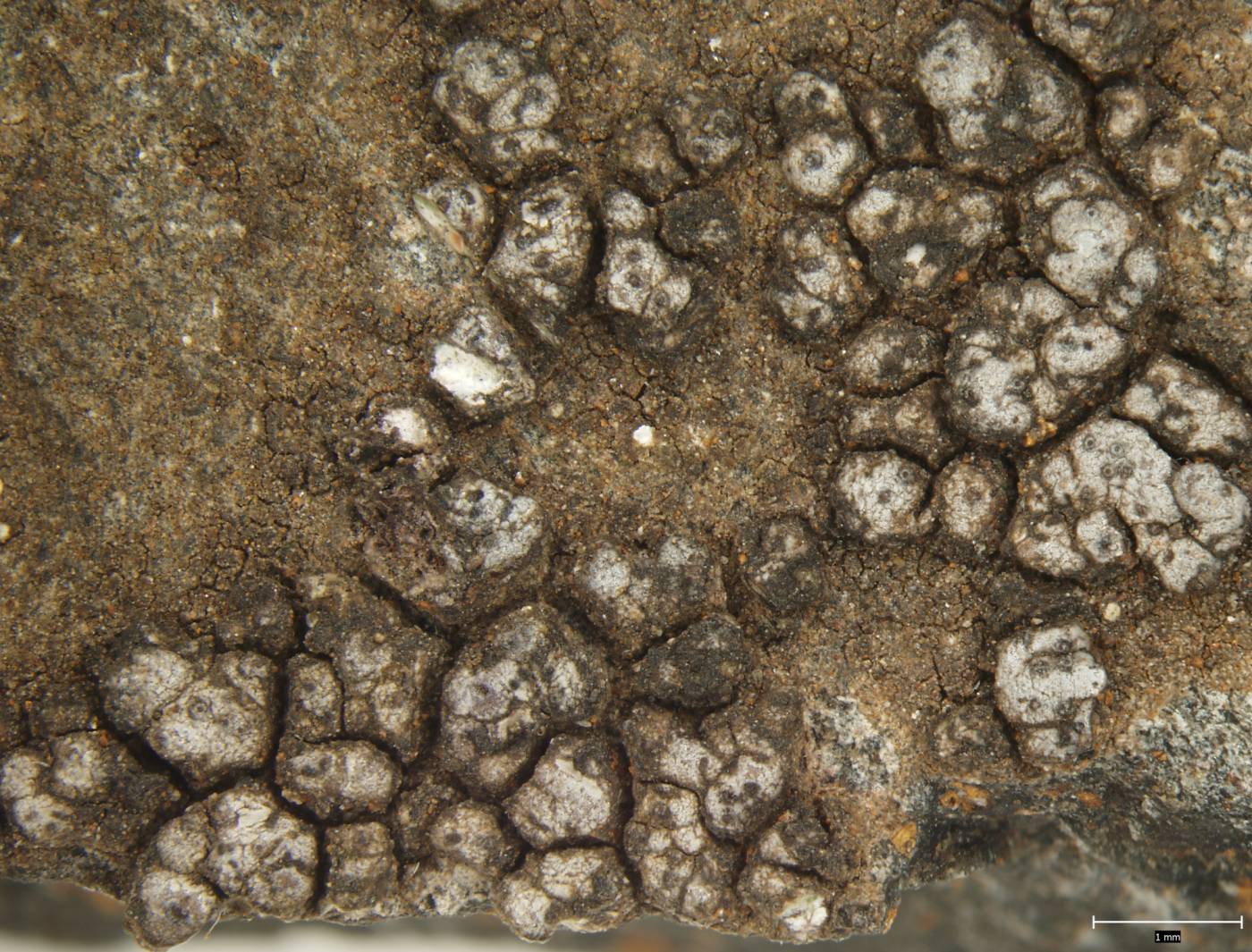
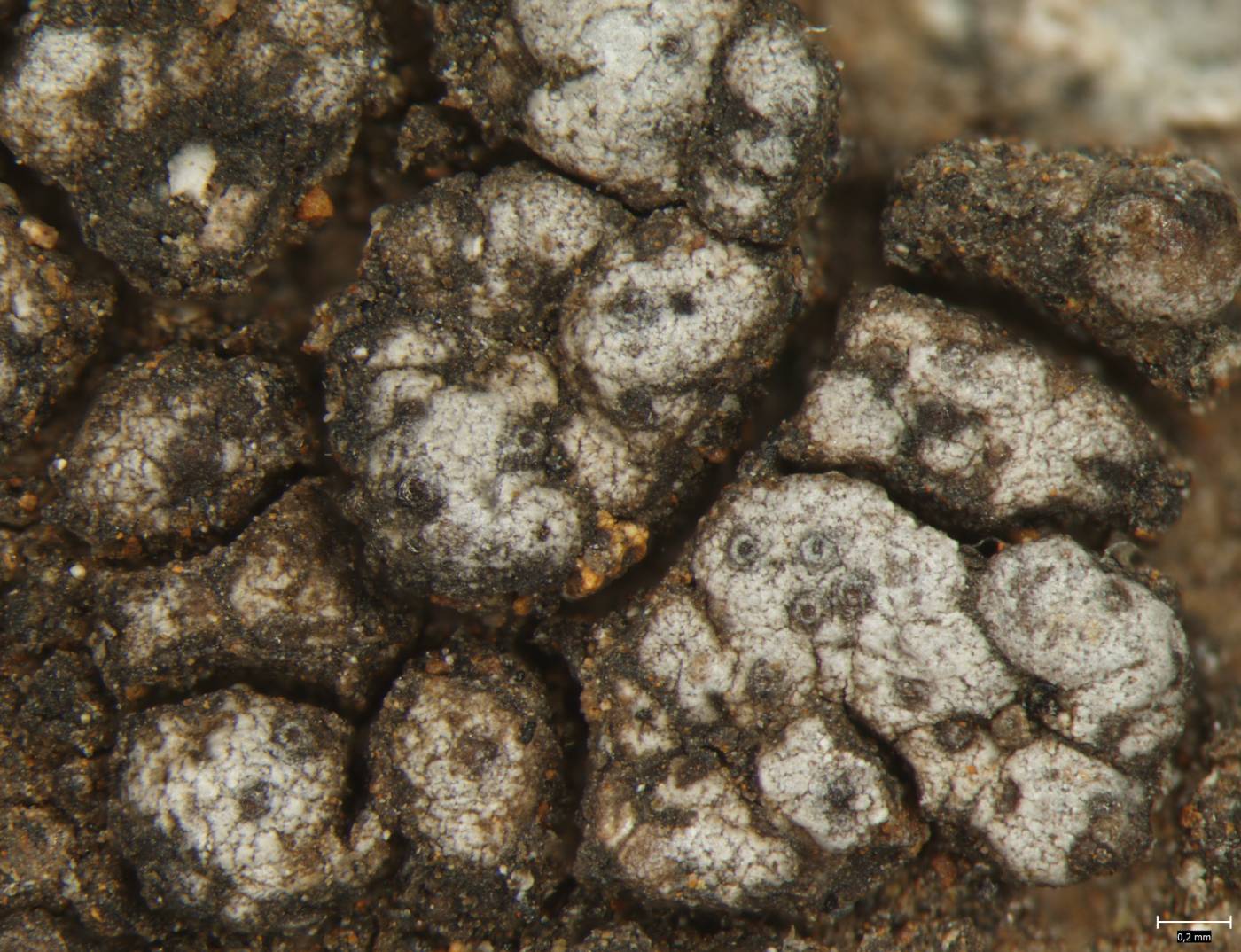
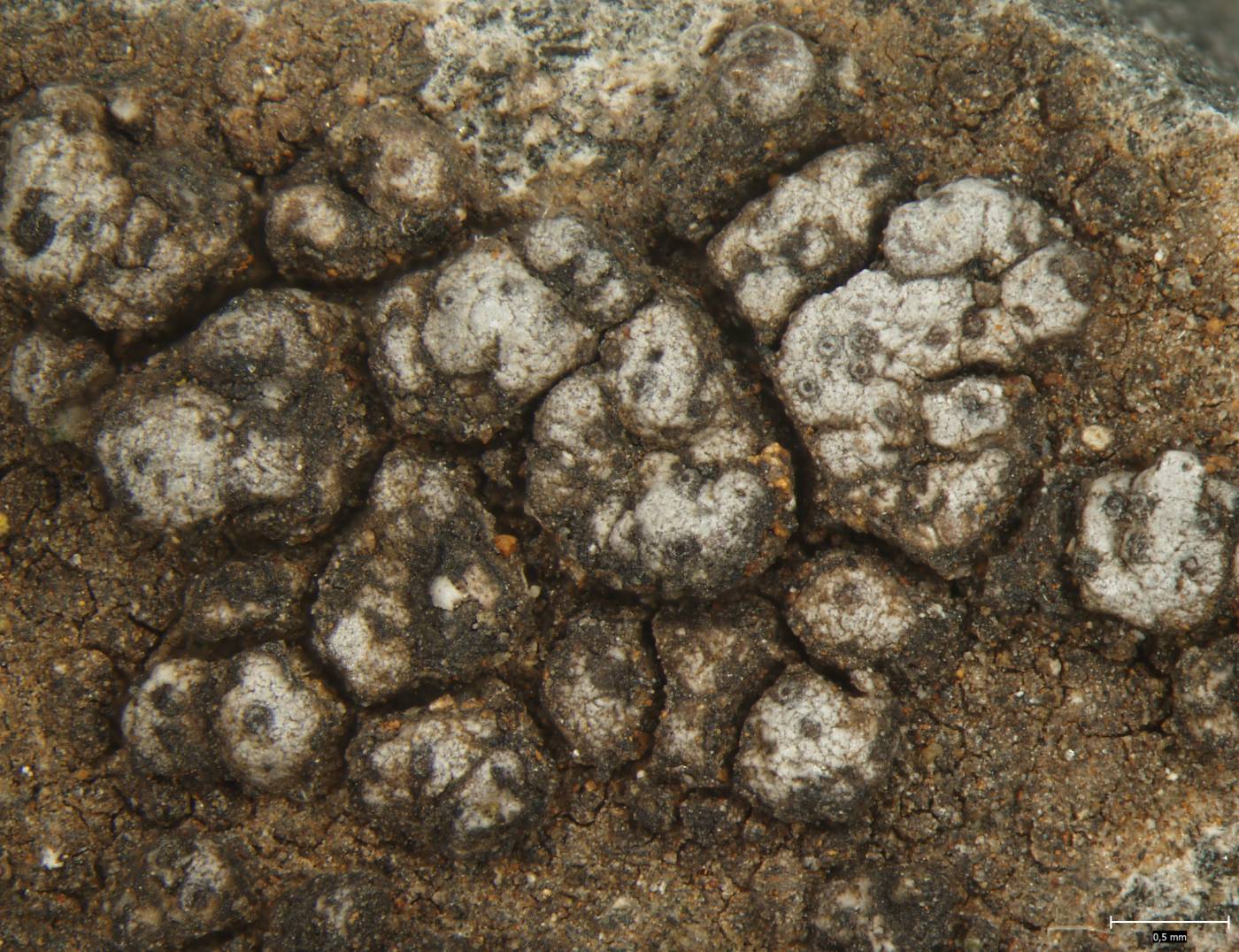
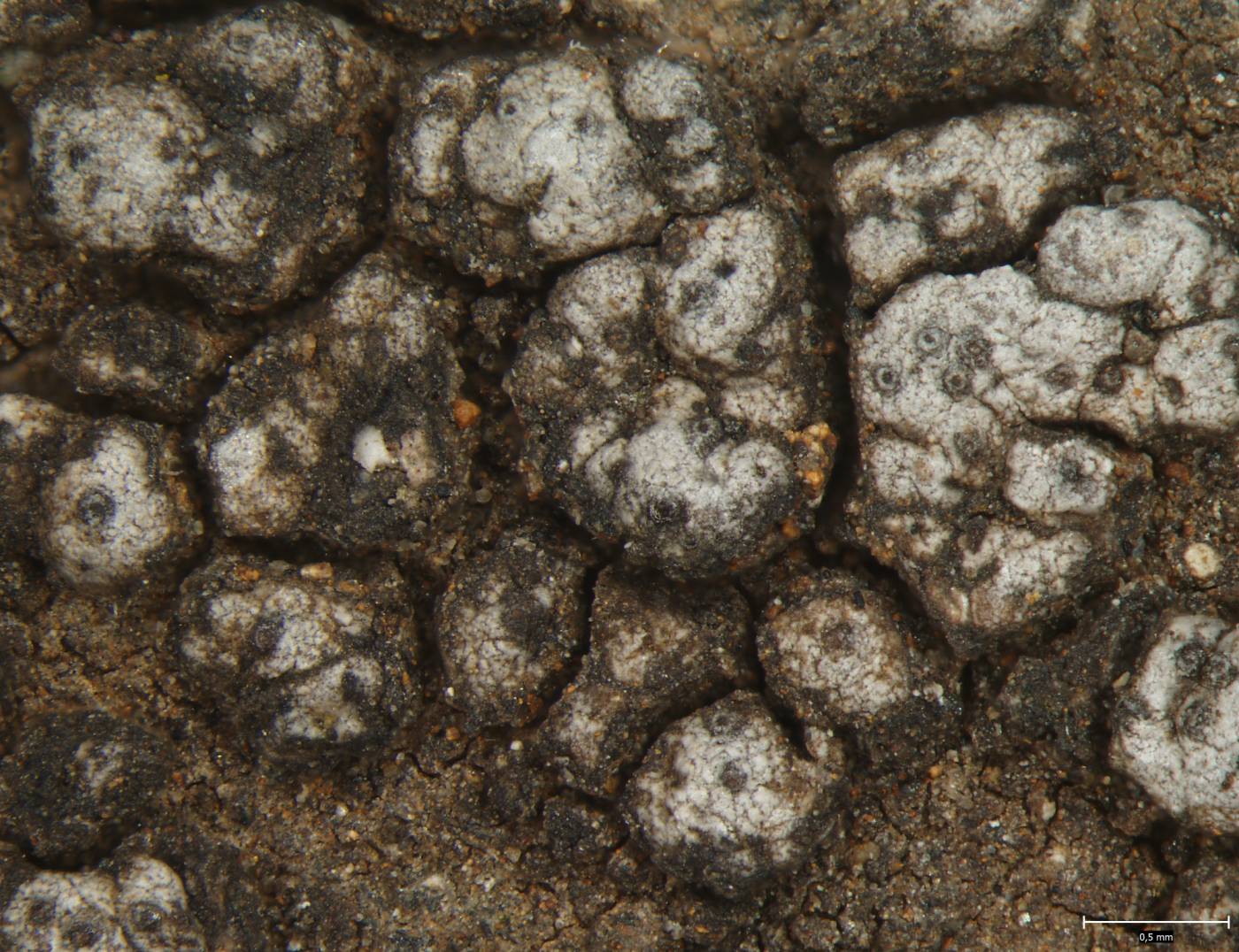
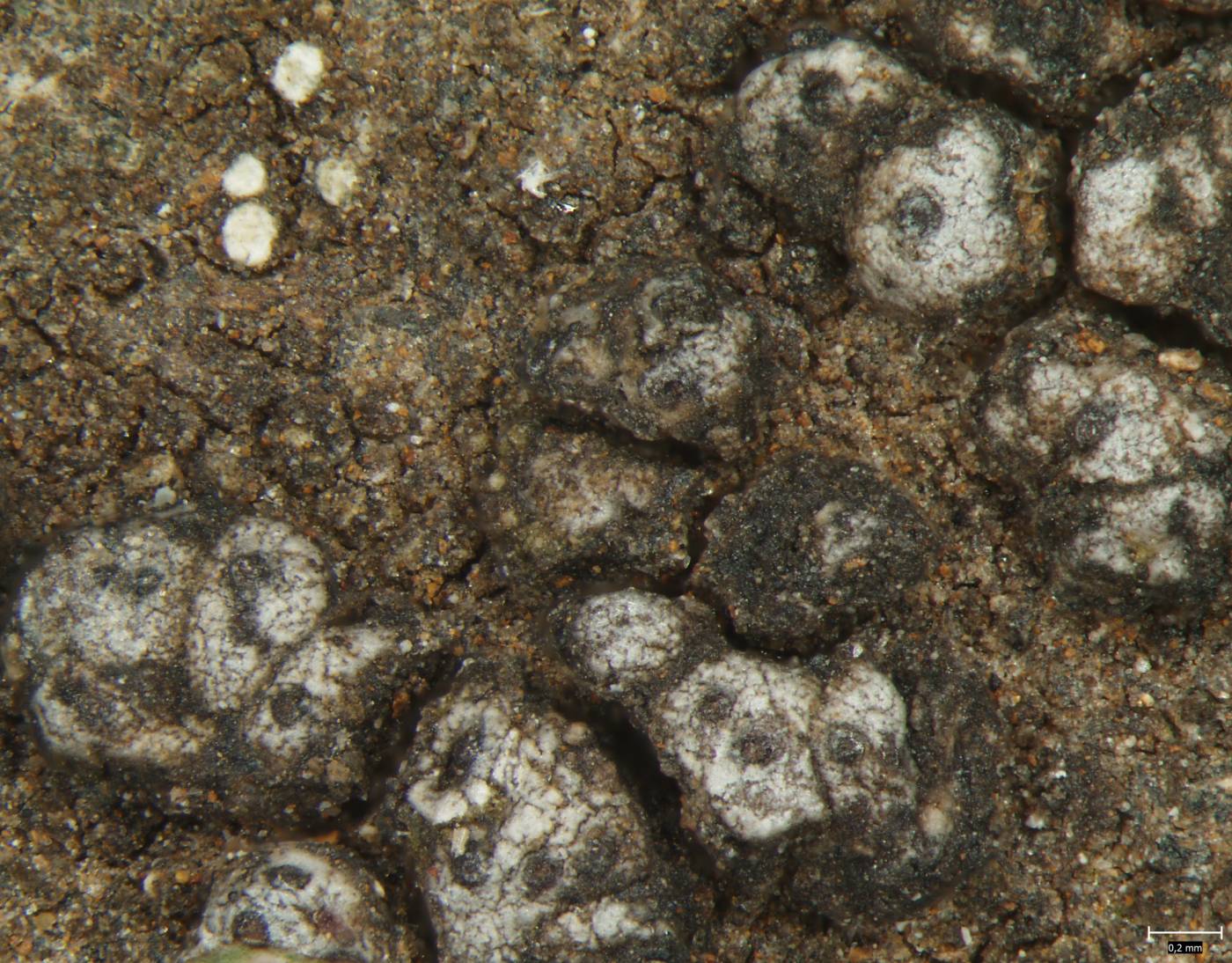
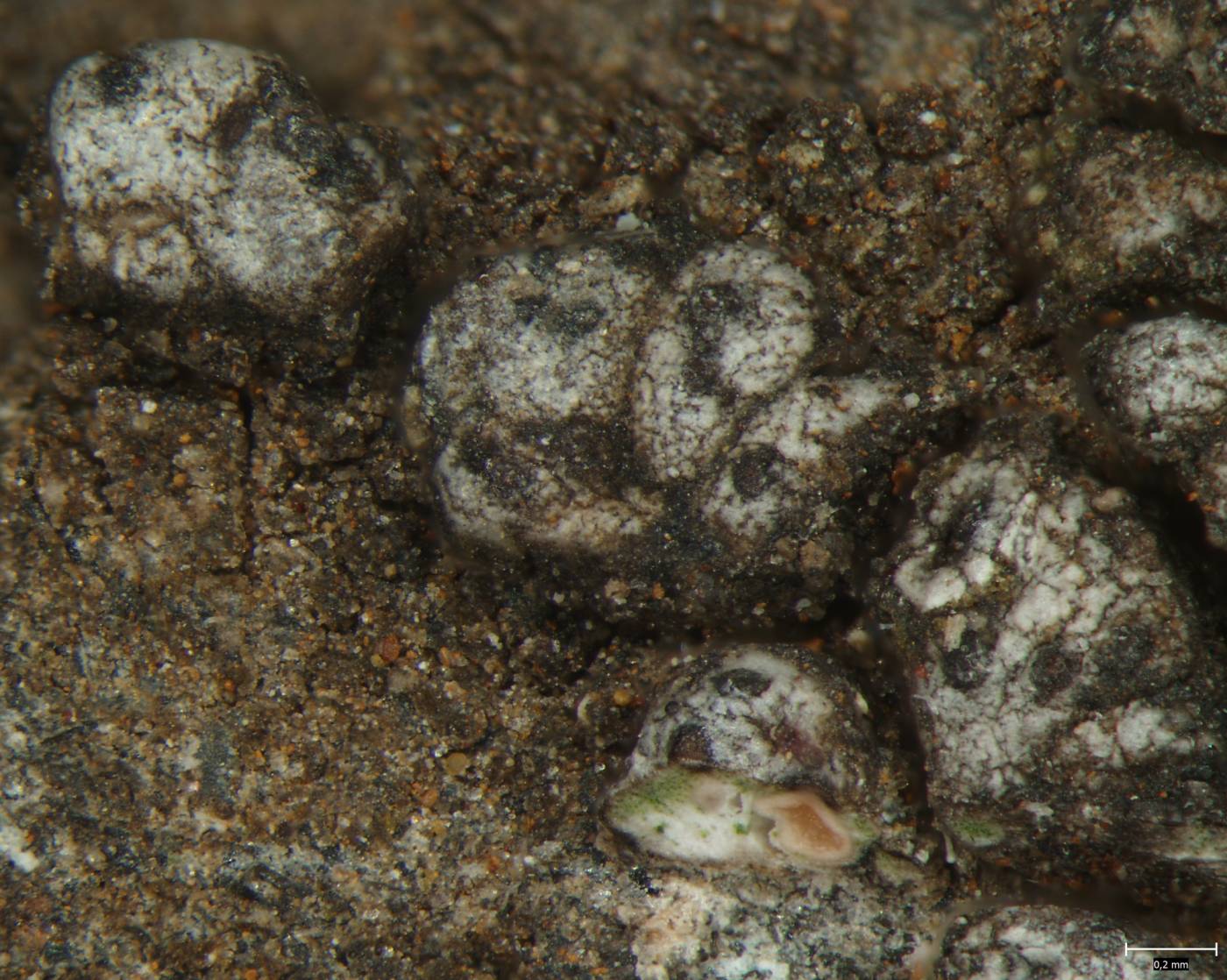
A lichen very similar to the more common P. fuscellum, from which it differs in having larger ascospores (usually longer than 20 μm) with a distinct perispore. It grows on sun-exposed limestone rocks, where it often starts as a parasite on the thallus of Circinaria calcarea.
In Europe, it is a widespread but rarely reported species, more frequent in the Mediterranean region. From the Czech Republic, it is so far known from a single record from the Raná National Nature Reserve, where it grew on a sun-exposed nephelinite rock. The thallus was free-living, without the presence of a host lichen. Ecologically, this Czech record is somewhat atypical; however, the length of the narrowly ellipsoid ascospores (20–24 μm) corresponds to P. canellum.
Another similar species, P. breussii Cl. Roux & Gueidan, has slightly smaller spores (16.5–22 μm) and is reported as a parasite on Aspicilia calcitrapa (Roux & Gueidan 2011), which has not yet been recorded from the Czech Republic.
Literature: Orange A. (2004): The Verrucaria fuscella group in Great Britain and Ireland. – Lichenologist 36: 173–182. Krzewicka B. (2009): The ‚Verrucaria fuscella group‘ in Poland with some nomenclatorial remarks. – Acta Societatis Botanicorum Poloniae 78: 229–234. Malíček J. (2024): Příspěvek k poznání lišejníků Českého středohoří. – Bryonora 74: 37–85.
taxonomic classification:Ascomycota → Eurotiomycetes → Verrucariales → Verrucariaceae → Placopyrenium
most frequented synonyms:Verrucaria canellaRed List (Malíček 2023):C1 – critically endangered
Occurrence in the Czech Republic
All records: 1, confirmed 0. One click on a selected square displays particular record(s), including their source(s).