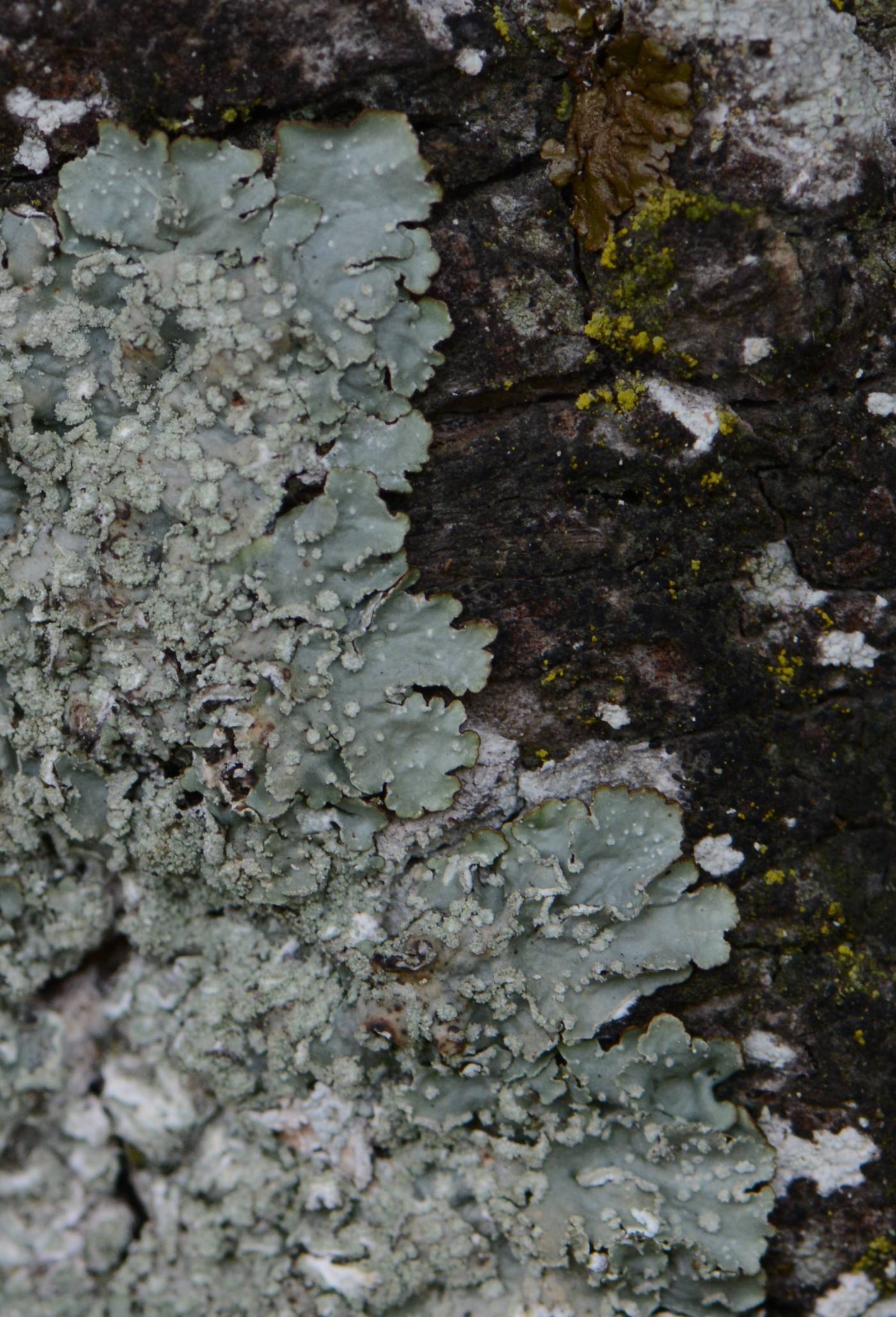
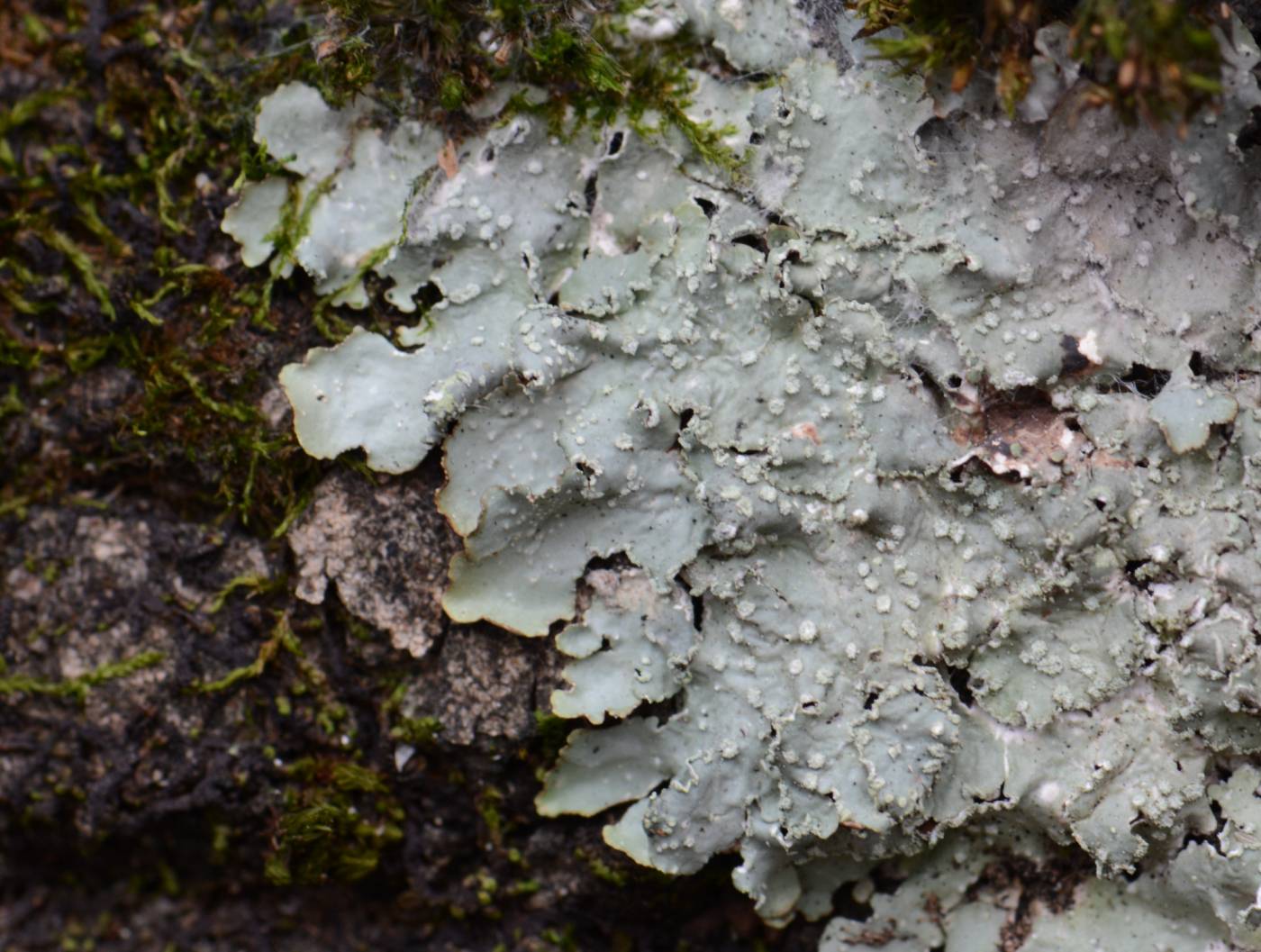
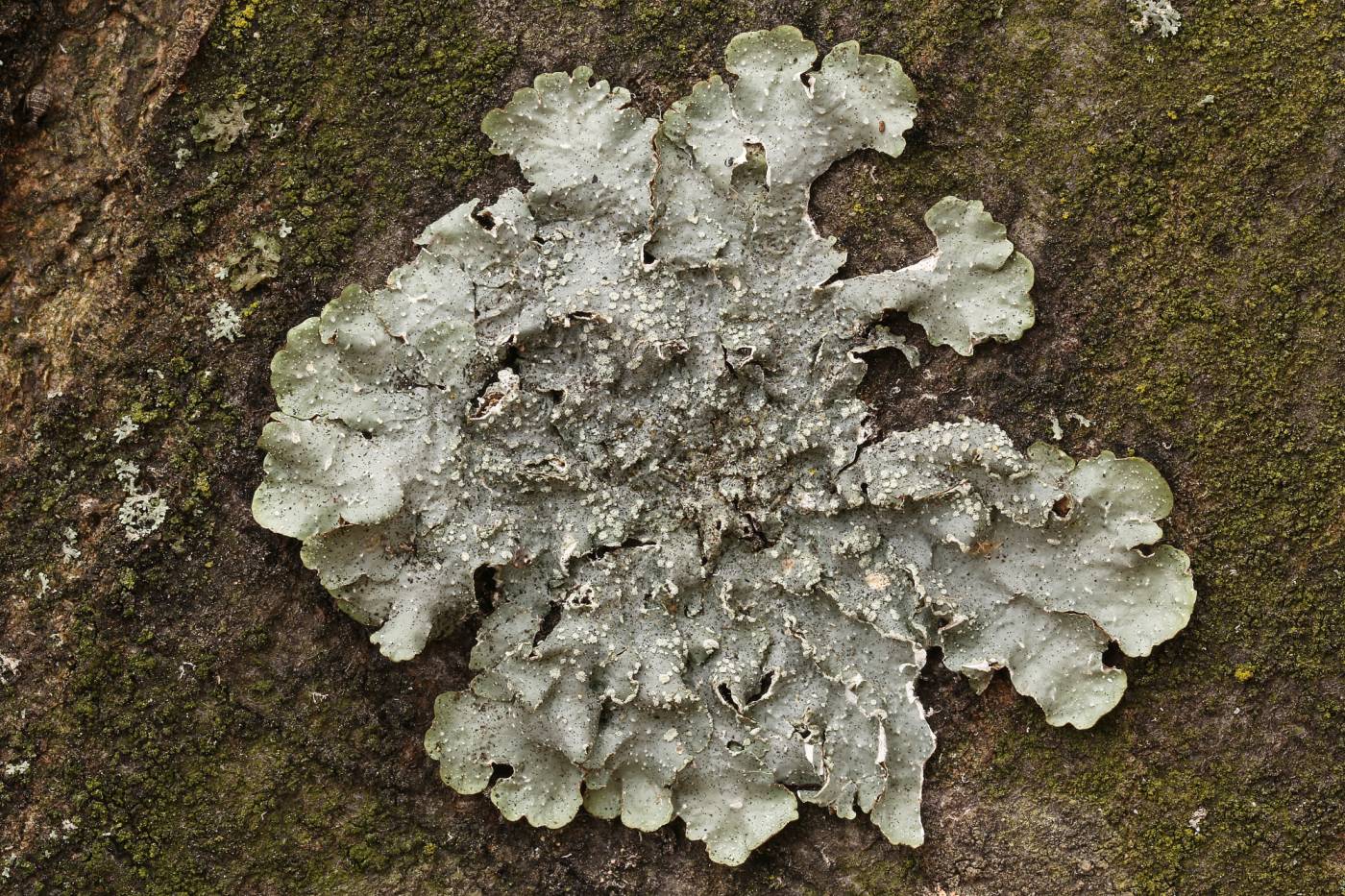
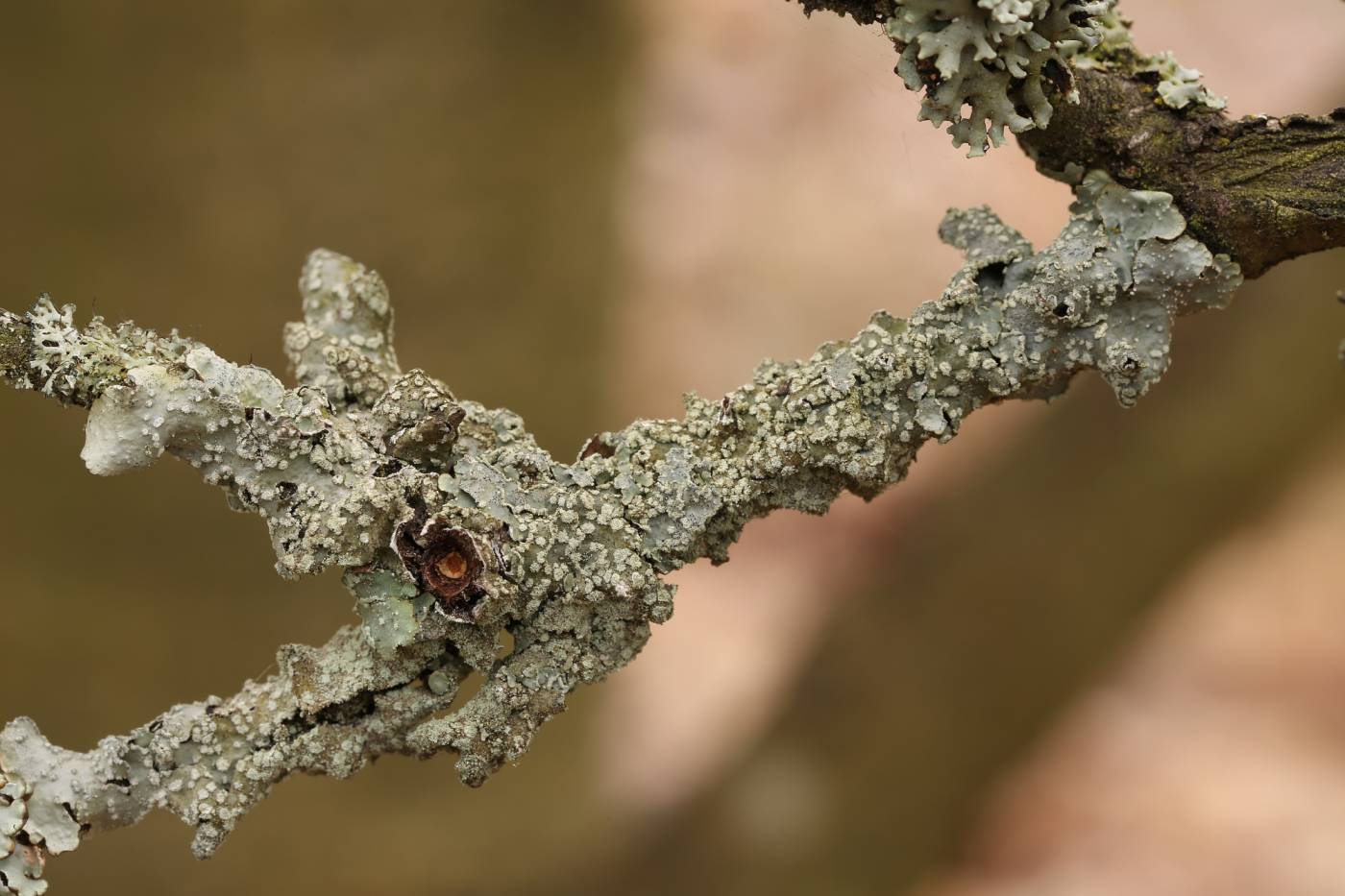
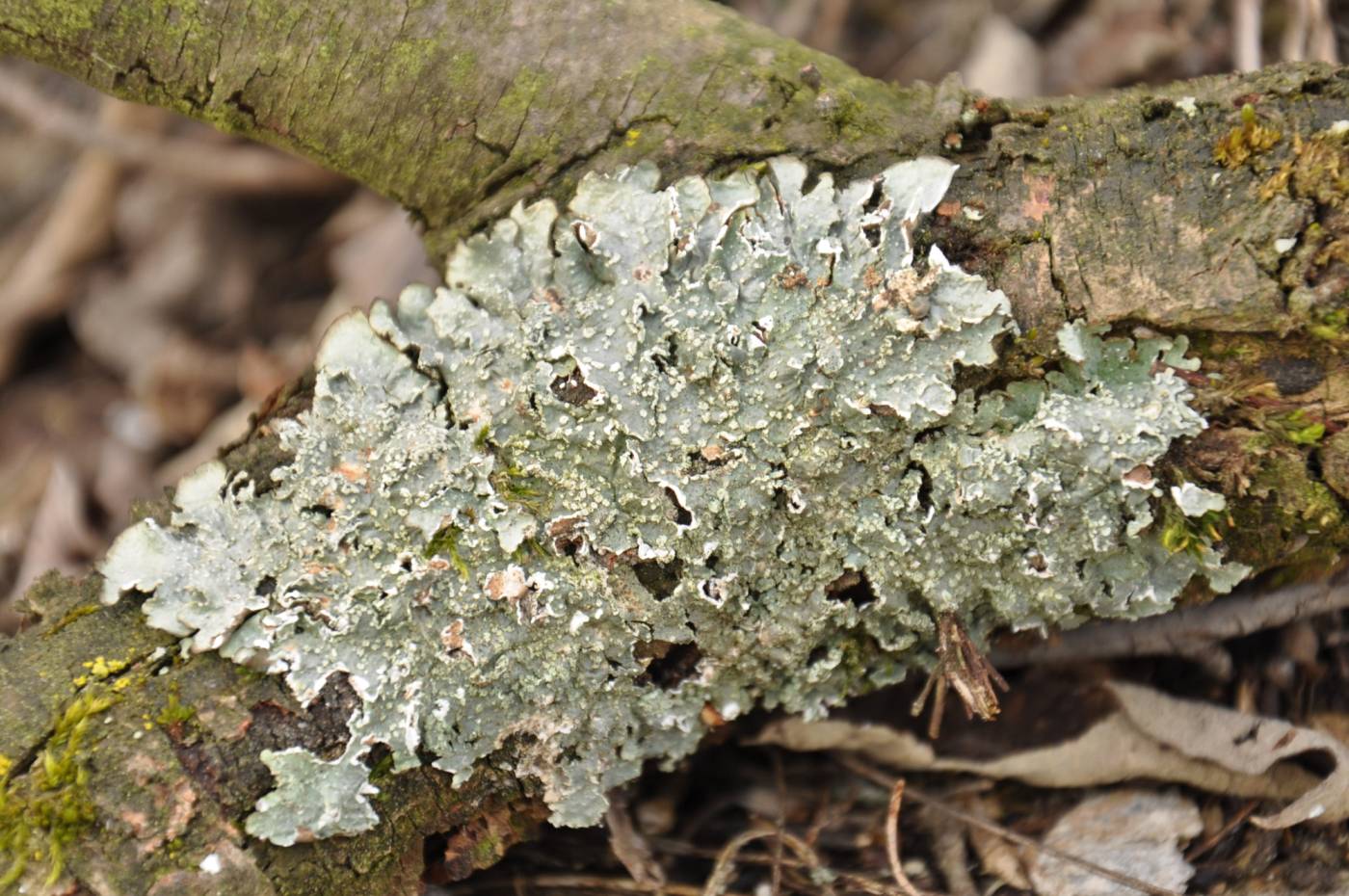
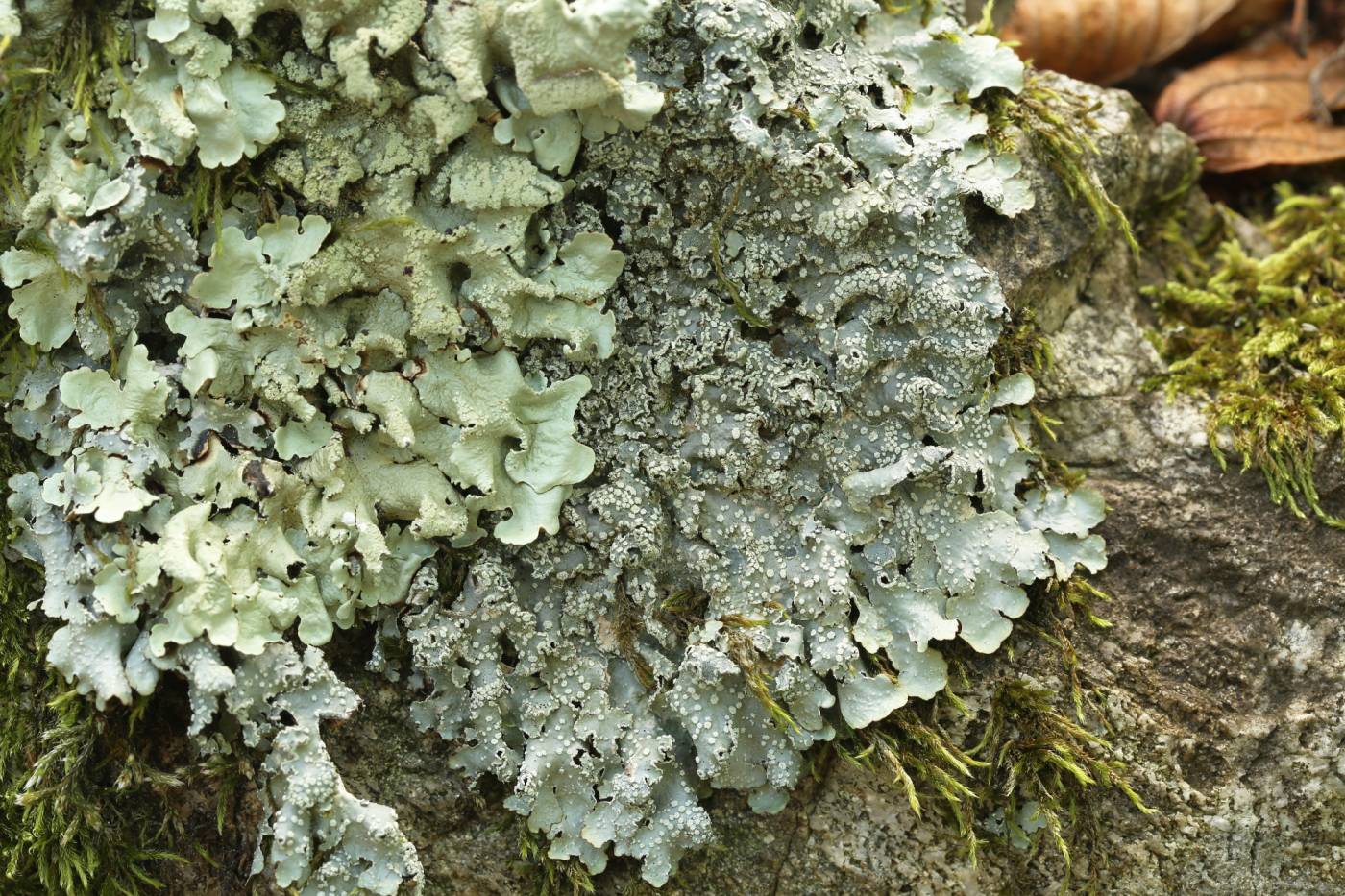
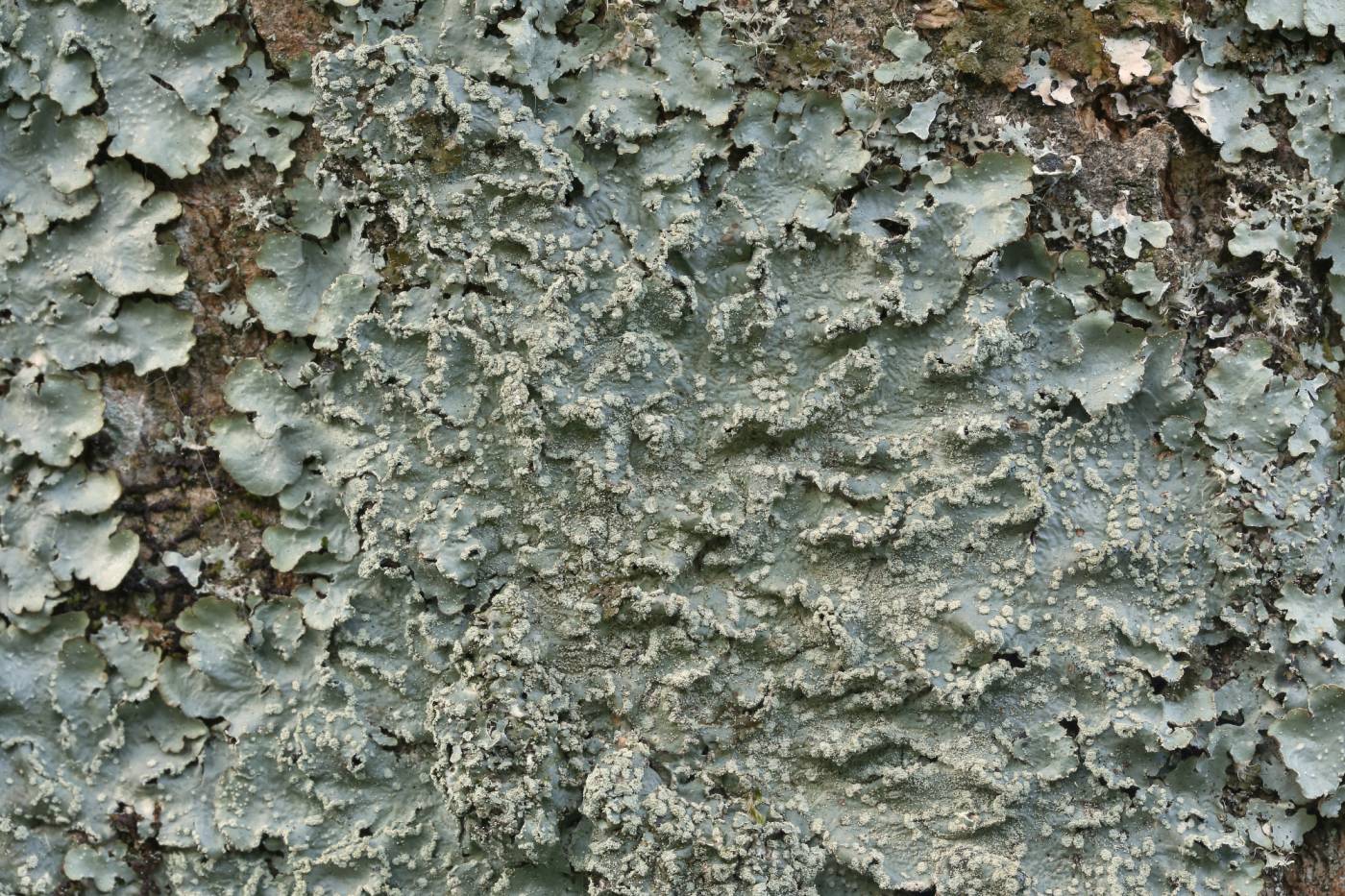
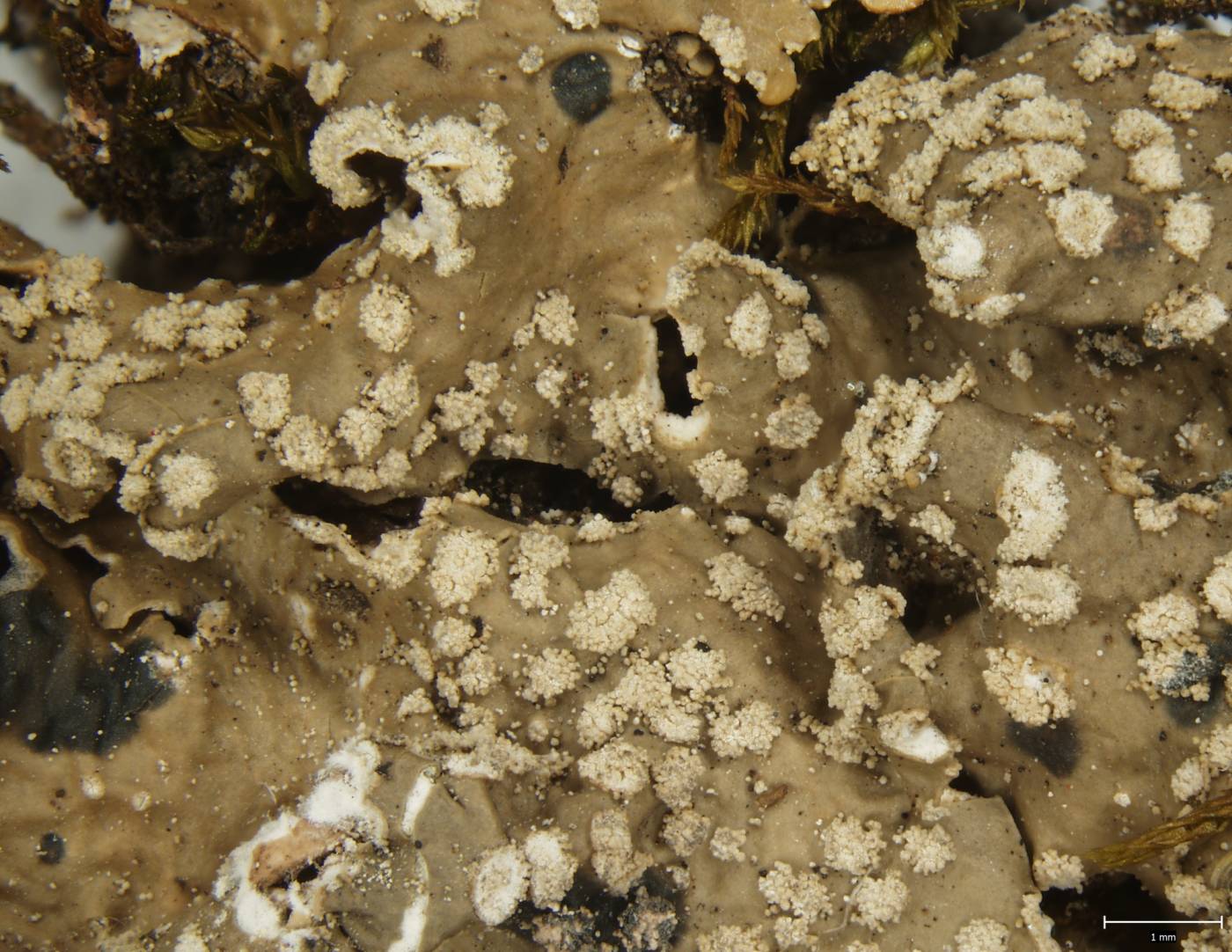
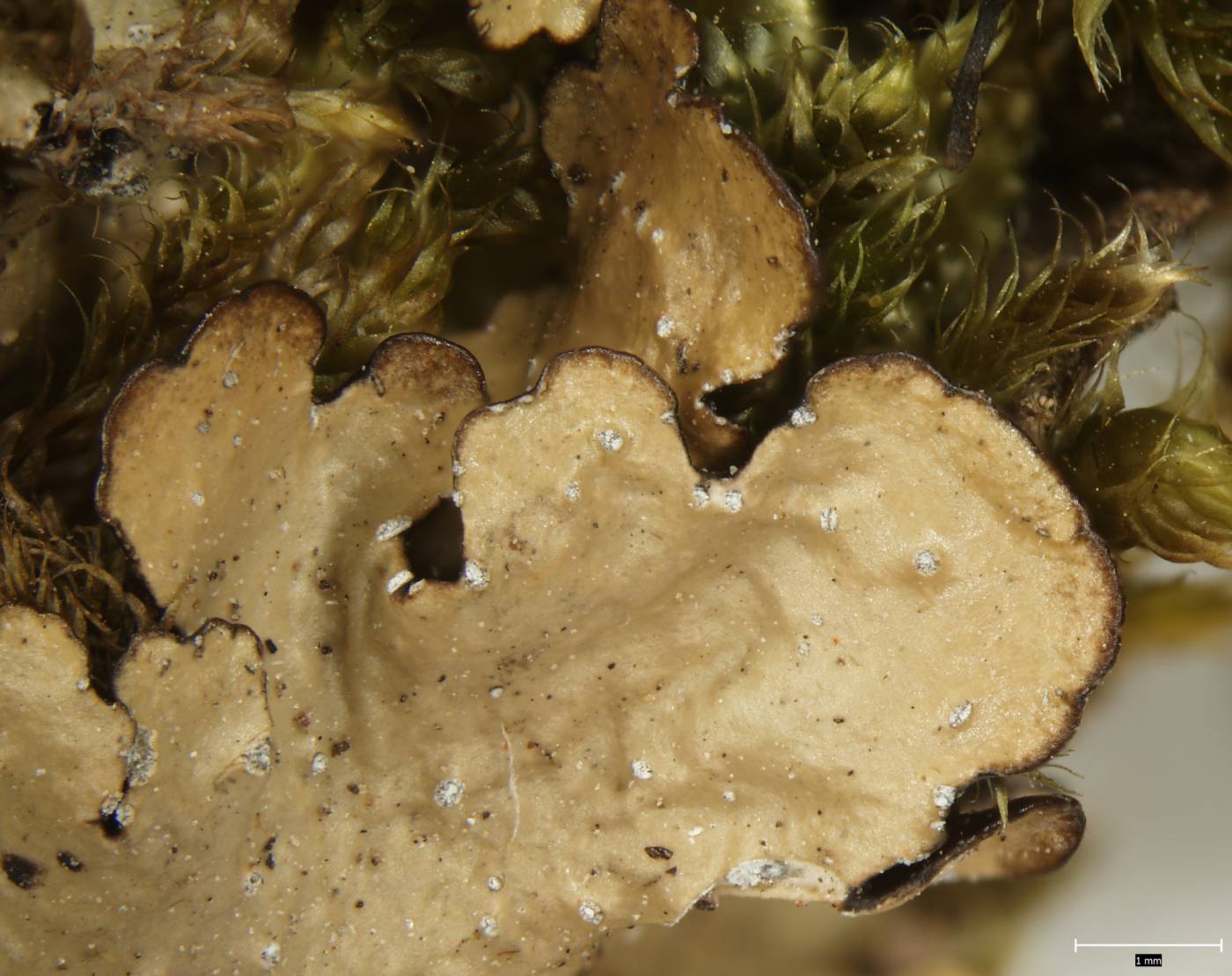
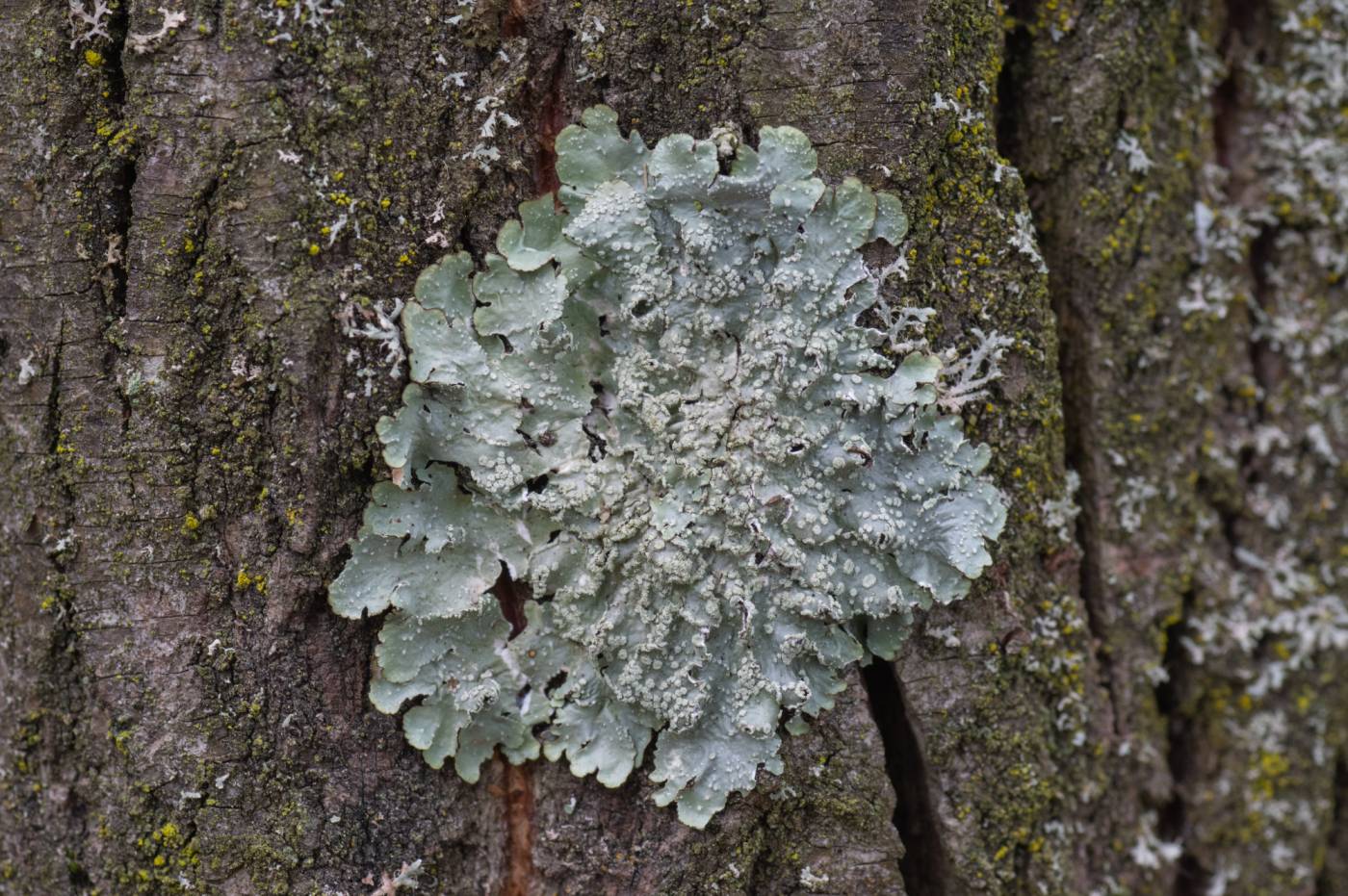
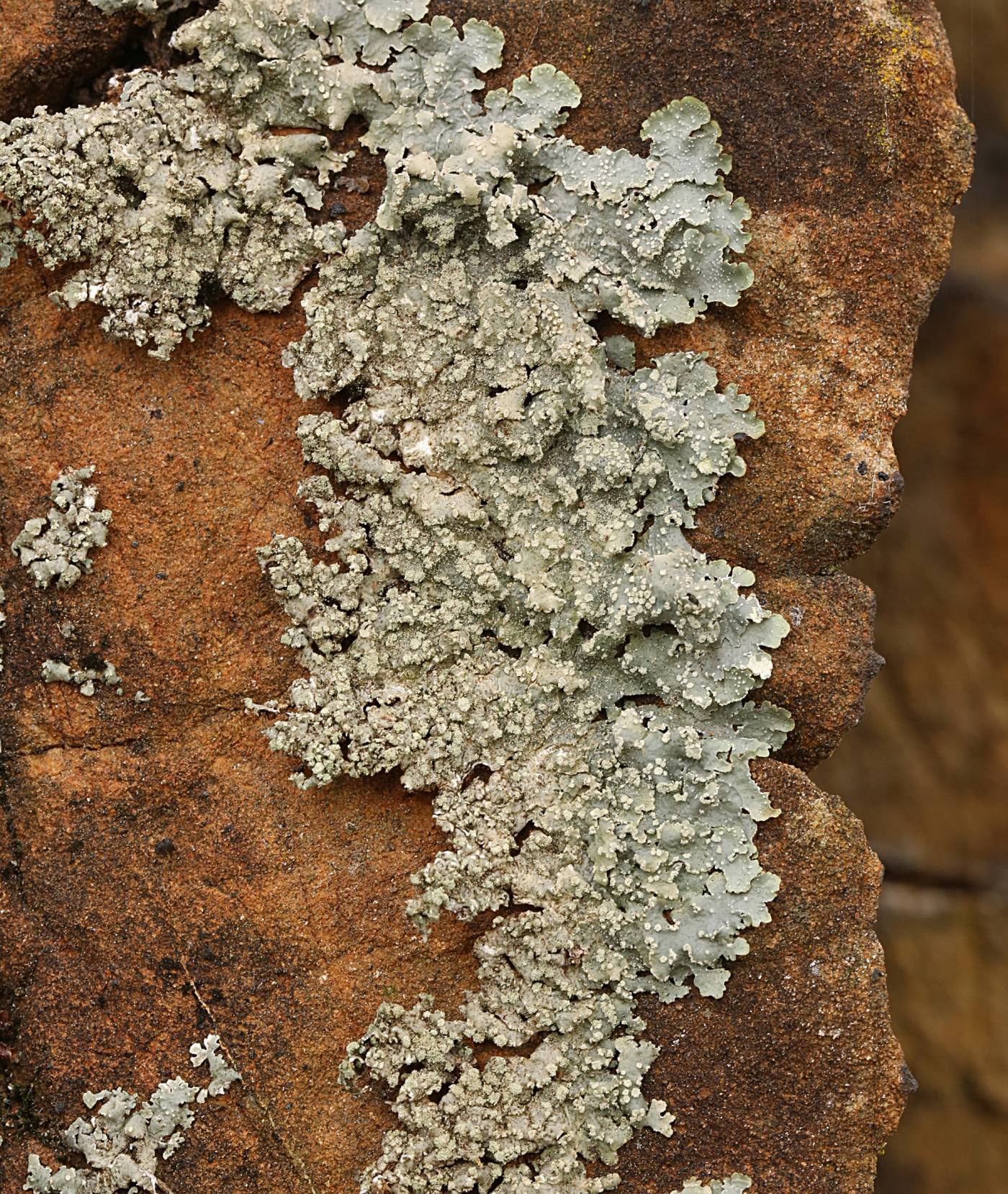
A lichen characterized by closely appressed lobes with epruinose brown margins and primarily punctiform soralia on the surface of the lobes. Its ecological requirements are very similar to those of P. jeckeri, and the two species are often found together. It predominantly grows on acidic to subneutral bark of deciduous trees and shrubs in well-lit habitats, both in open landscapes and forests, from lowlands to foothills. Its distribution center lies at lower elevations, up to 500 m a.s.l. It occurs most frequently on oaks, but a significant number of records also come from Crataegus, Fraxinus, and Larix. Remarkable are its saxicolous occurrences, mainly in the vicinity of Veverská Bítýška (on conglomerate) and Znojmo (on gneiss) in southern Moravia, where the species has been collected repeatedly. However, it usually grows there on moss-covered rock surfaces. Its overall distribution includes temperate and tropical regions of Eurasia, Africa, and Australasia. In the Czech Republic, it occurs scattered and appears to be spreading in recent years.
A very similar lichen is P. borreri, which differs in having a dark lower thallus surface and containing gyrophoric acid (instead of lecanoric acid). Attention should also be paid to confusion with the common P. jeckeri (pruinose lobe margins, marginal soralia), Flavopunctelia flaventior (yellowish thallus due to usnic acid), as well as with species not yet known from the Czech Republic, such as P. perreticulata (foveolate thallus, longer conidia), P. reddenda (isidiomorphs, C– medulla), and P. stictica (a saxicolous species with brownish thallus).
Literature: Lajblová M. & Malíček J. (2024): Terčovky rodu Punctelia v České republice [The genus Punctelia in the Czech Republic]. – Bryonora 73: 1–12.
taxonomic classification:Ascomycota → Lecanoromycetes → Lecanorales → Parmeliaceae → Punctelia
Red List (Liška & Palice 2010):VU – vulnerable
Occurrence in the Czech Republic
All records: 199, confirmed 137. One click on a selected square displays particular record(s), including their source(s).