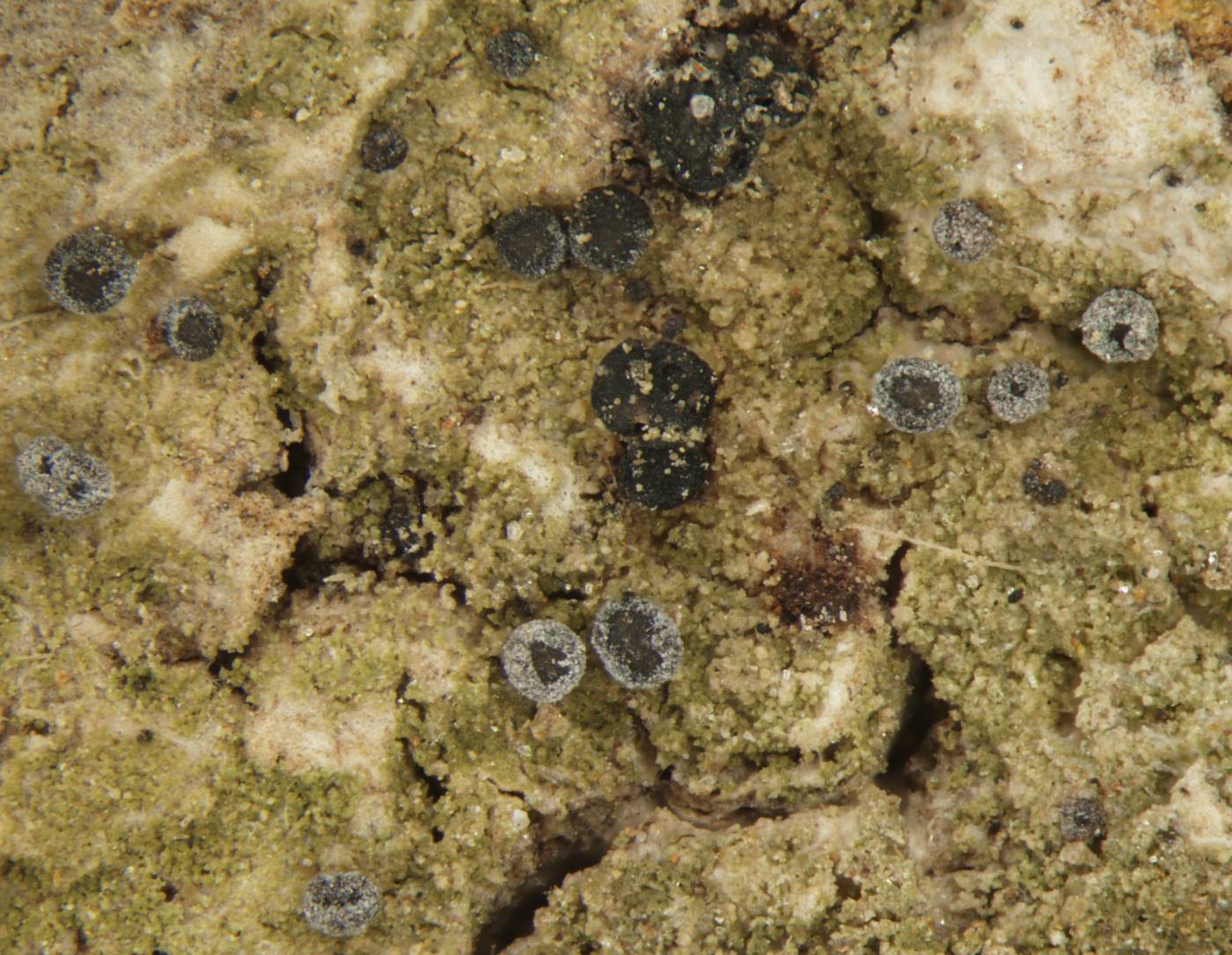
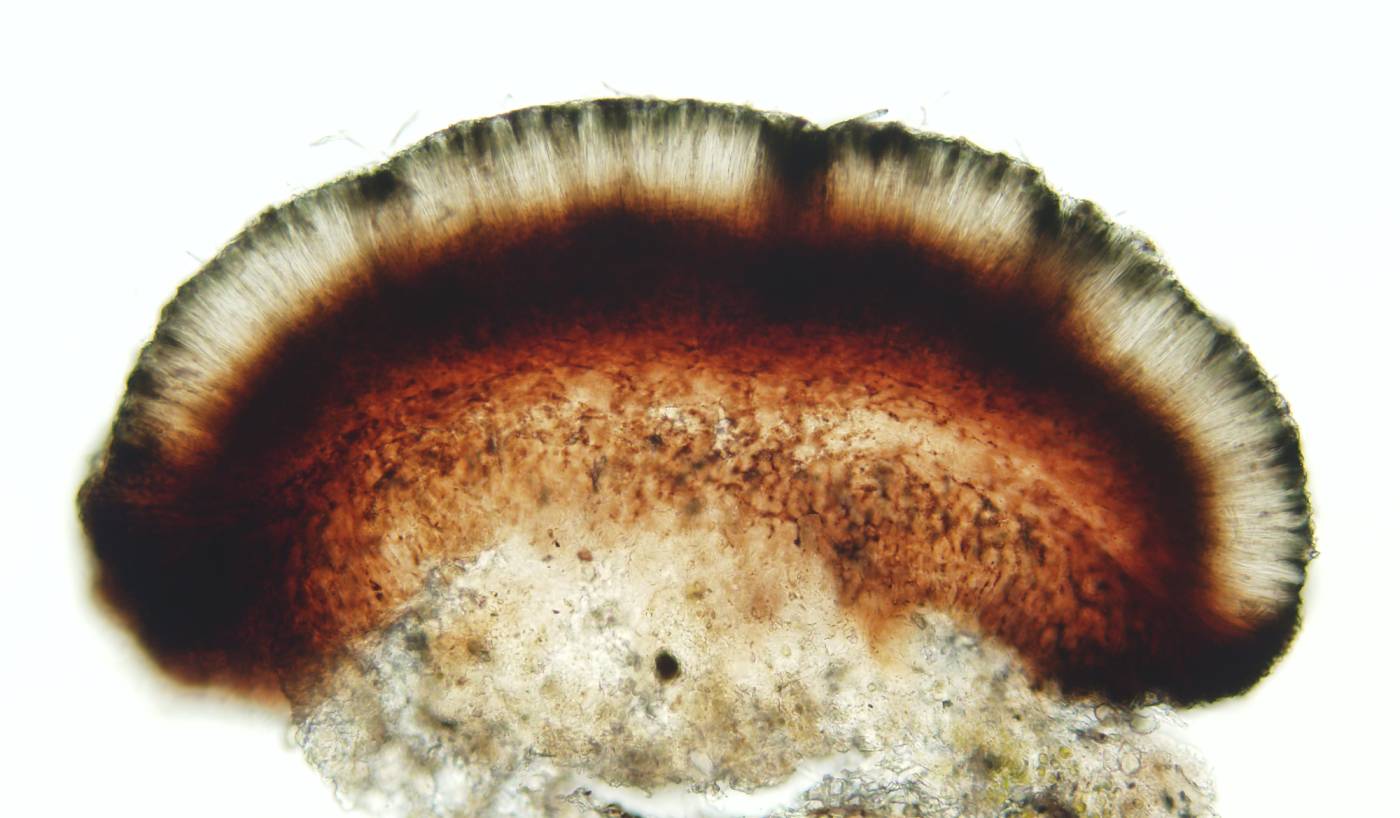
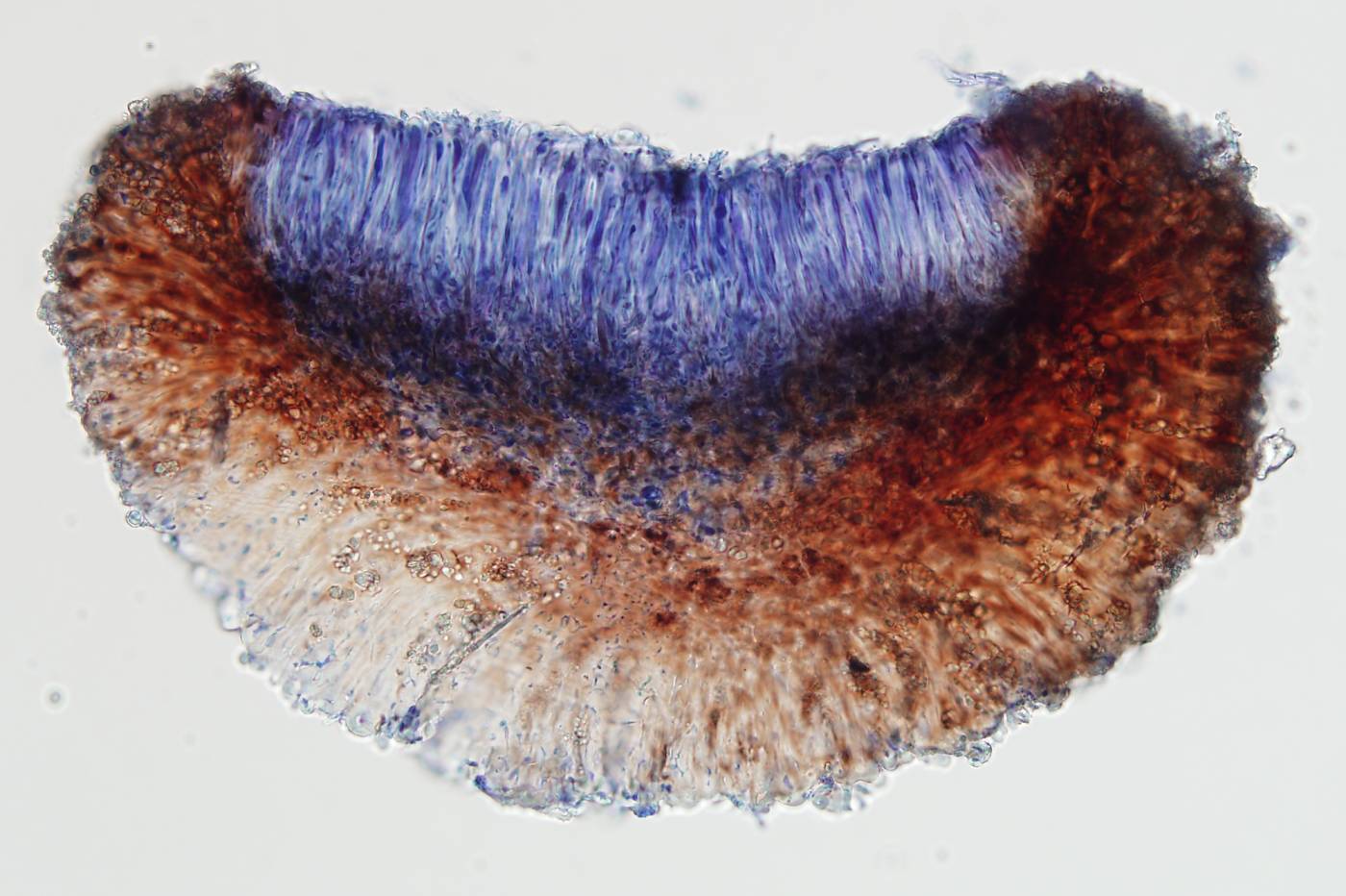
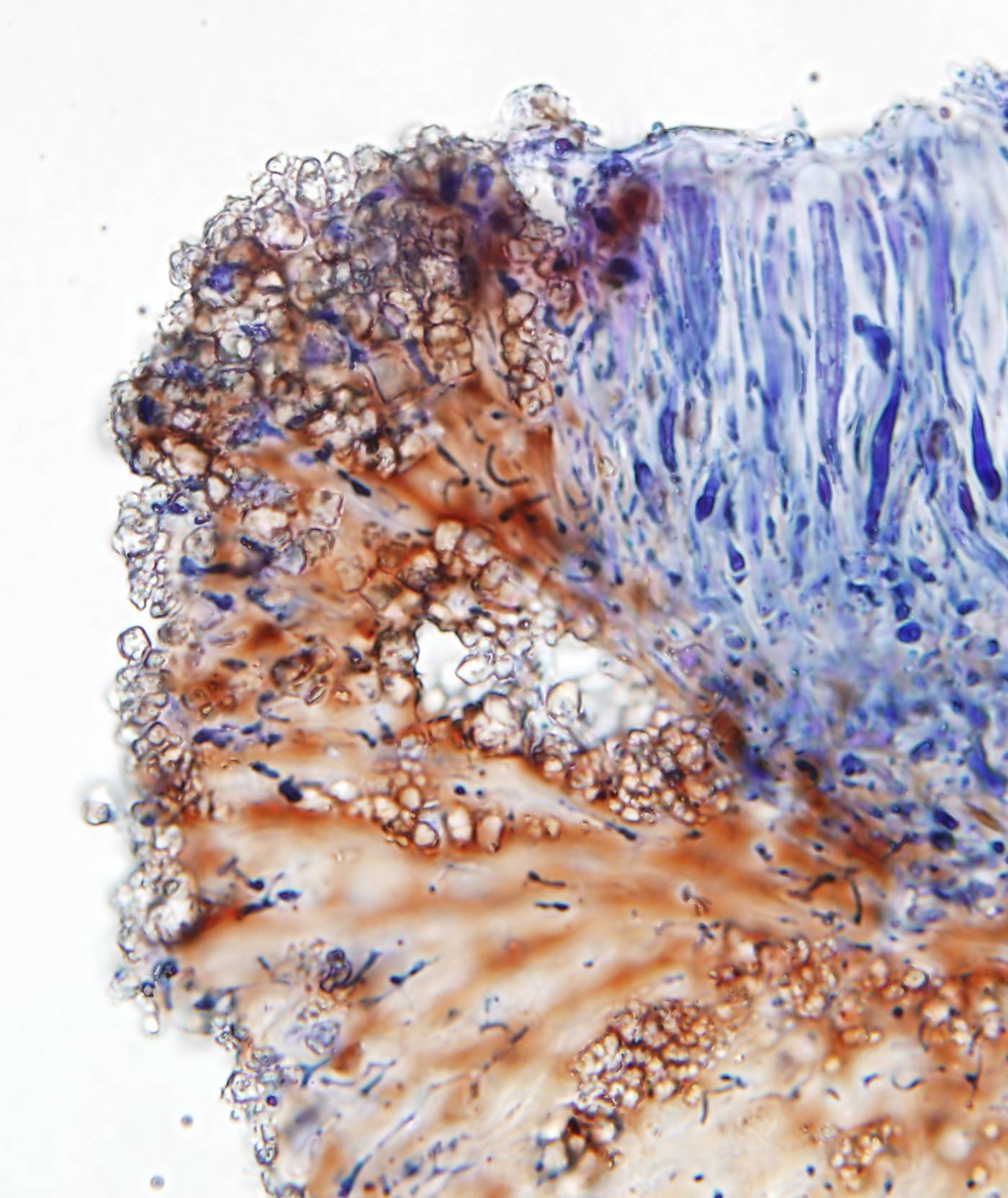
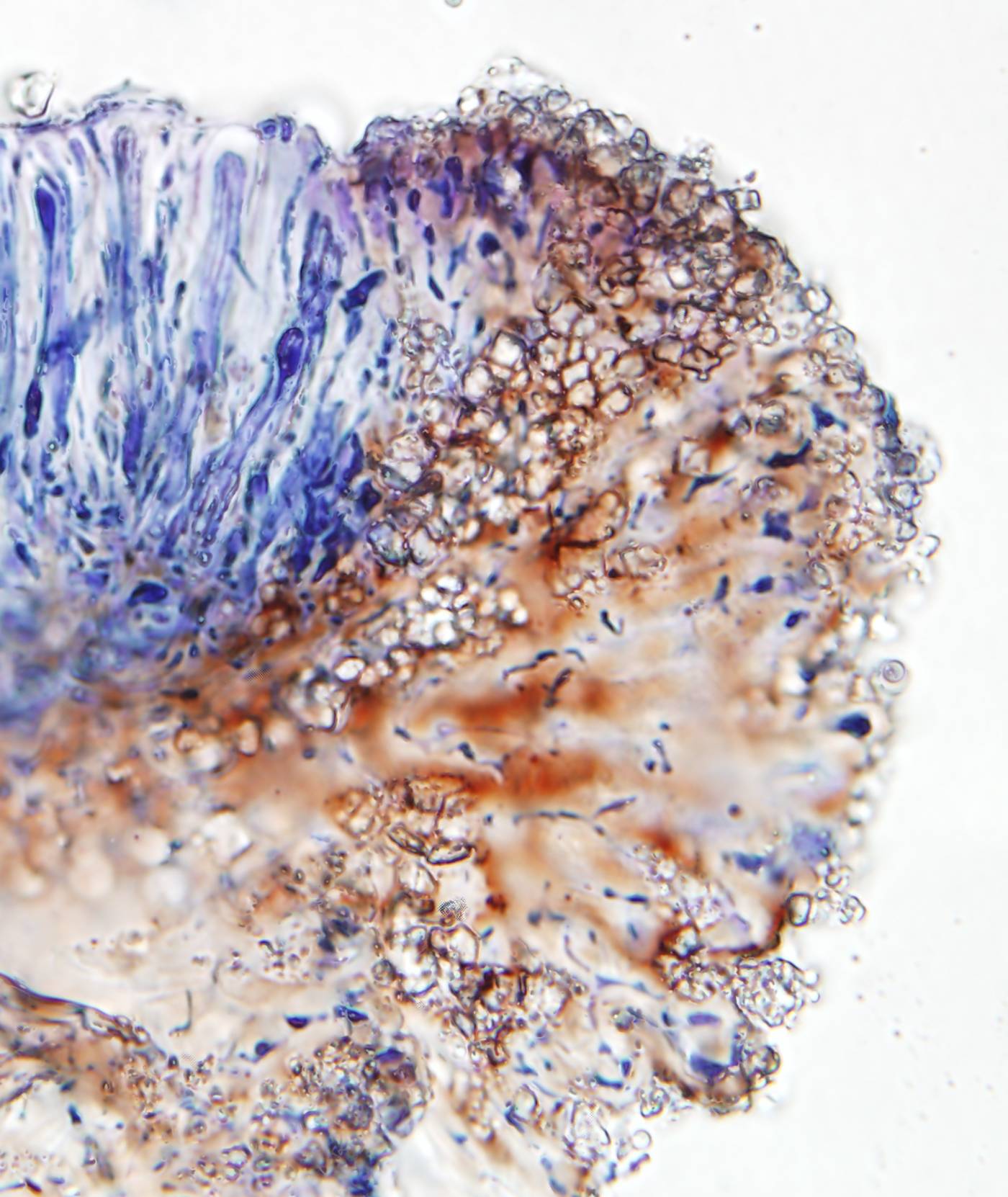
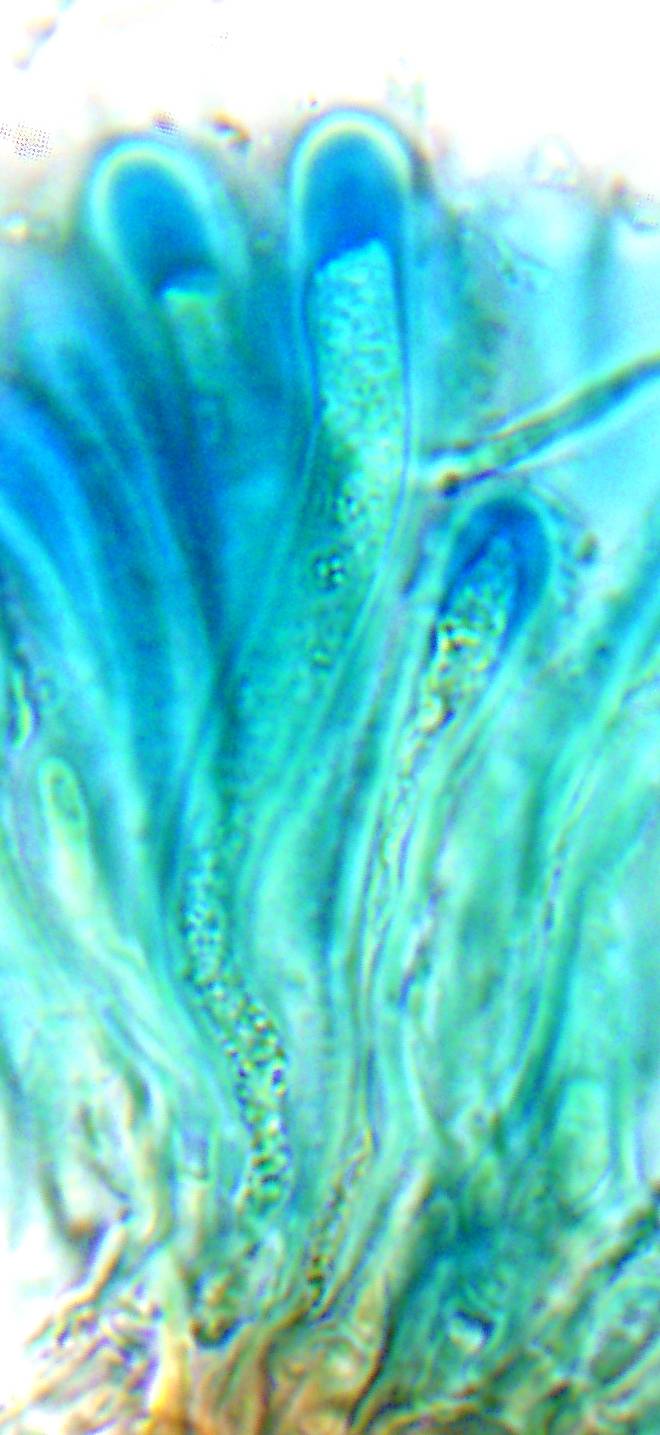
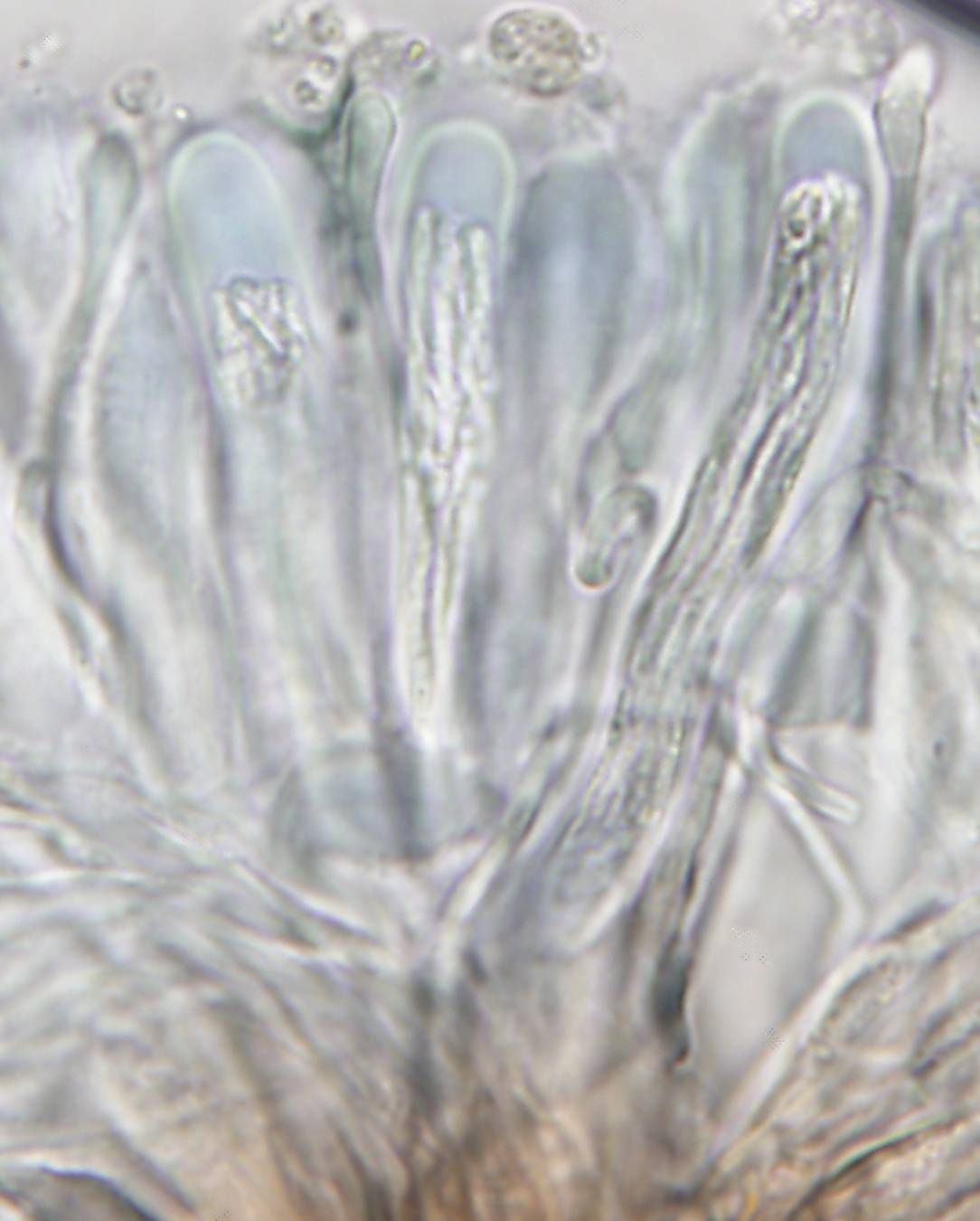
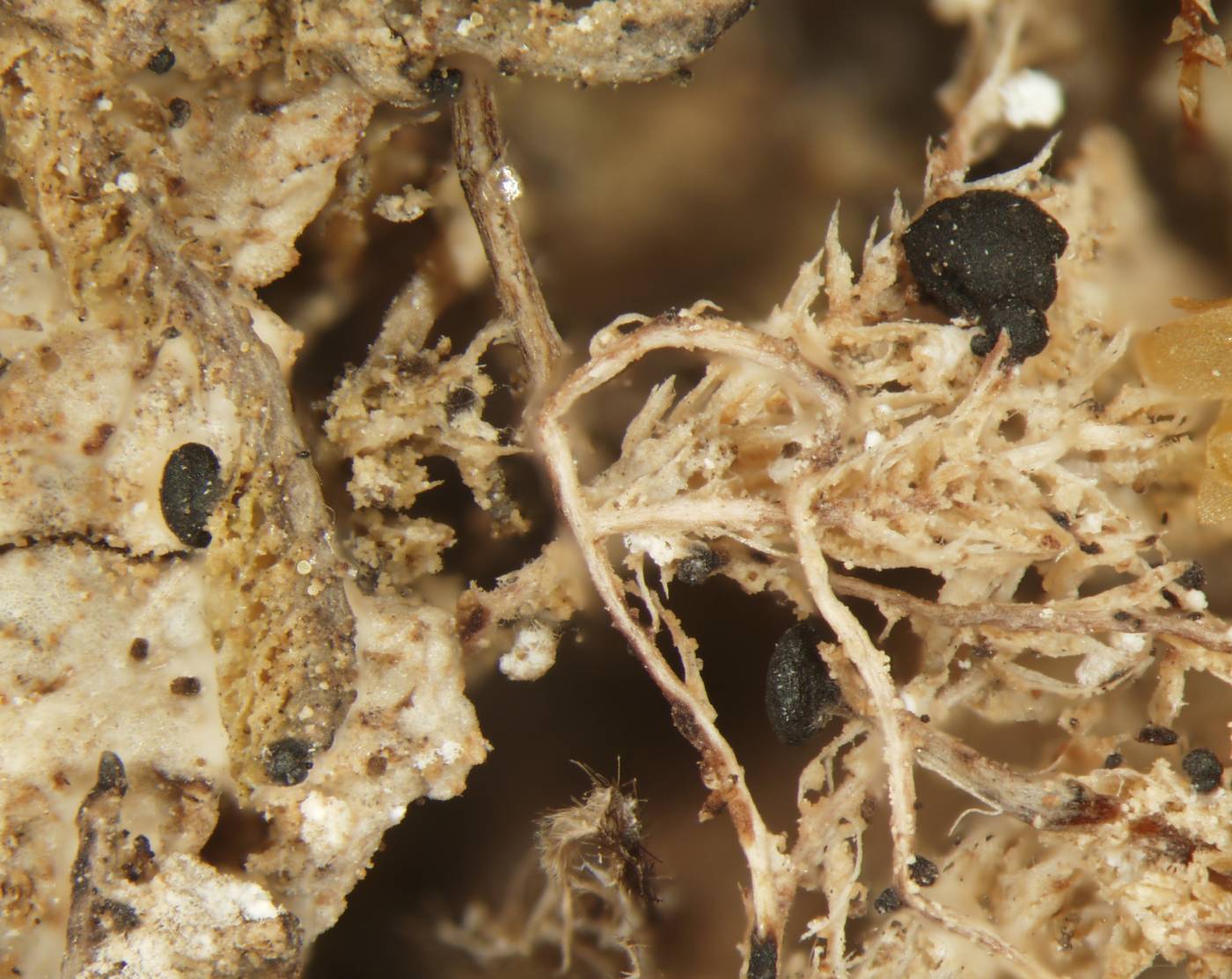
A diagnostic character of this recently described lichen is the almost stipitate young apothecia with a white pruinose margin. The apothecia contain distinctive pigments: a green pigment in the epihymenium (K–, HNO₃+ purple-violet; sometimes weak or absent), a brown-red pigment in the hypothecium (K+ deep purple, HNO₃+ red), and usually an additional olive-green pigment in the upper hypothecium and outer exciple (K+ dark brown, HNO₃+ purple).
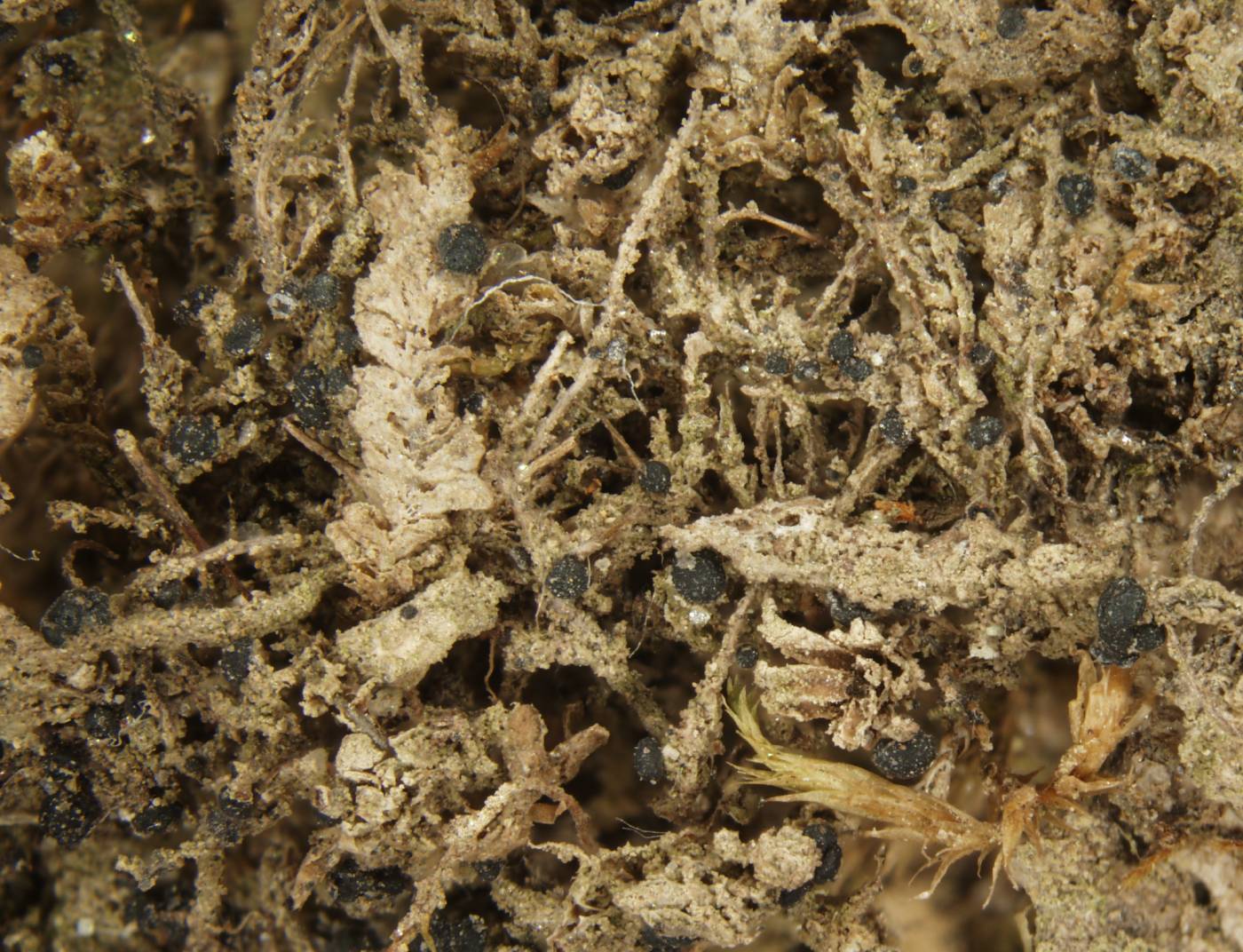
Toniniopsis pruinosa grows on shaded, rain-sheltered parts of trunks on slightly acidic bark, where in the humid microclimate of old-growth forests it typically overgrows epiphytic bryophytes. It has most often been recorded at the bases of trunks or on exposed roots of beech. Most specimens come from the southern and eastern Carpathians (Romania, Ukraine), and one from the Czech Republic, specifically from an old-growth mixed forest (940 m a.s.l.) at Spáleniště in the Šumava Mountains. According to environmental DNA data, the species has been detected only in the Žofín old-growth forest.
Literature: Vondrák J., Svoboda S., Malíček J., Šoun J., Košnar J., Svensson M., Timdal E., Machač J. & Palice Z. (2024): Combining environmental DNA data and taxonomic surveys provides an unprecedented understanding of lichen diversity and accelerates the discovery of new species. – Preslia 96: 351–417.
taxonomic classification:Ascomycota → Lecanoromycetes → Lecanorales → Ramalinaceae → Toniniopsis
Occurrence in the Czech Republic
All records: 1, confirmed 1. One click on a selected square displays particular record(s), including their source(s).