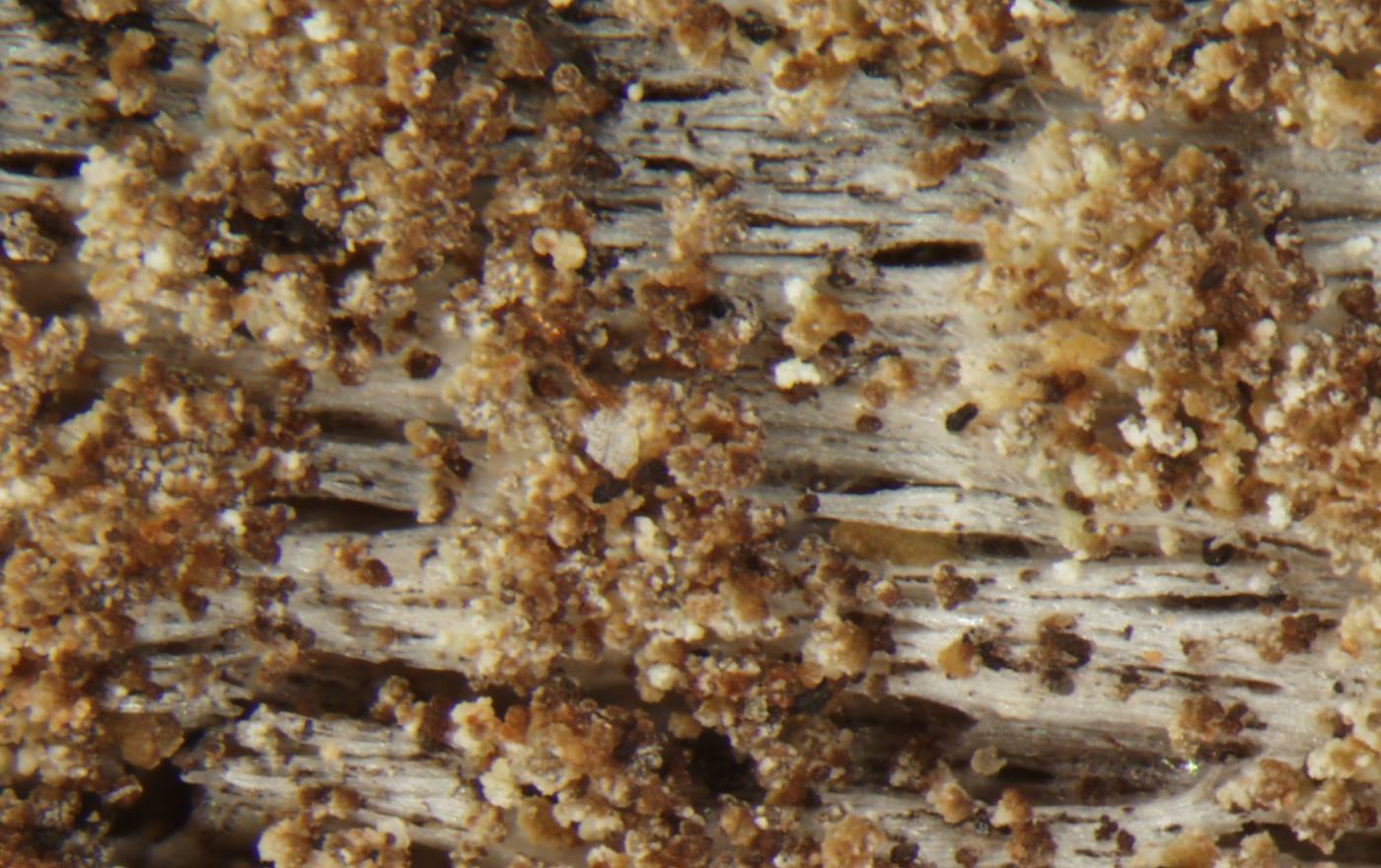
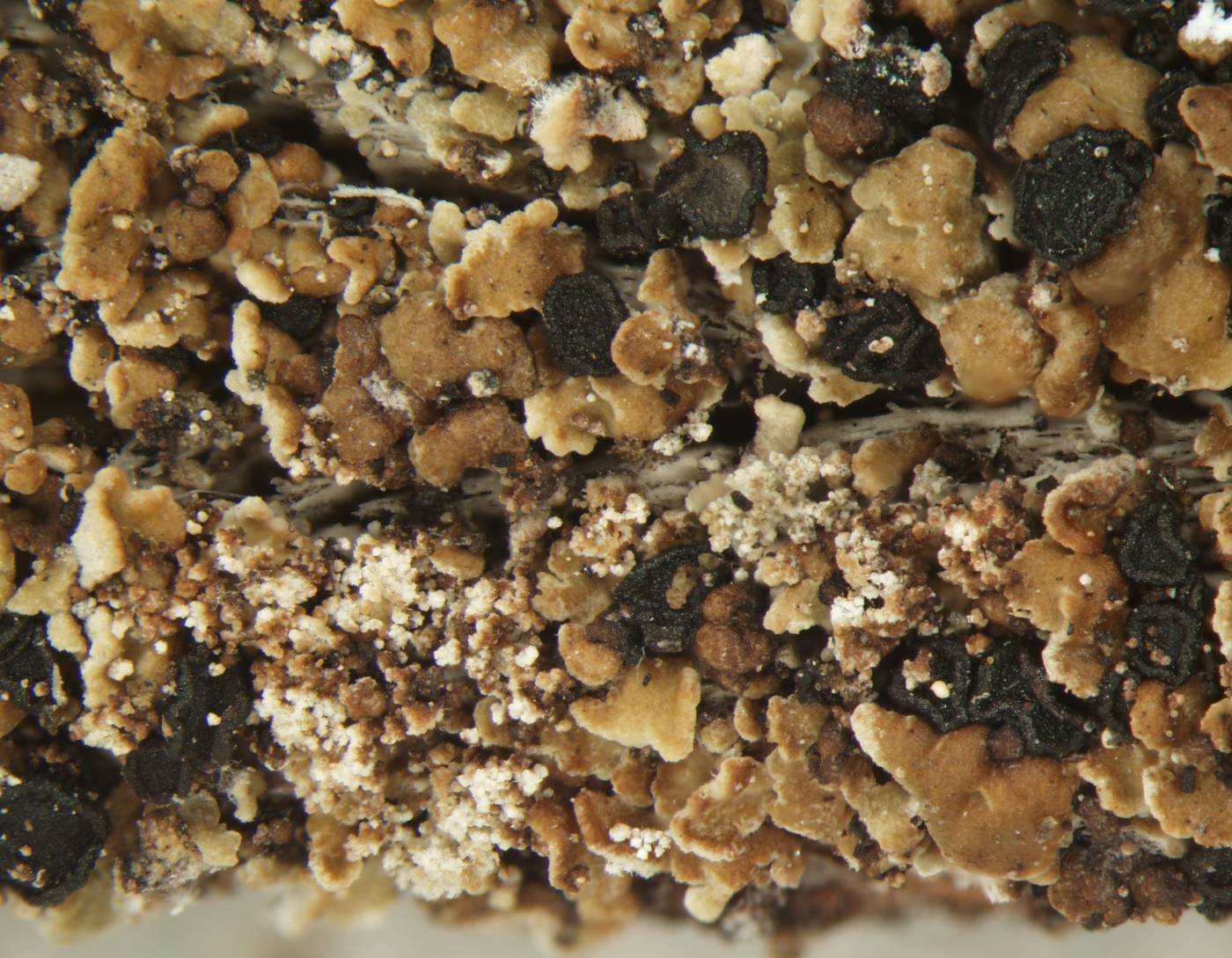
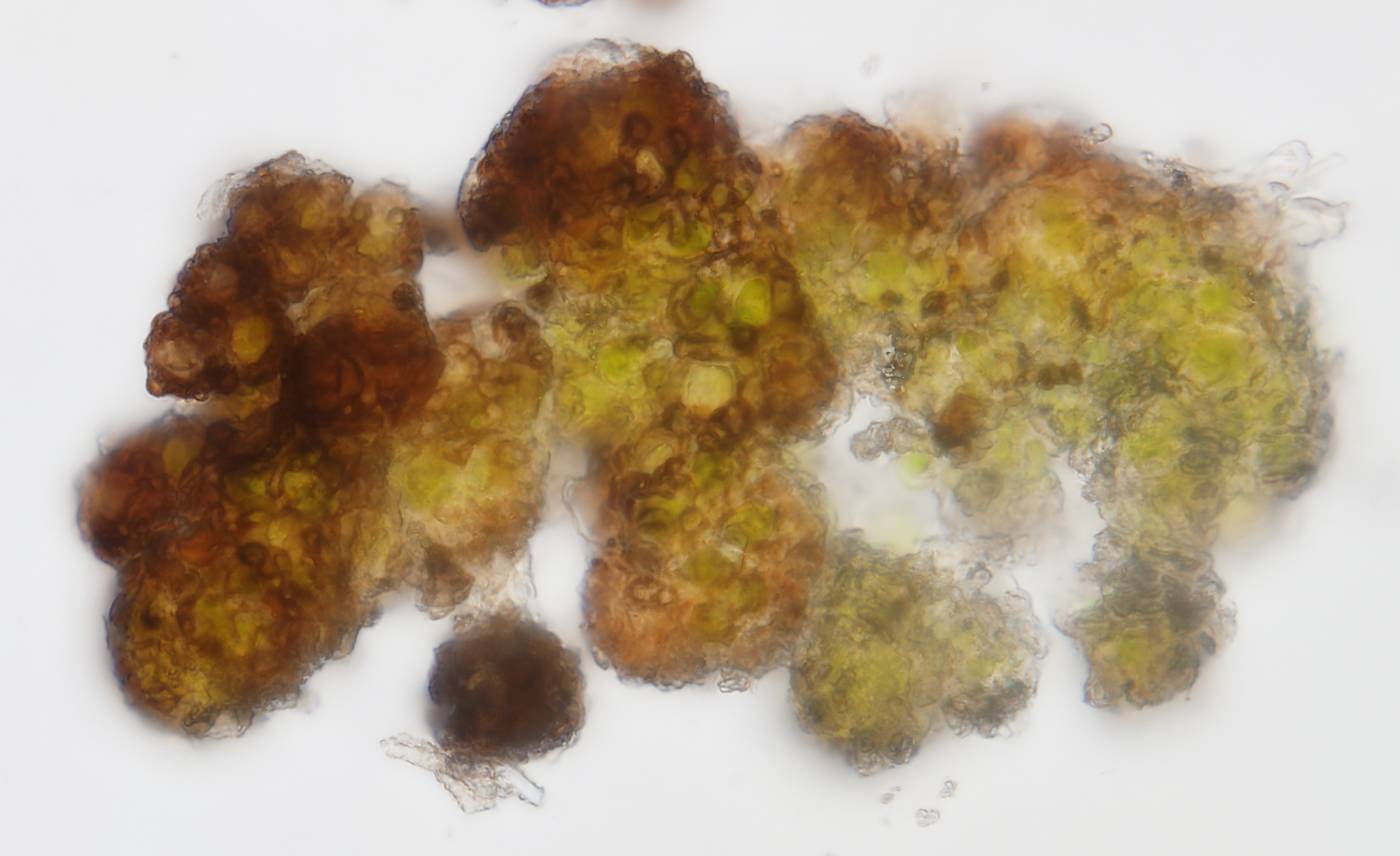
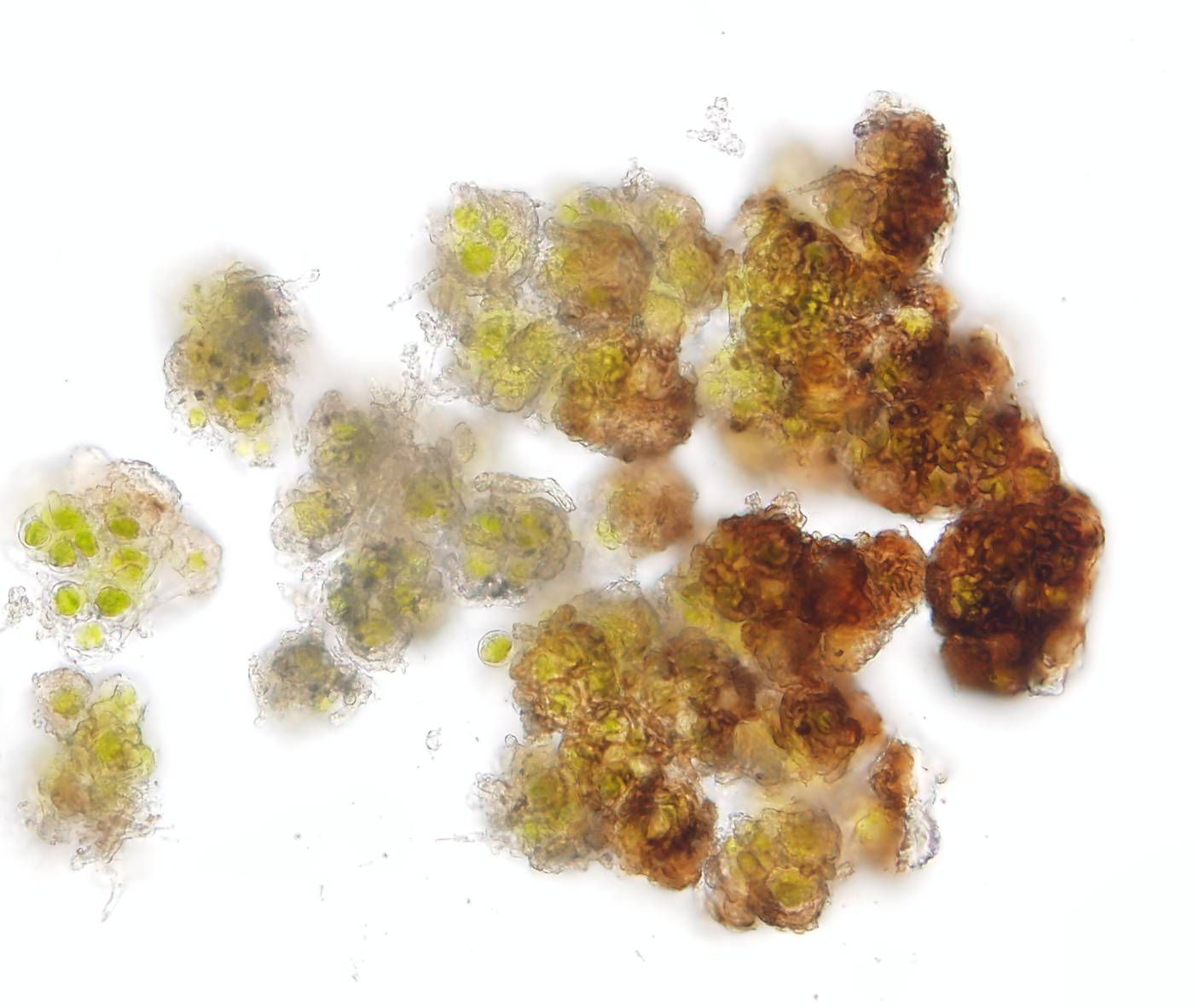
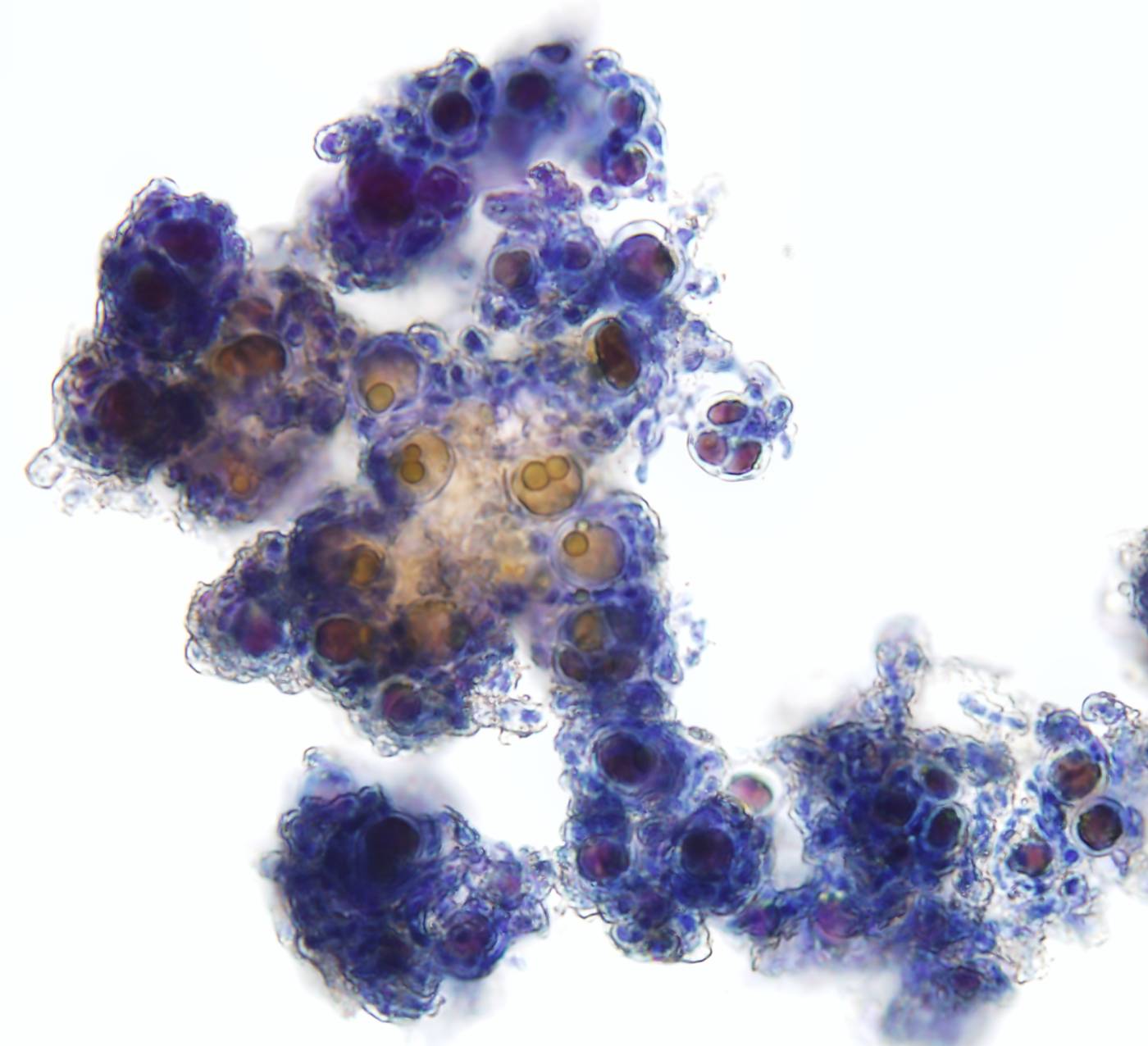
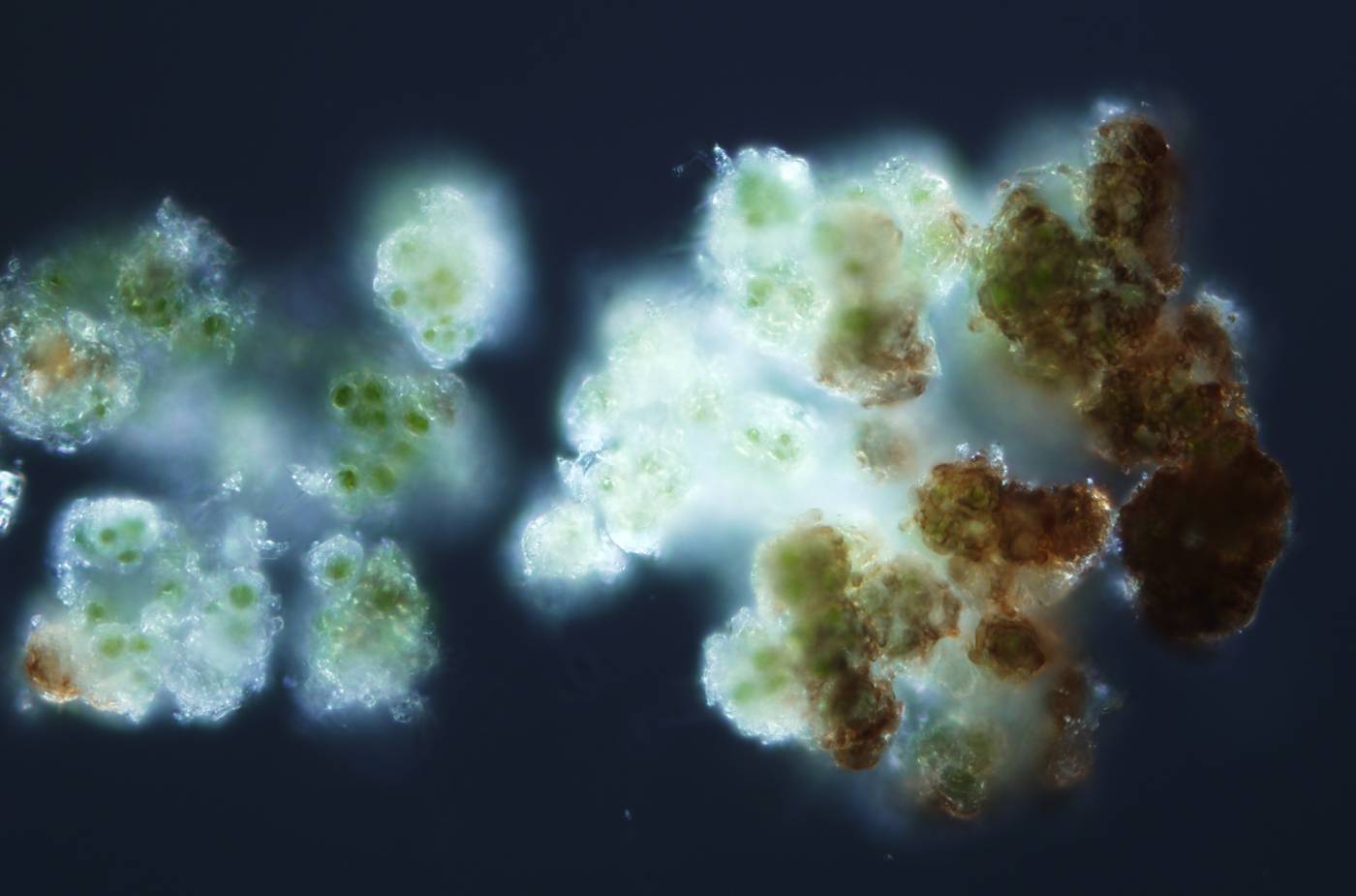
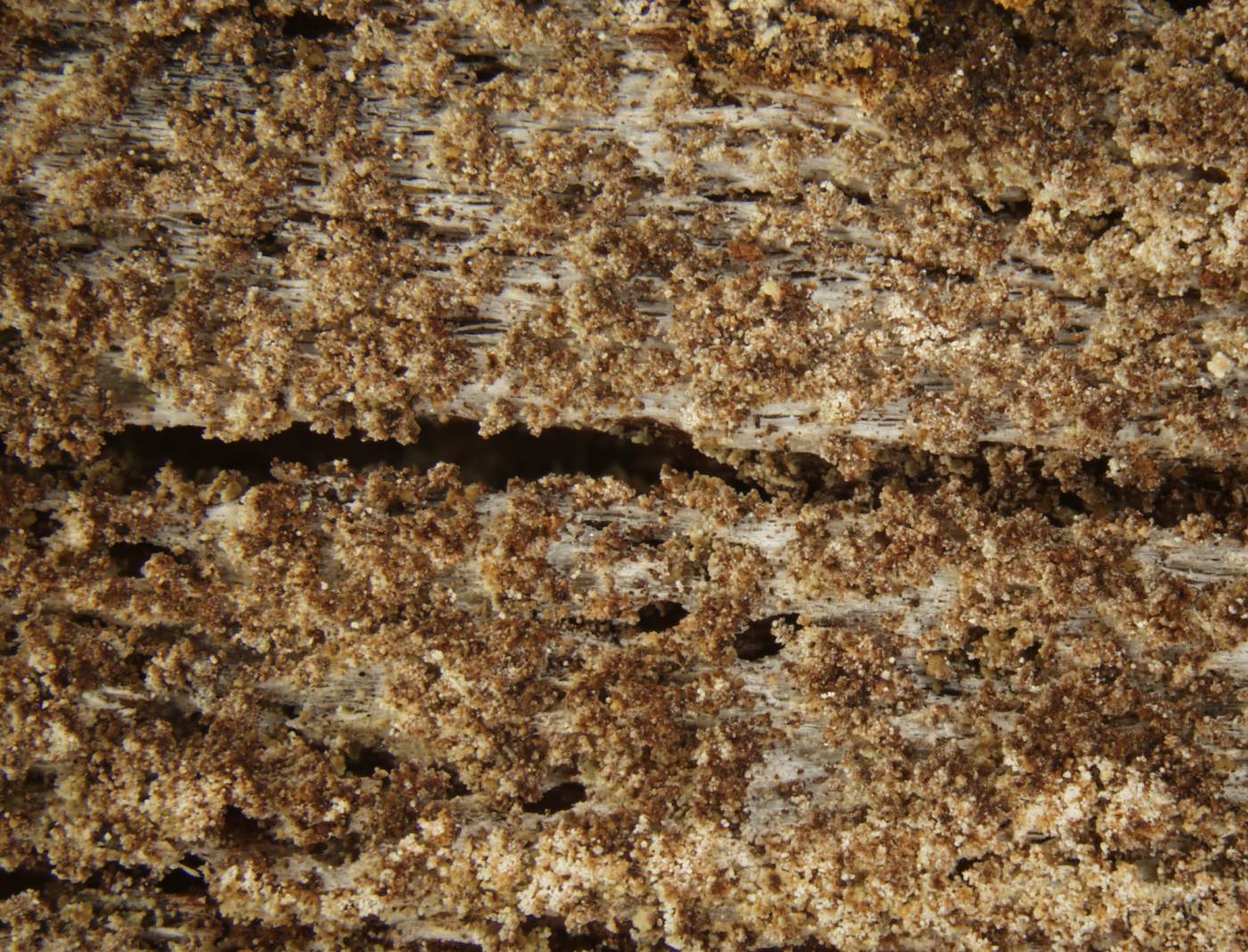
The thallus of this inconspicuous lichen consists of piles of pale grey to brown soredia up to 0.3 mm high, which originate from squamules at early stages. The soredia contain friesiic acid and an orange-red pigment (K+ brown, HNO₃+ brown-red).
Records of X. diffissa are so far known from fewer than ten localities in the Czech Republic and from one locality in Austria. It occurs in old-growth and old managed forests dominated mainly by pine (but also in fir–beech forests), either on steep, often rocky slopes, or on peat bogs. It grows on hard, slowly decaying wood in microhabitats sheltered from rain, often in communities with species such as Chaenotheca ferruginea, Pycnora sorophora, Hypocenomyce scalaris and Xylopsora friesii s. lat. It frequently forms “mechanical hybrids” with X. friesii, which may give the impression that X. diffissa represents only the soralia of X. friesii. Environmental DNA data suggest that it is a relatively frequent but overlooked species.
Literature: Vondrák J., Svoboda S., Malíček J., Šoun J., Košnar J., Svensson M., Timdal E., Machač J. & Palice Z. (2024): Combining environmental DNA data and taxonomic surveys provides an unprecedented understanding of lichen diversity and accelerates the discovery of new species. – Preslia 96: 351–417.
taxonomic classification:Ascomycota → Lecanoromycetes → Umbilicariales → Umbilicariaceae → Xylopsora
Occurrence in the Czech Republic
All records: 11, confirmed 11. One click on a selected square displays particular record(s), including their source(s).