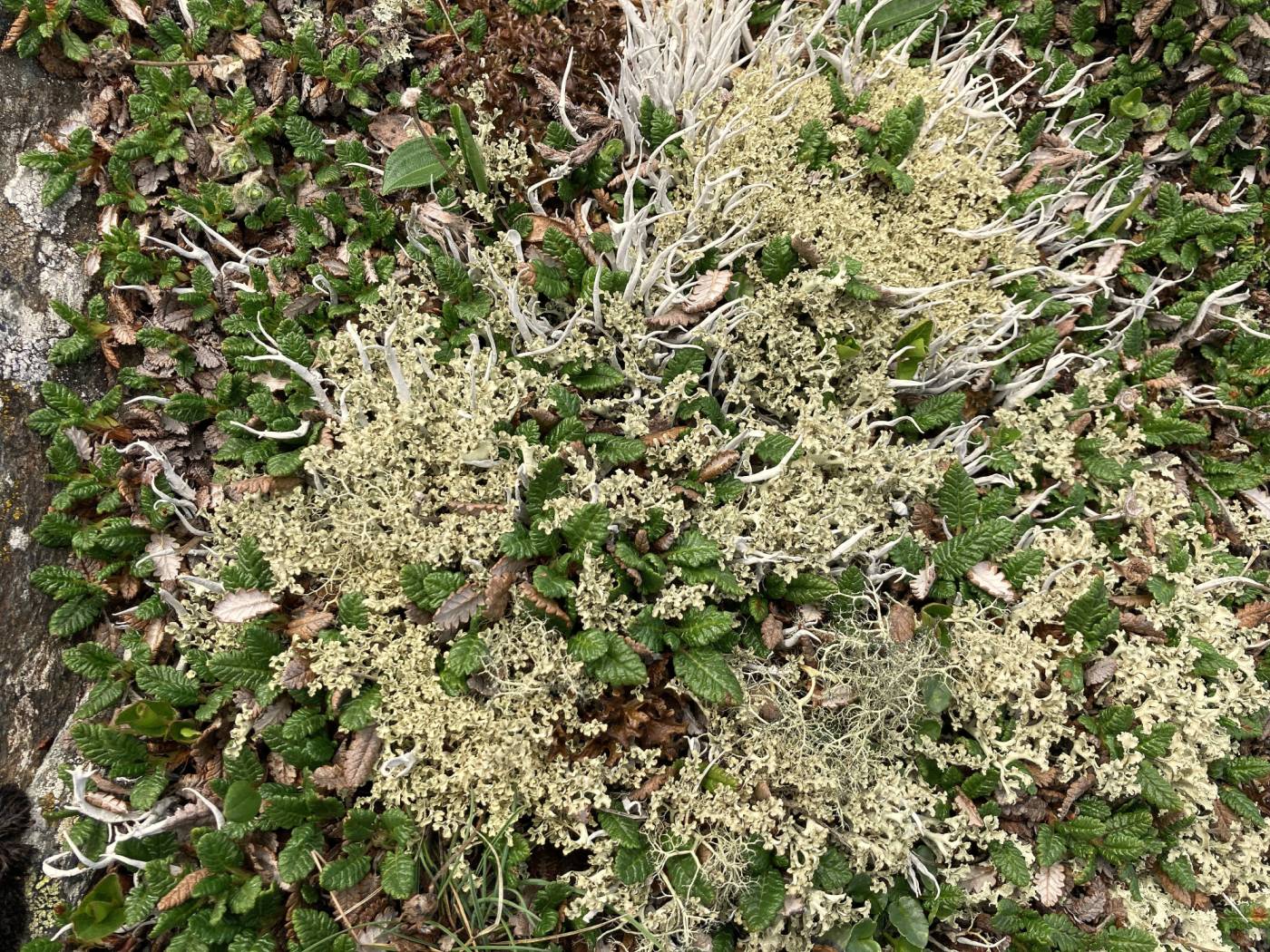
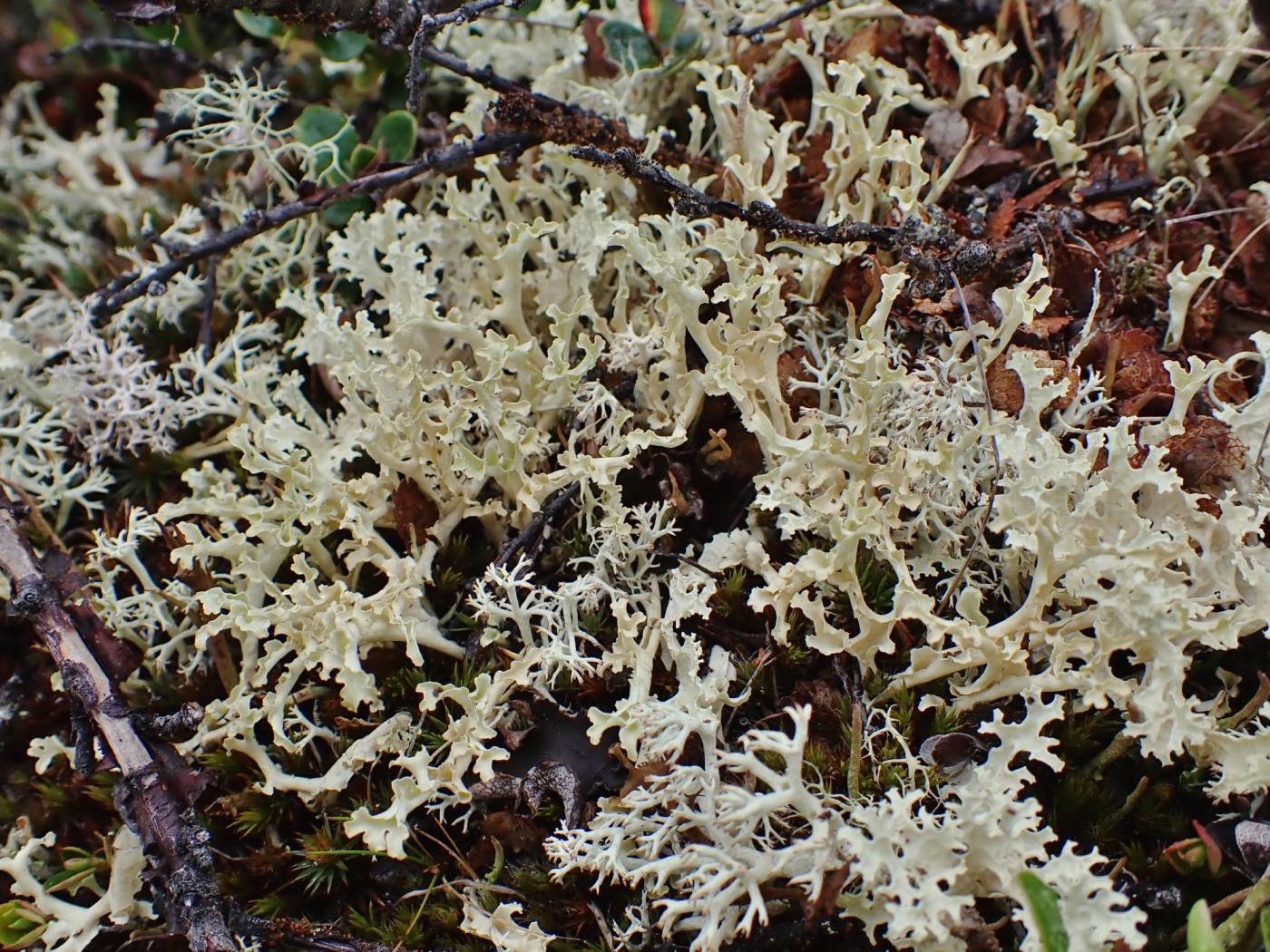
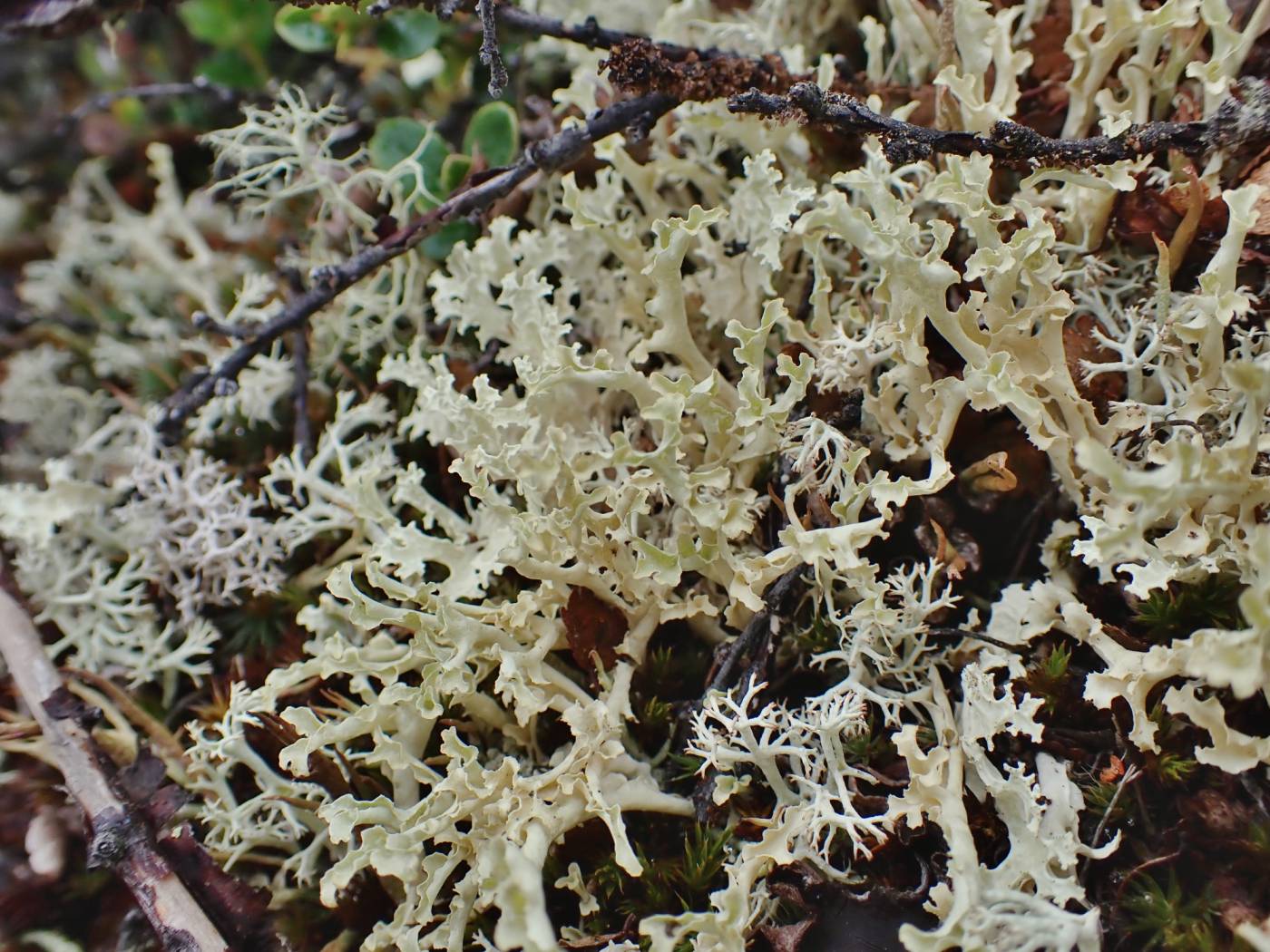
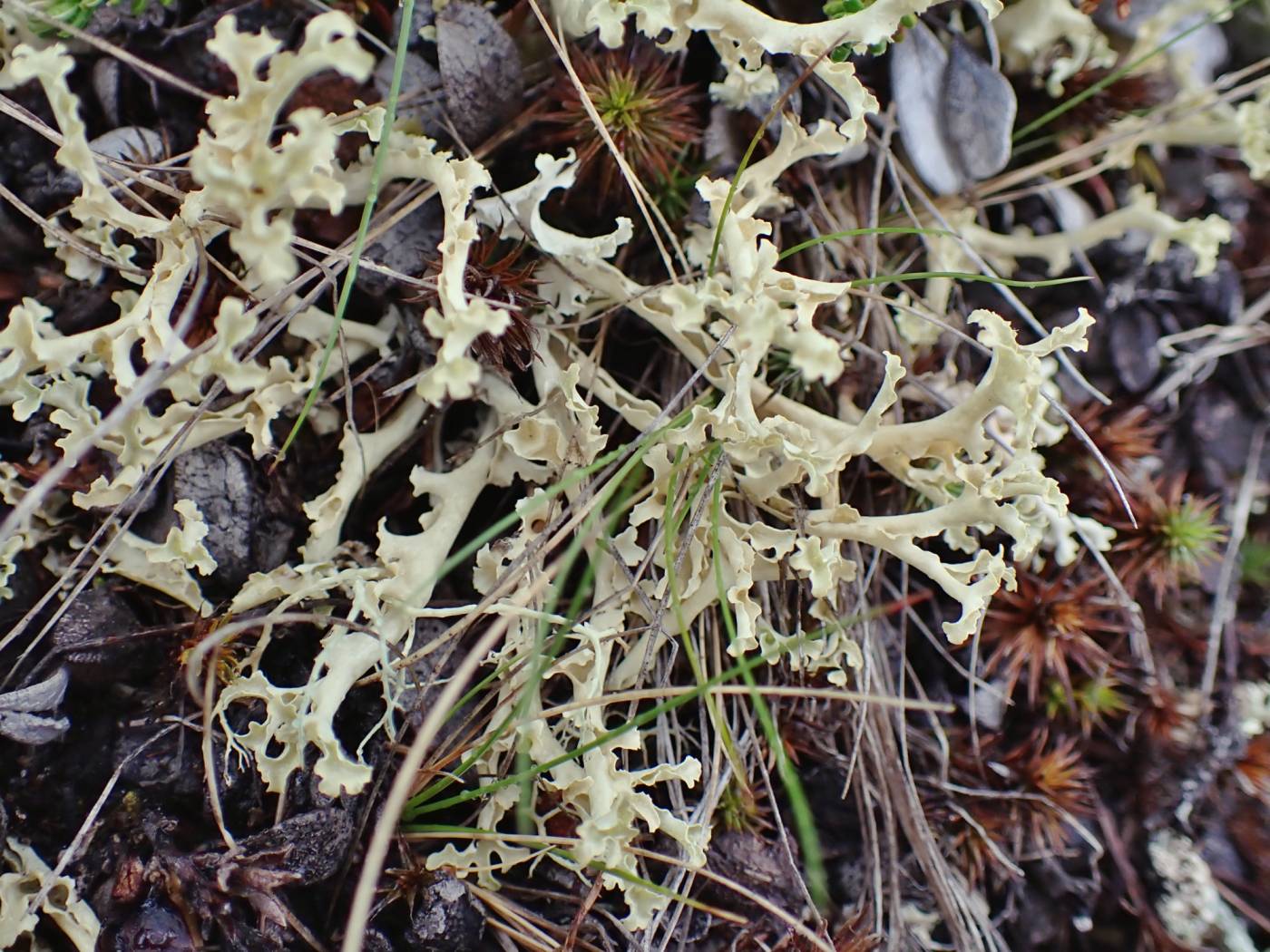
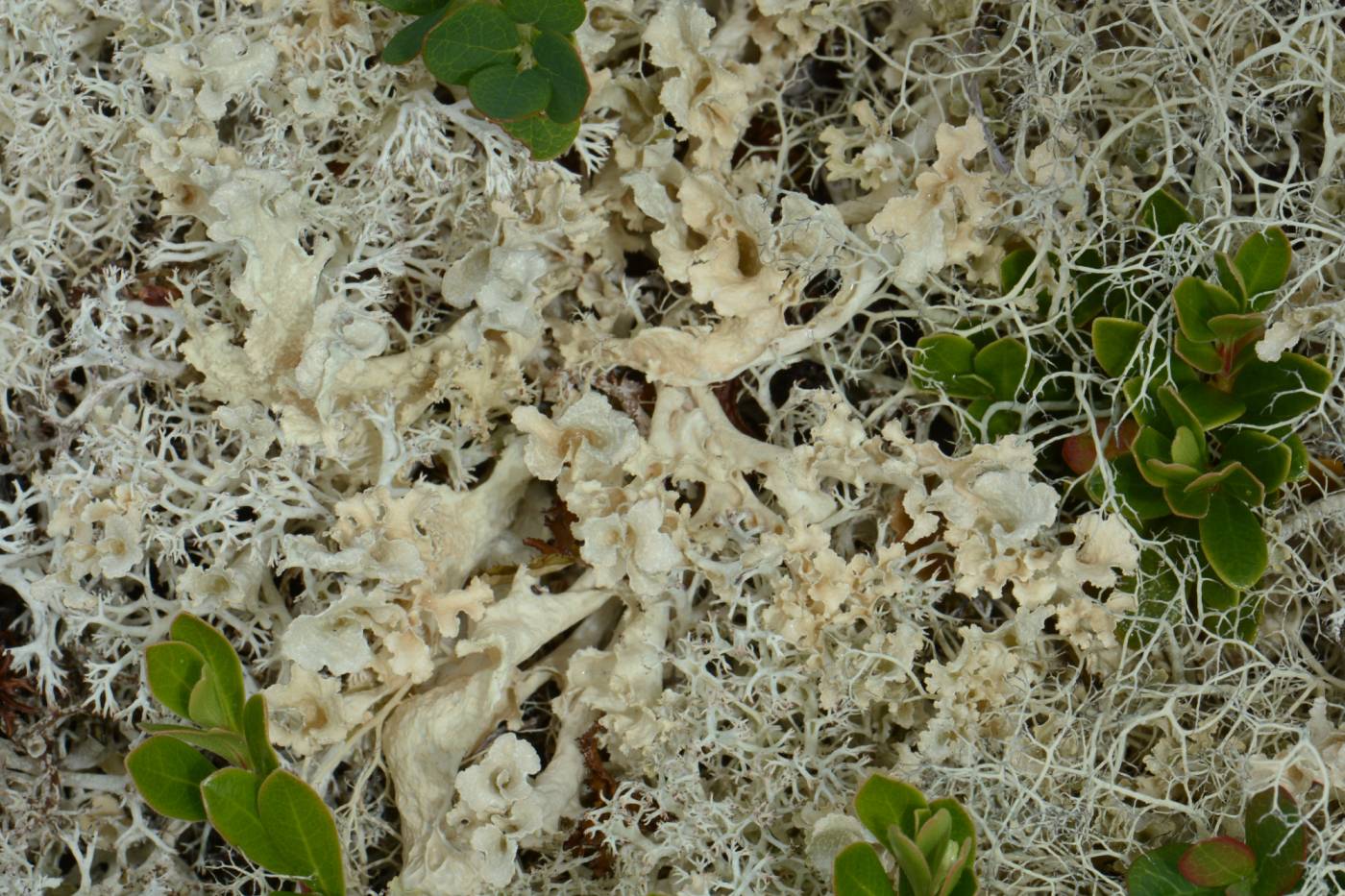
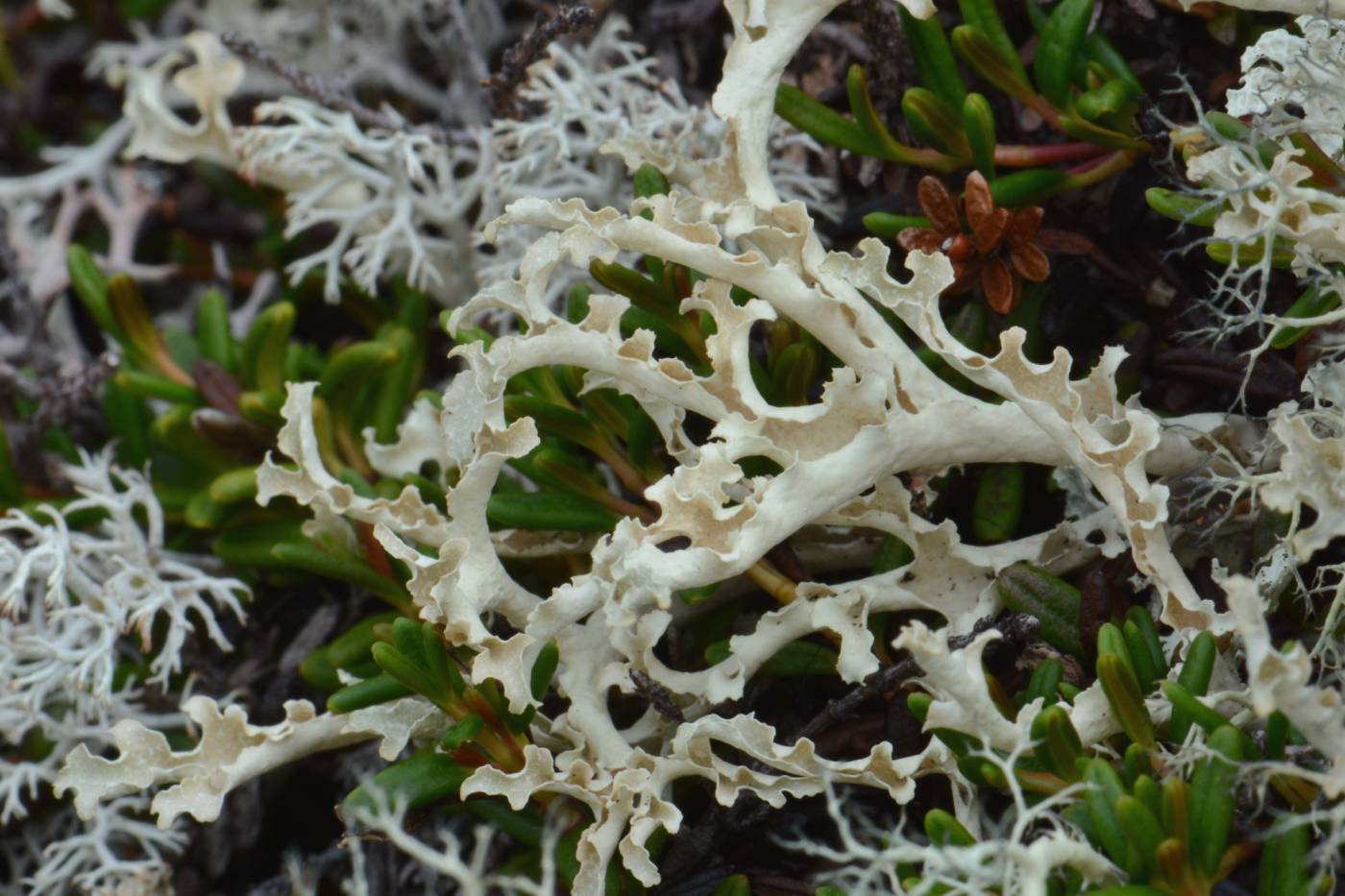
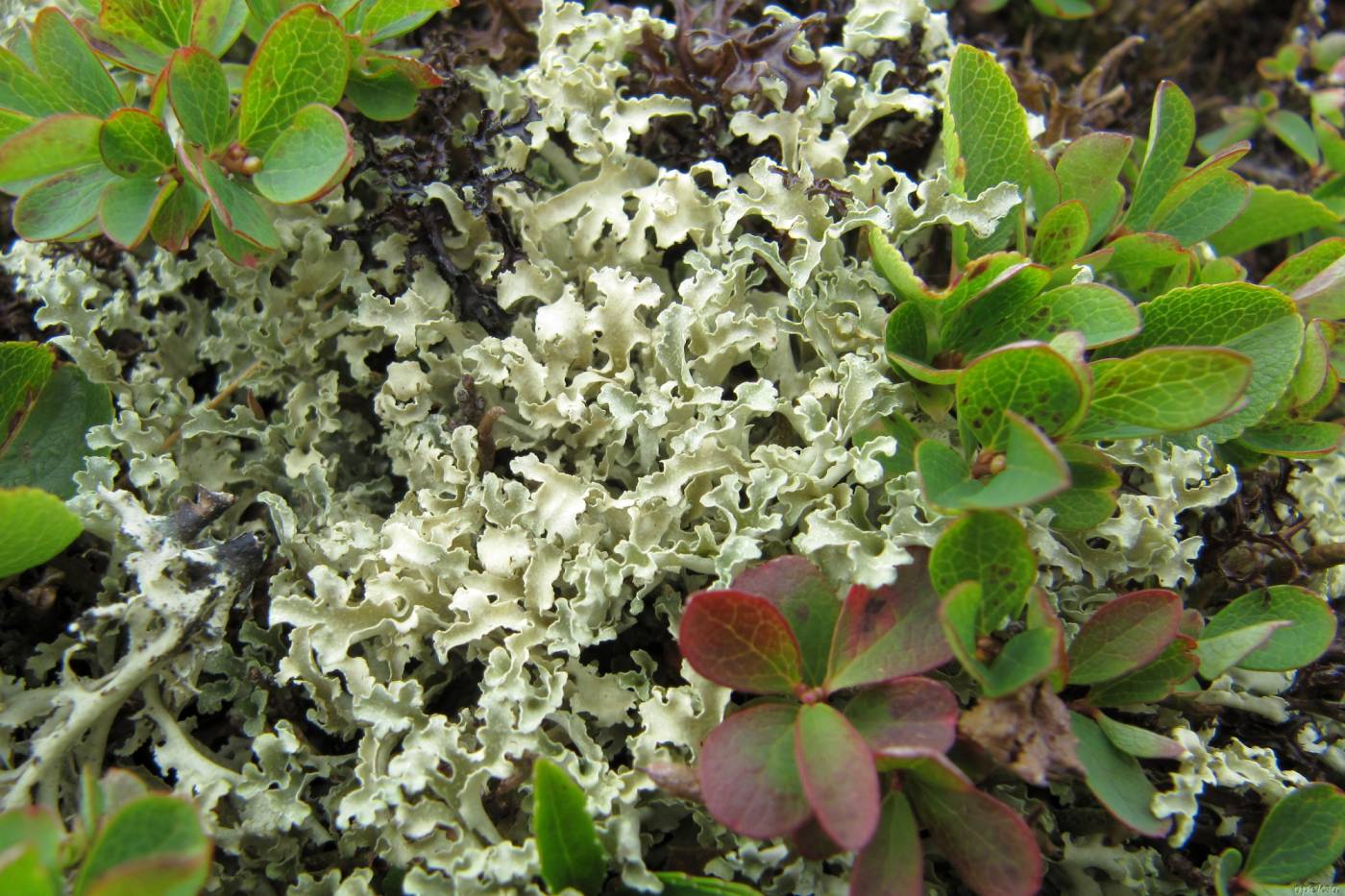
Flavocetraria cucullata is an Arctic–alpine species that grows on acidic soil and humus, mainly above the treeline in exposed, windswept sites. It is characterised by relatively narrow, yellow to yellow-green, erect lobes with margins rolled inwards to form tubes and a violet-tinged base. In the Czech Republic, it has been recorded in the Šumava, Krkonoše, Králický Sněžník and Hrubý Jeseník Mts. At present, its occurrence has been confirmed only on Mt Sněžka. At the other localities, it has probably disappeared due to the encroachment of its habitats by vascular plants, driven by climate change and eutrophication. The species also occurs close to the Czech border on the Polish side of Mt Vysoké kolo.
The species has a predominantly circumpolar distribution in the Northern Hemisphere, extending across a broad belt of cooler regions of Eurasia and North America, with its main centre of occurrence in the Arctic tundra. Smaller disjunct populations also occur near the equator and in the Southern Hemisphere, where the species is known from the high mountains of Papua New Guinea and the high Andes of Peru (Randlane & Saag 2007). In some parts of Europe, including Scandinavia and Germany, it also occurs in lowland areas.
Literature: Randlane T. & Saag A. (2007): Cetrarioid lichens in the Southern Hemisphere – an identification key and distribution patterns of the species. – Bibliotheca Lichenologica 95: 489–499.
taxonomic classification:Ascomycota → Lecanoromycetes → Lecanorales → Parmeliaceae → Flavocetraria
Red List (Liška & Palice 2010):EN – endangered
Red List (Malíček 2023):C1 – critically endangered
Occurrence in the Czech Republic
All records: 29, confirmed 11. One click on a selected square displays particular record(s), including their source(s).