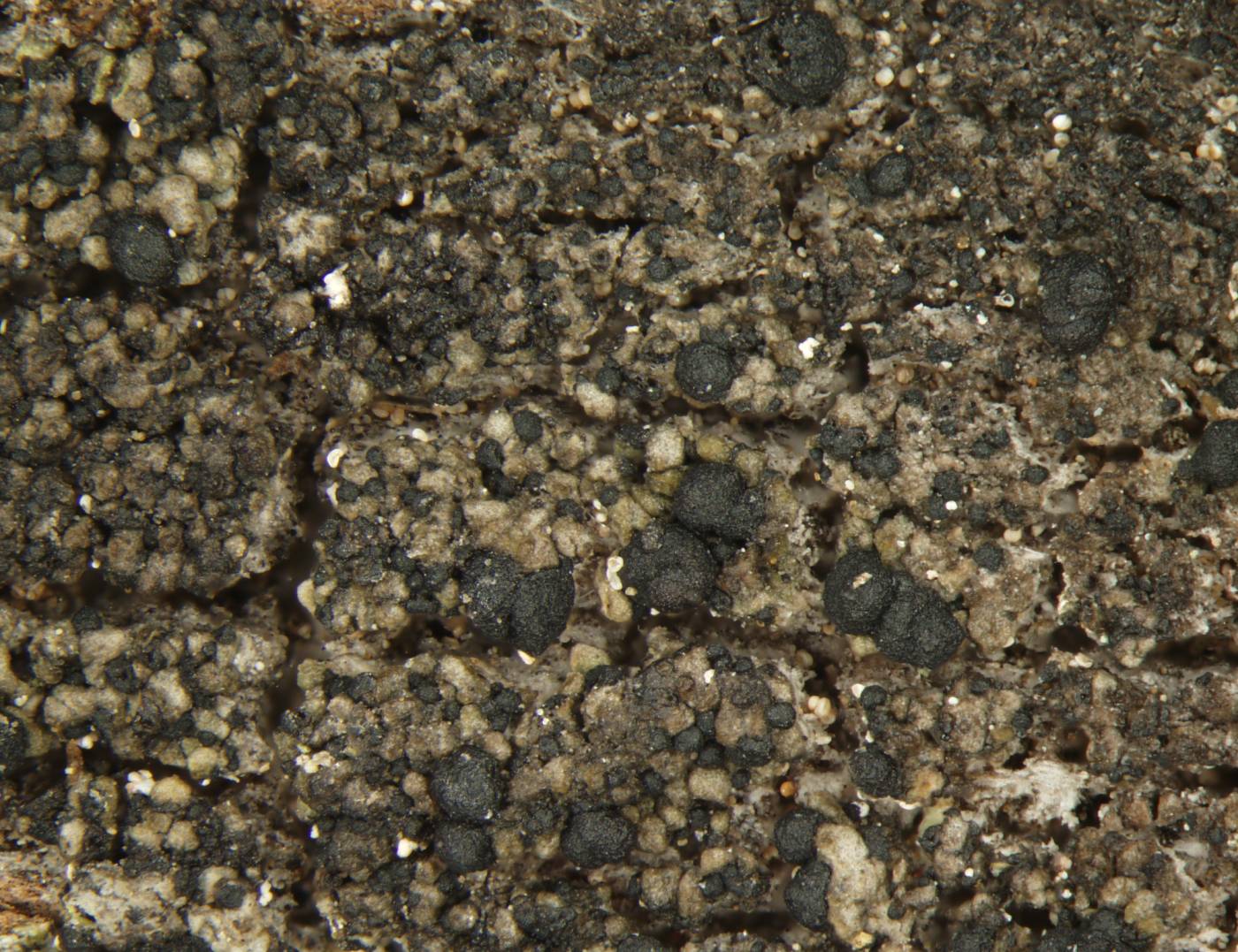
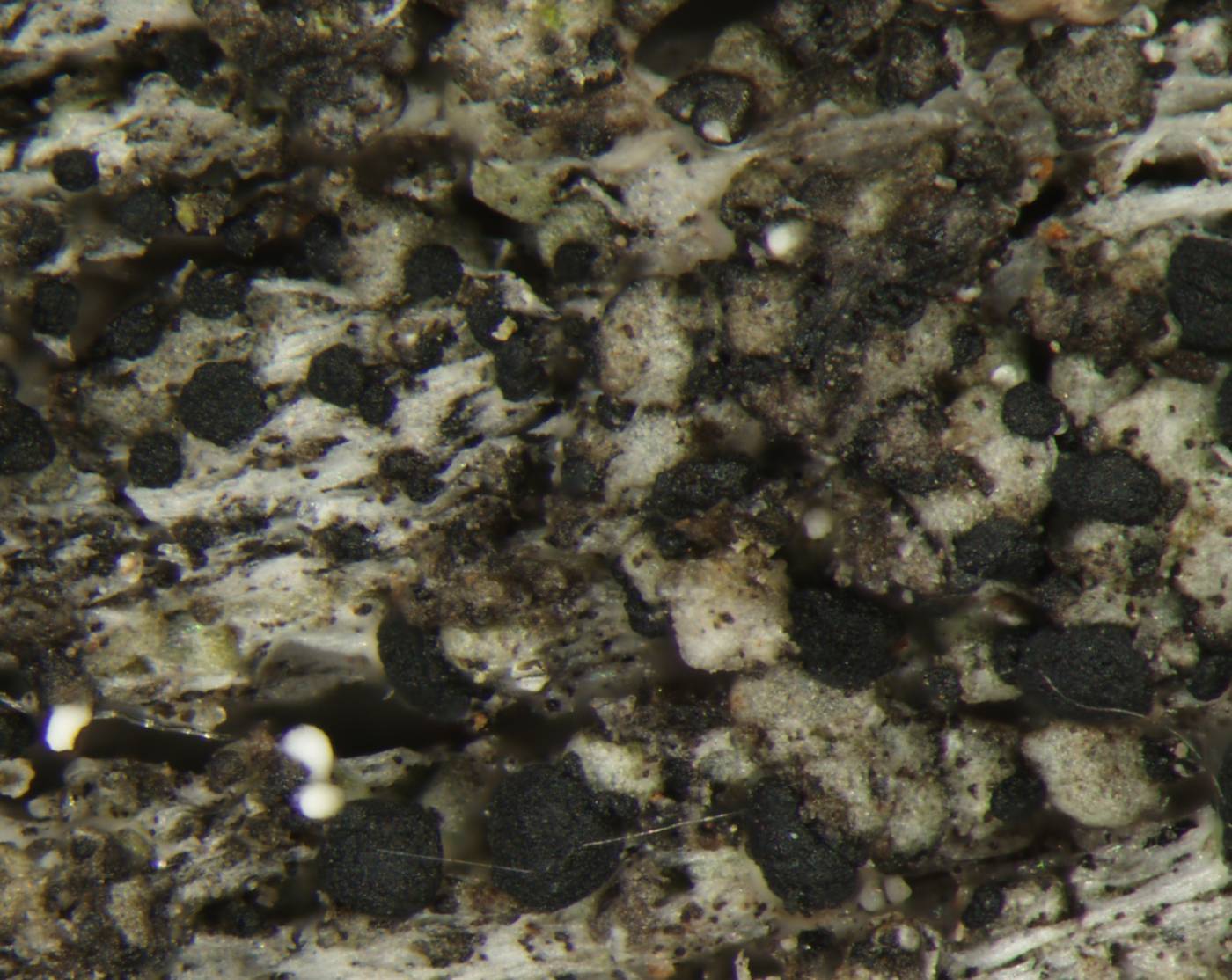
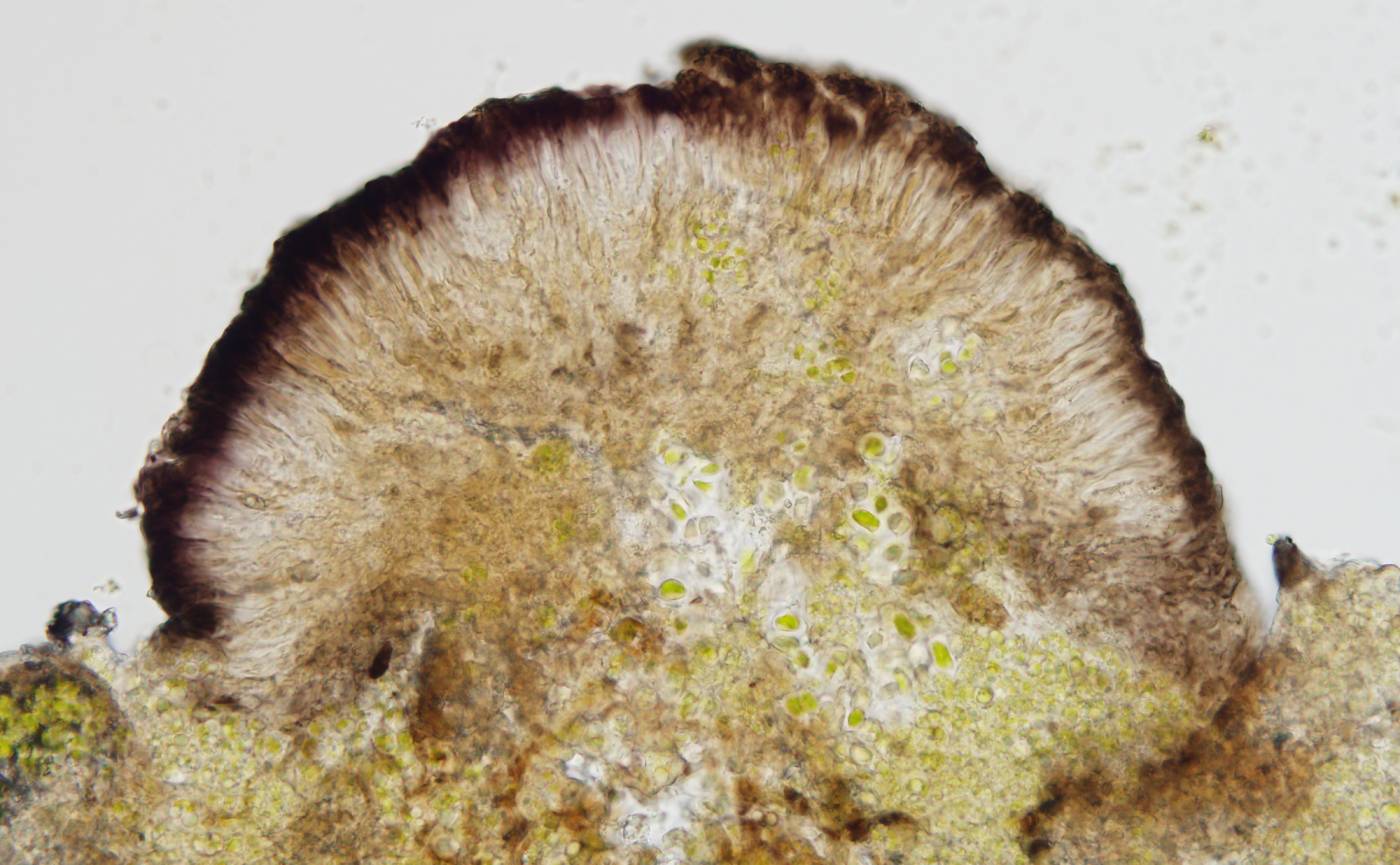
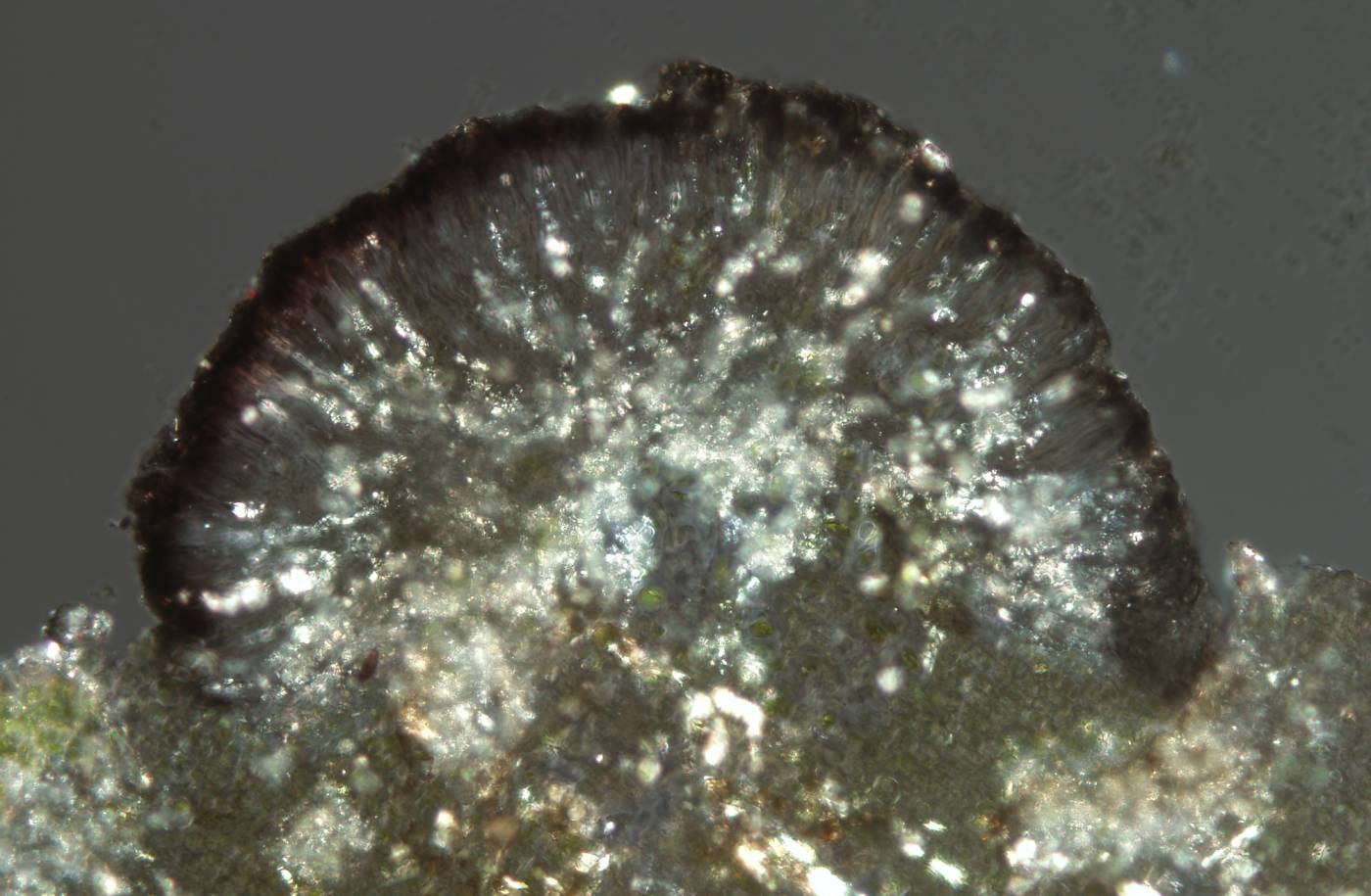
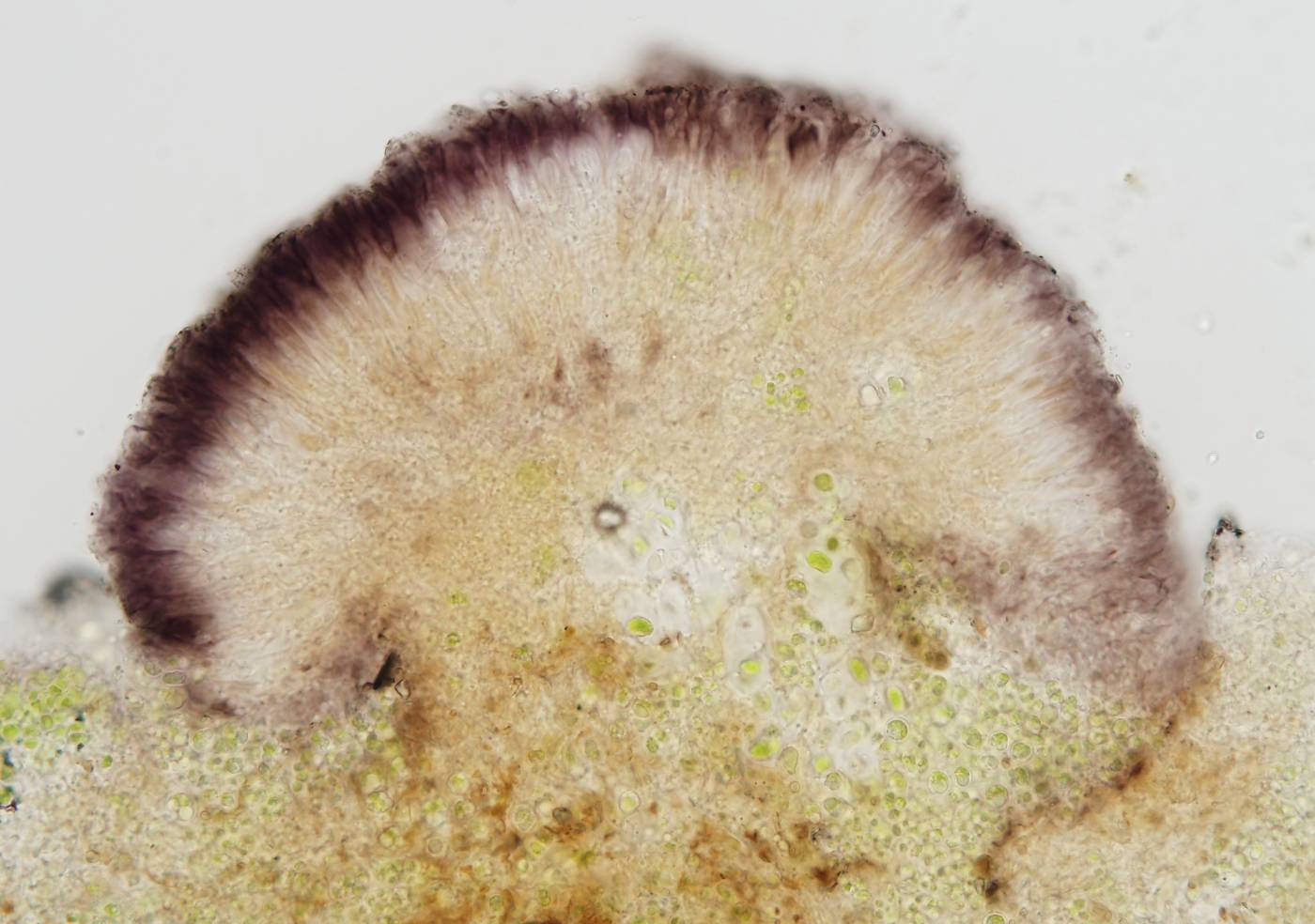
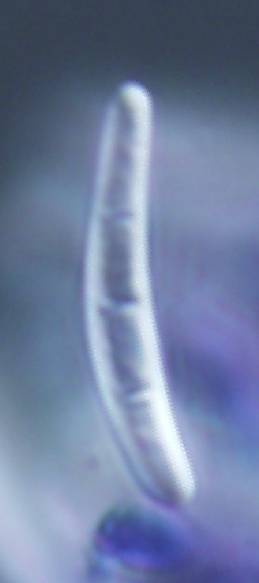
The main diagnostic character of this Micarea species is the presence of lobaric acid in both the thallus and apothecia, visible as bright, shining granules under polarized light. Otherwise, it is very similar to M. denigrata and M. globulosella, but differs from them in the absence of gyrophoric acid and, from the former species, also by larger ascospores that are 1–3-septate and measure 17–23 × 1.8–2.5 µm. Another characteristic feature is the presence of a brown pigment (probably Elachista-brown) in the epihymenium and the pycnidial wall.
Voucher specimens are known from wood of pine and oak logs in dry ecotones between xerothermic forests and steppe-like grasslands. The species occurs in communities of common epixylic lichens, e.g. Hypocenomyce scalaris, Lecidea nylanderi, Micarea denigrata and Trapeliopsis flexuosa. So far, it is known from only three sites in the Czech Republic at altitudes of 320–420 m. Additional localities, mainly at lower elevations, were detected using environmental DNA.
Literature: Vondrák J., Svoboda S., Malíček J., Šoun J., Košnar J., Svensson M., Timdal E., Machač J. & Palice Z. (2024): Combining environmental DNA data and taxonomic surveys provides an unprecedented understanding of lichen diversity and accelerates the discovery of new species. – Preslia 96: 351–417.
taxonomic classification:Ascomycota → Lecanoromycetes → Lecanorales → Pilocarpaceae → Micarea
Occurrence in the Czech Republic
All records: 3, confirmed 3. One click on a selected square displays particular record(s), including their source(s).