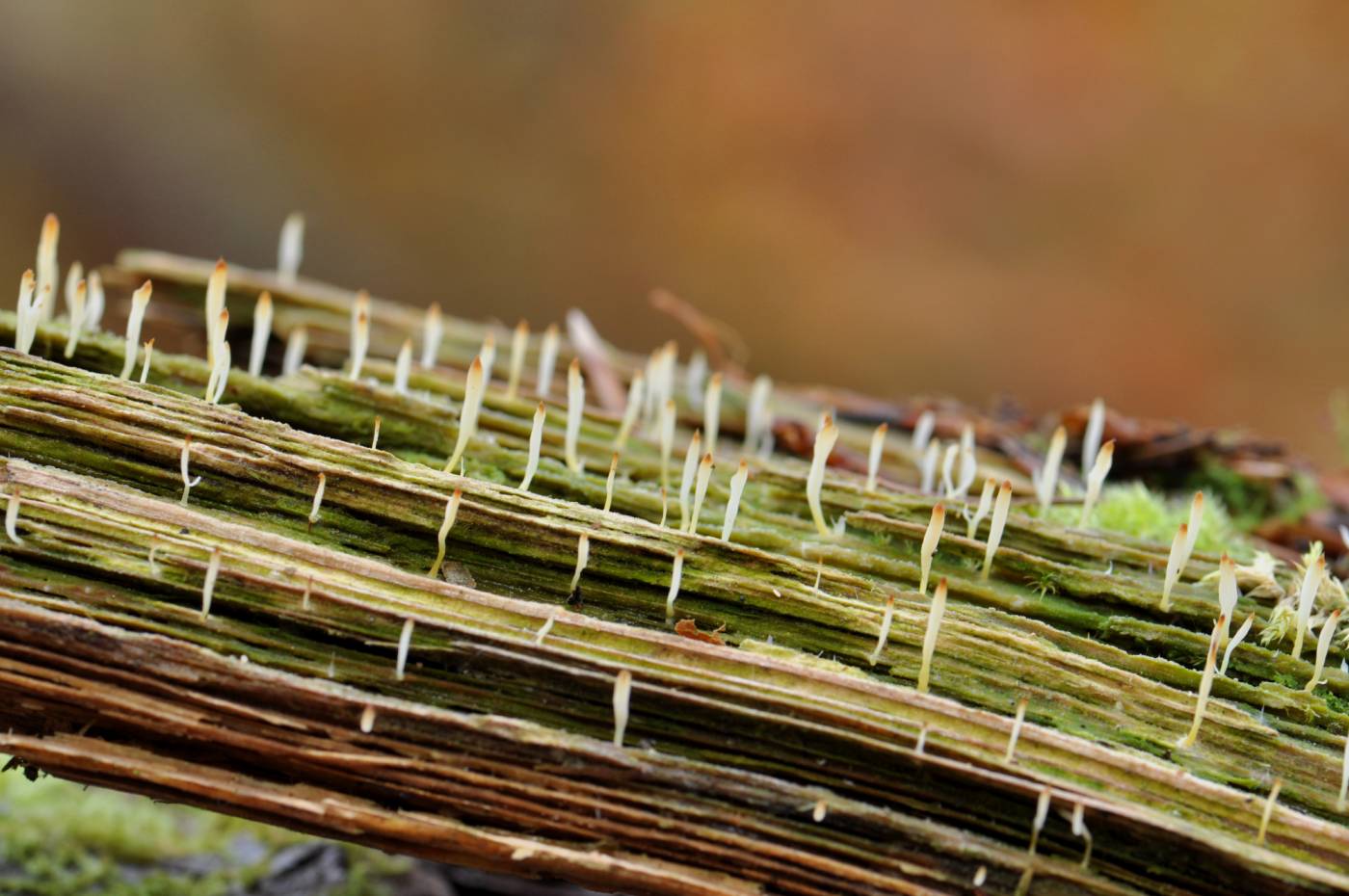
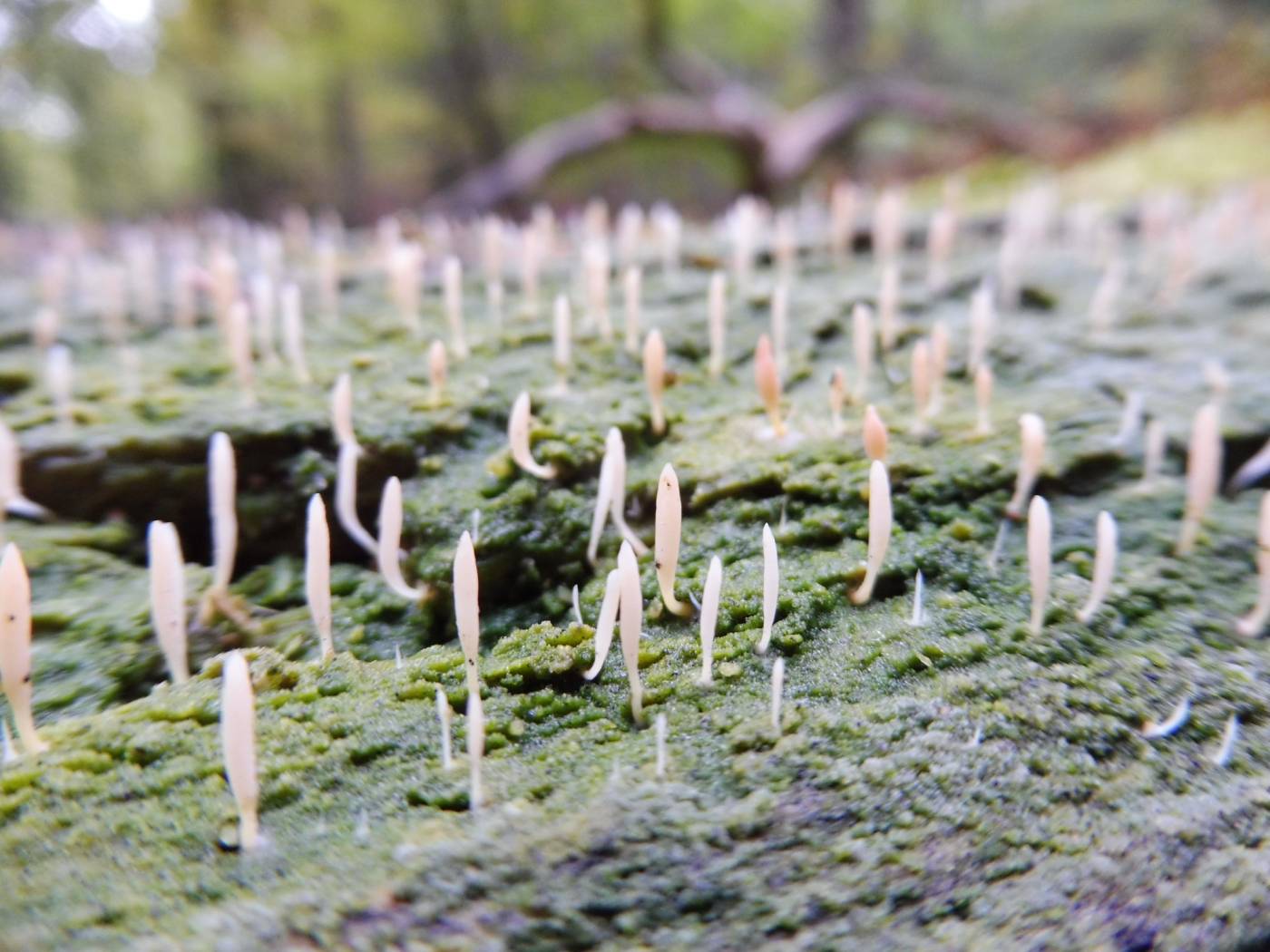
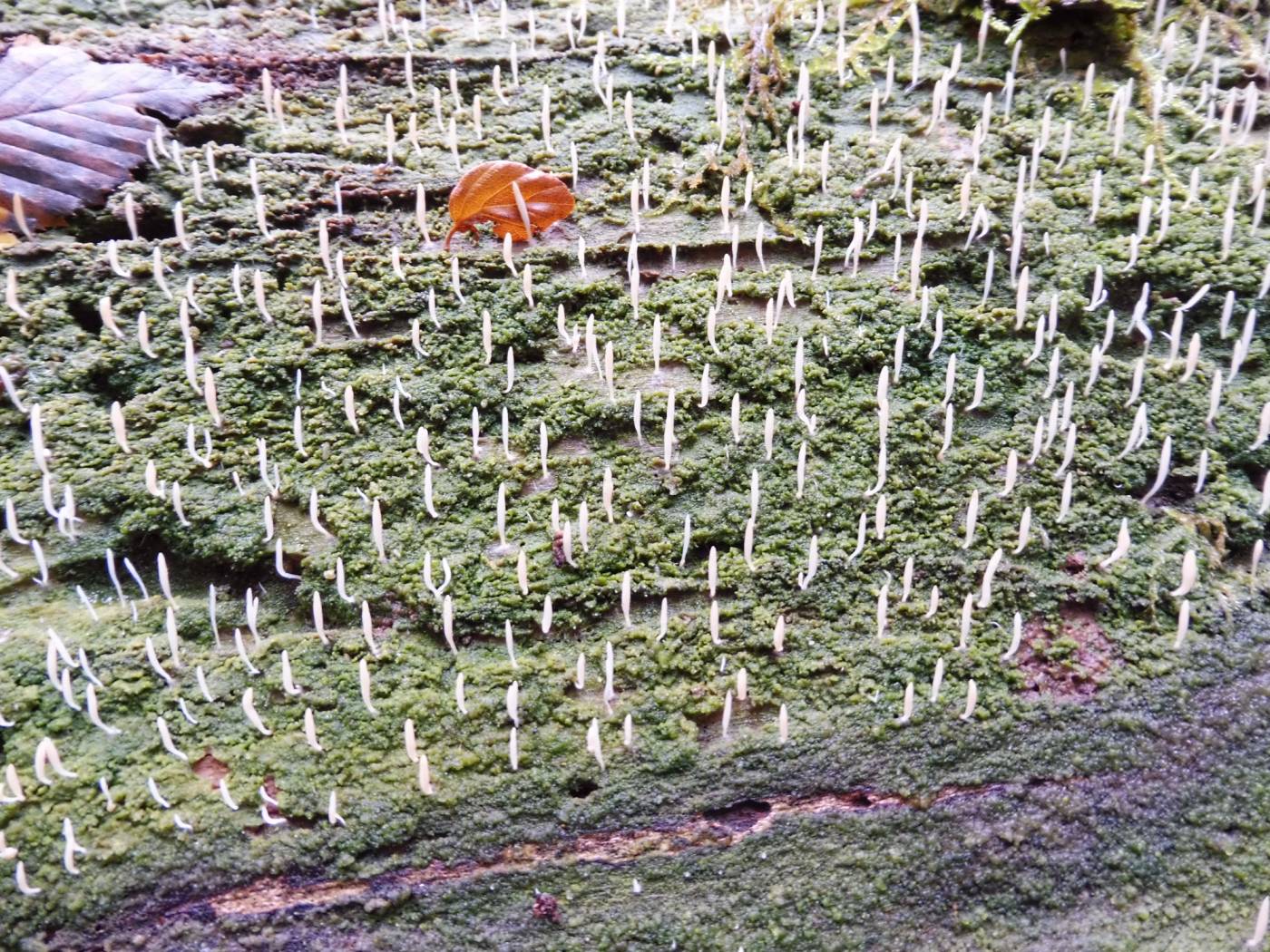
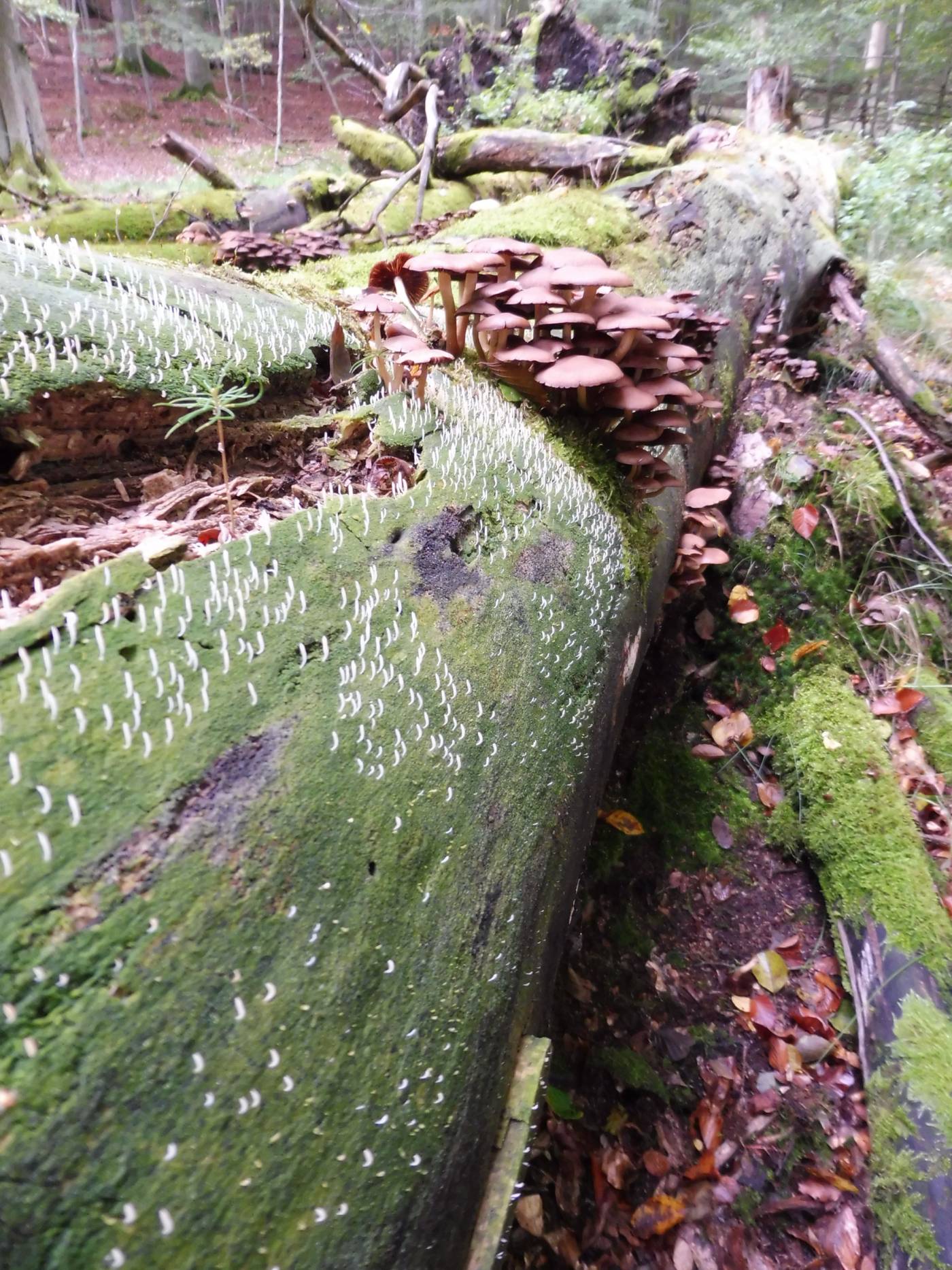
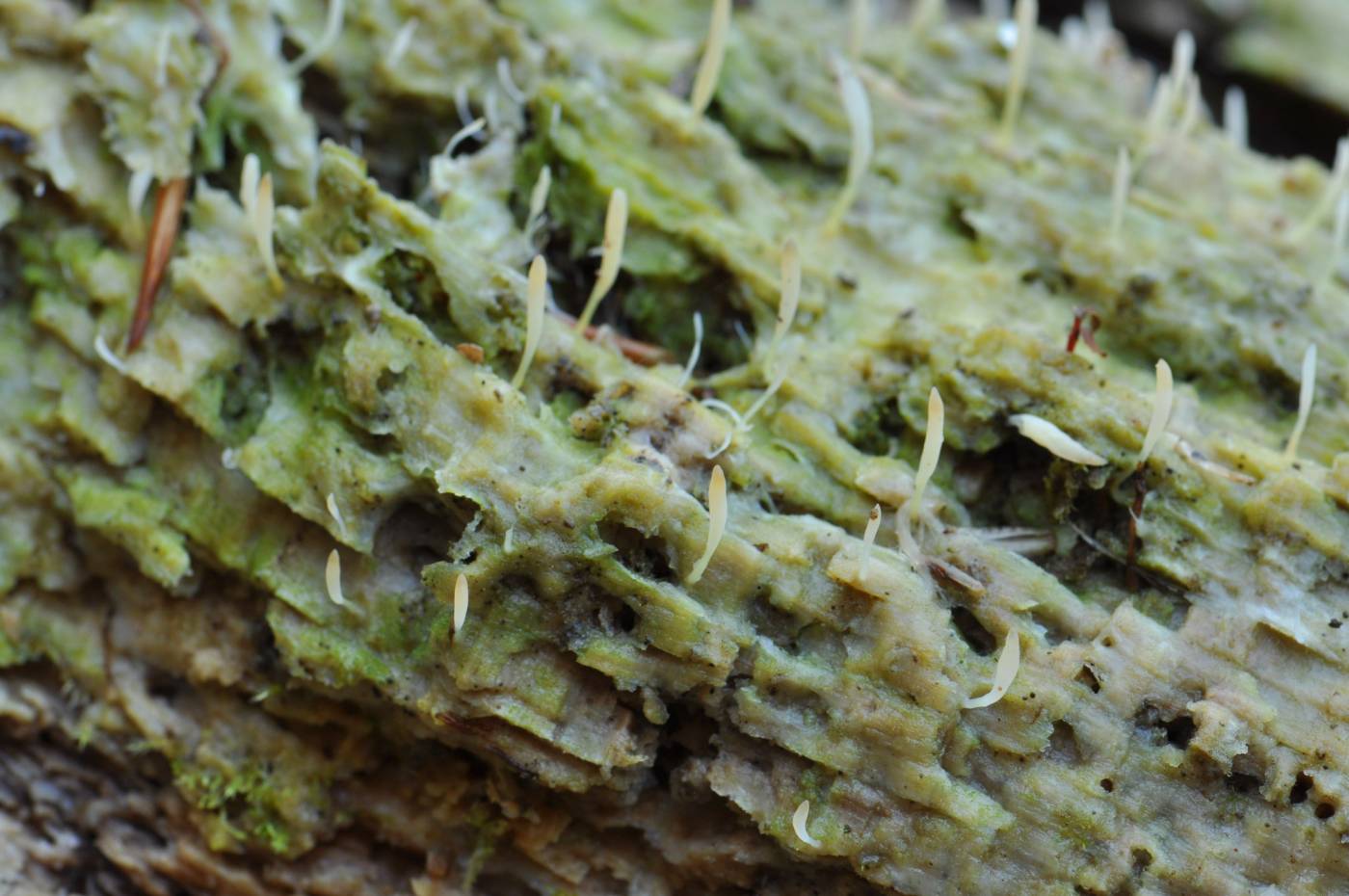
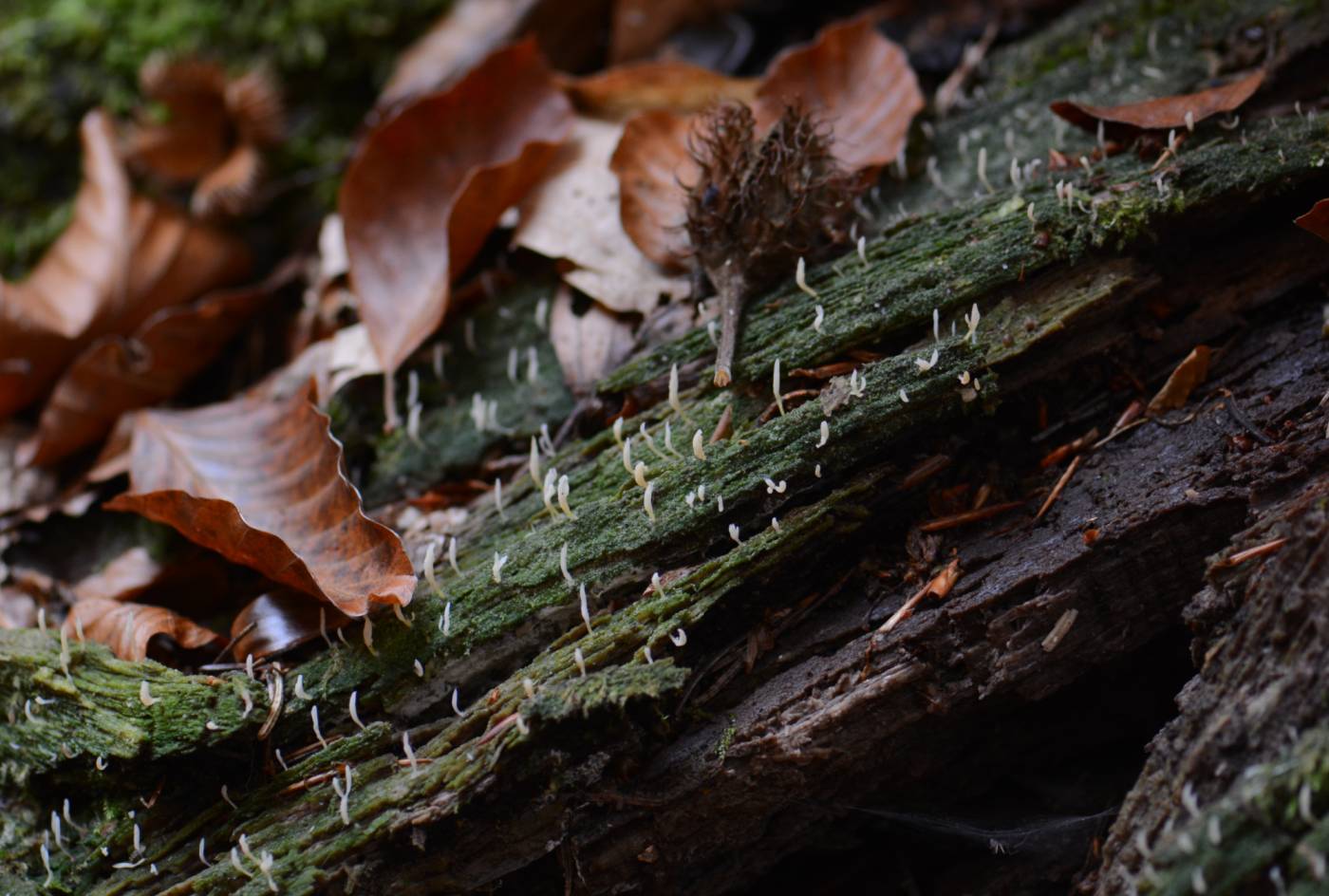
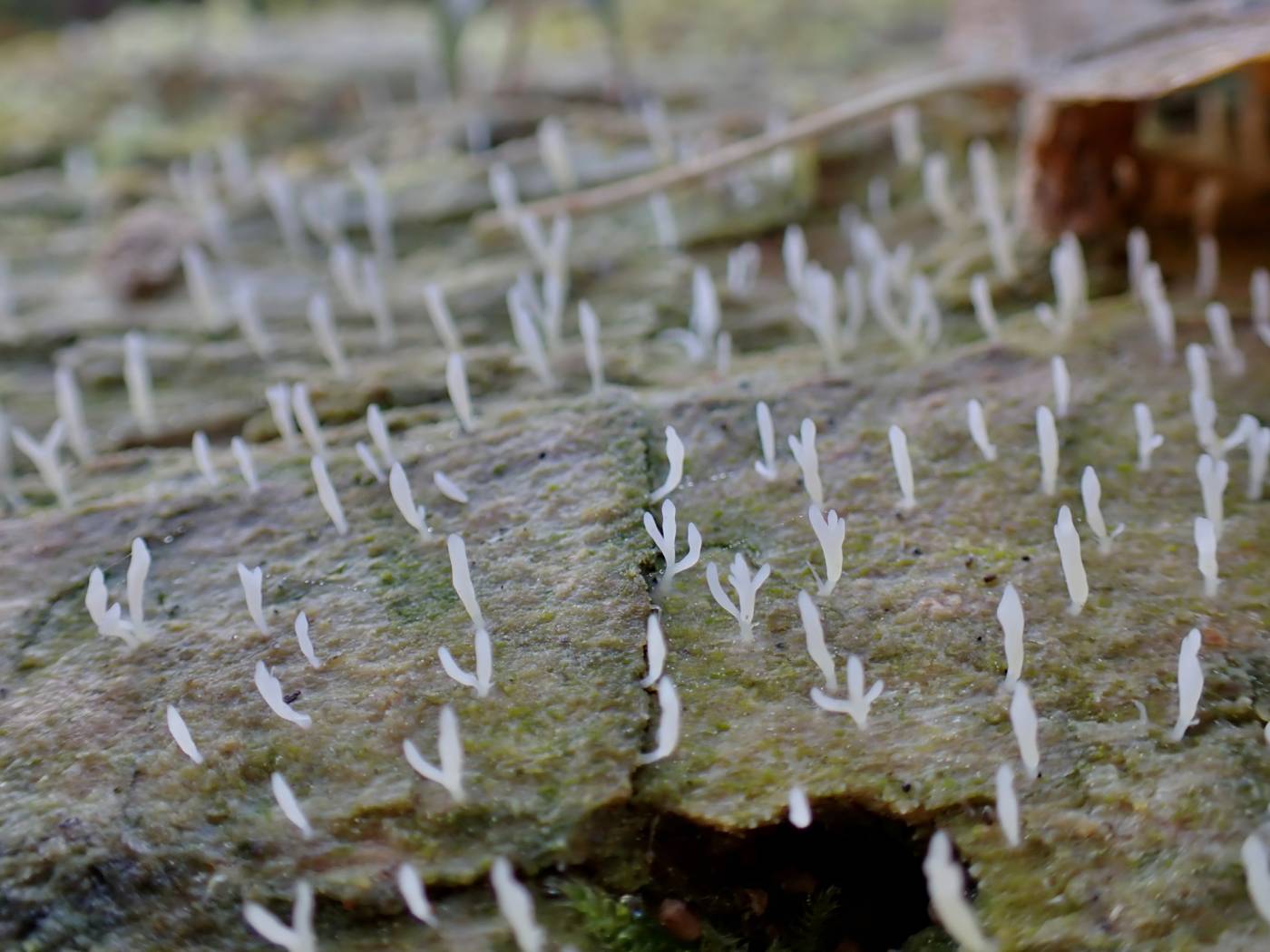
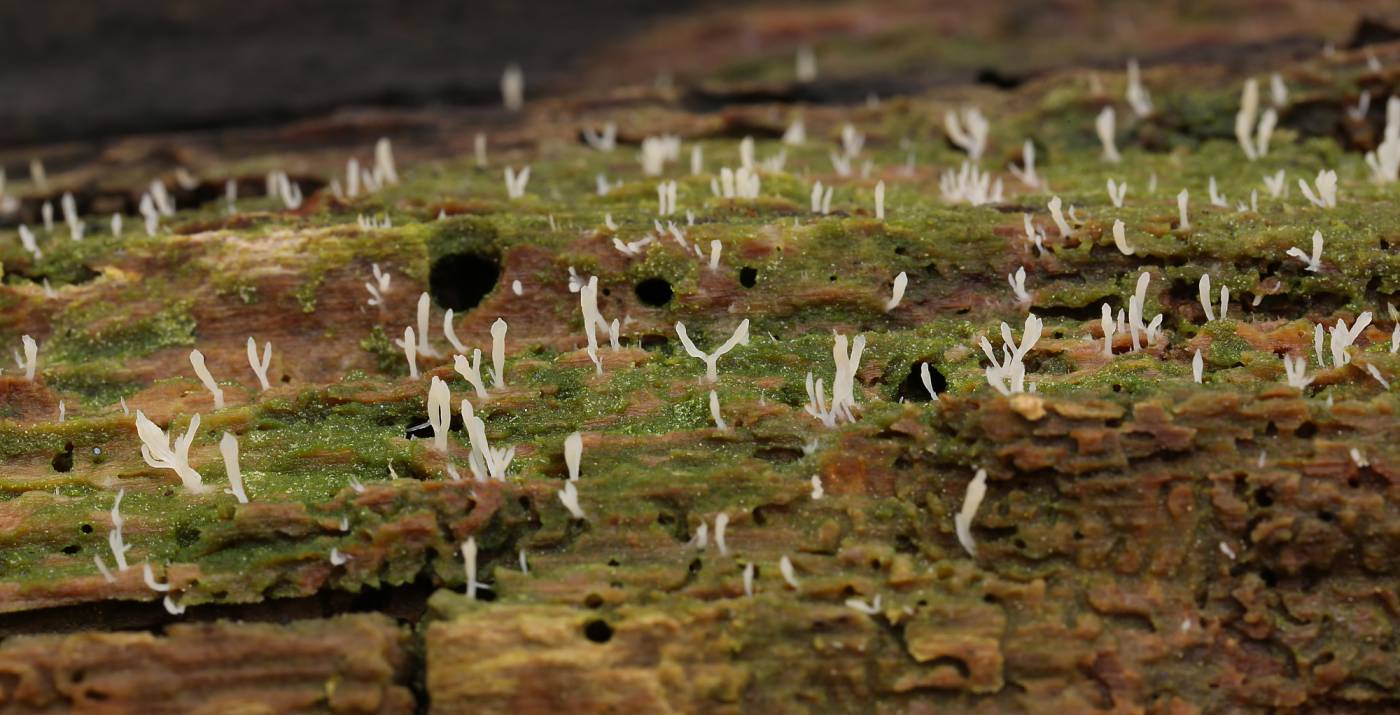
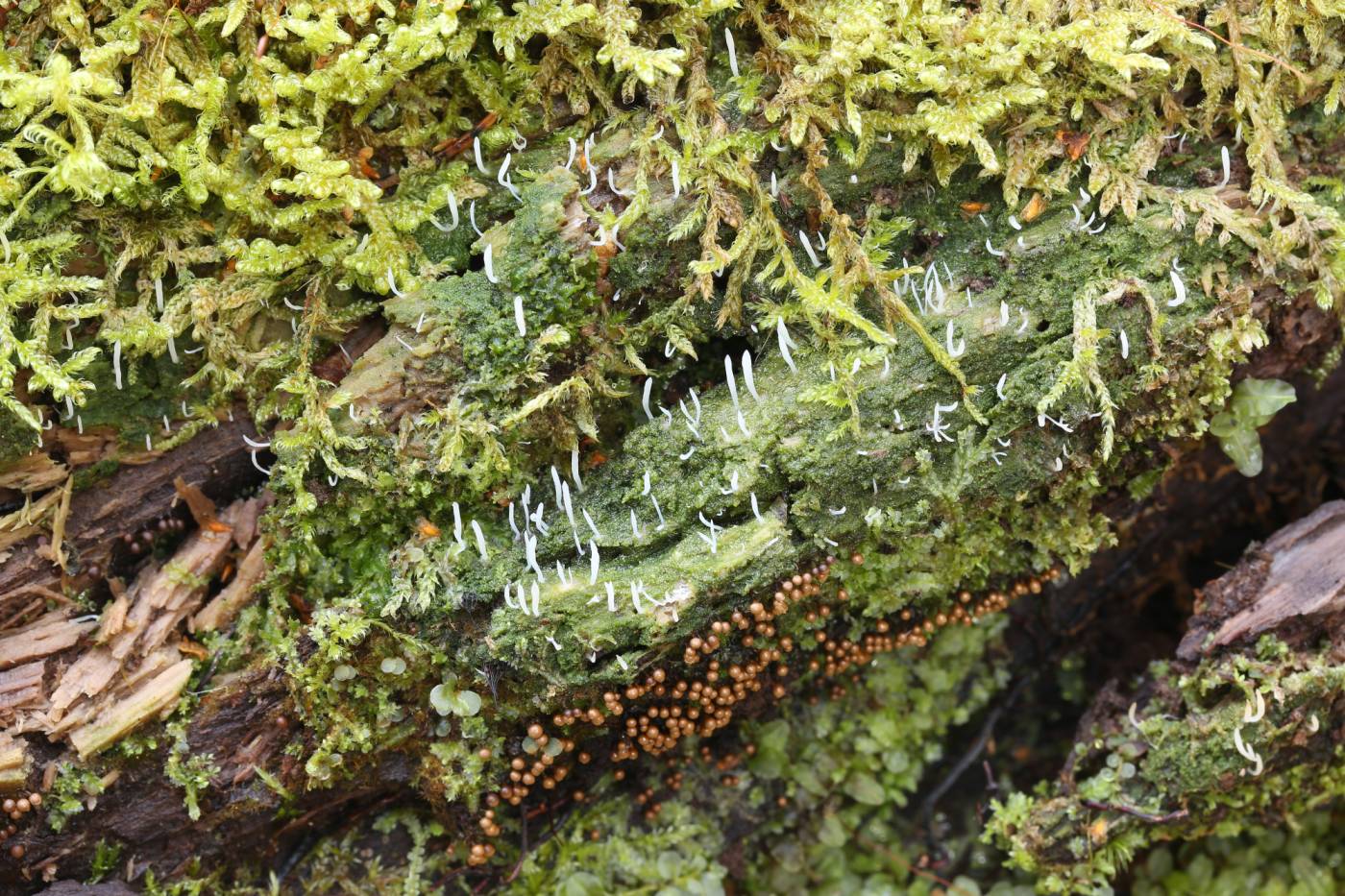
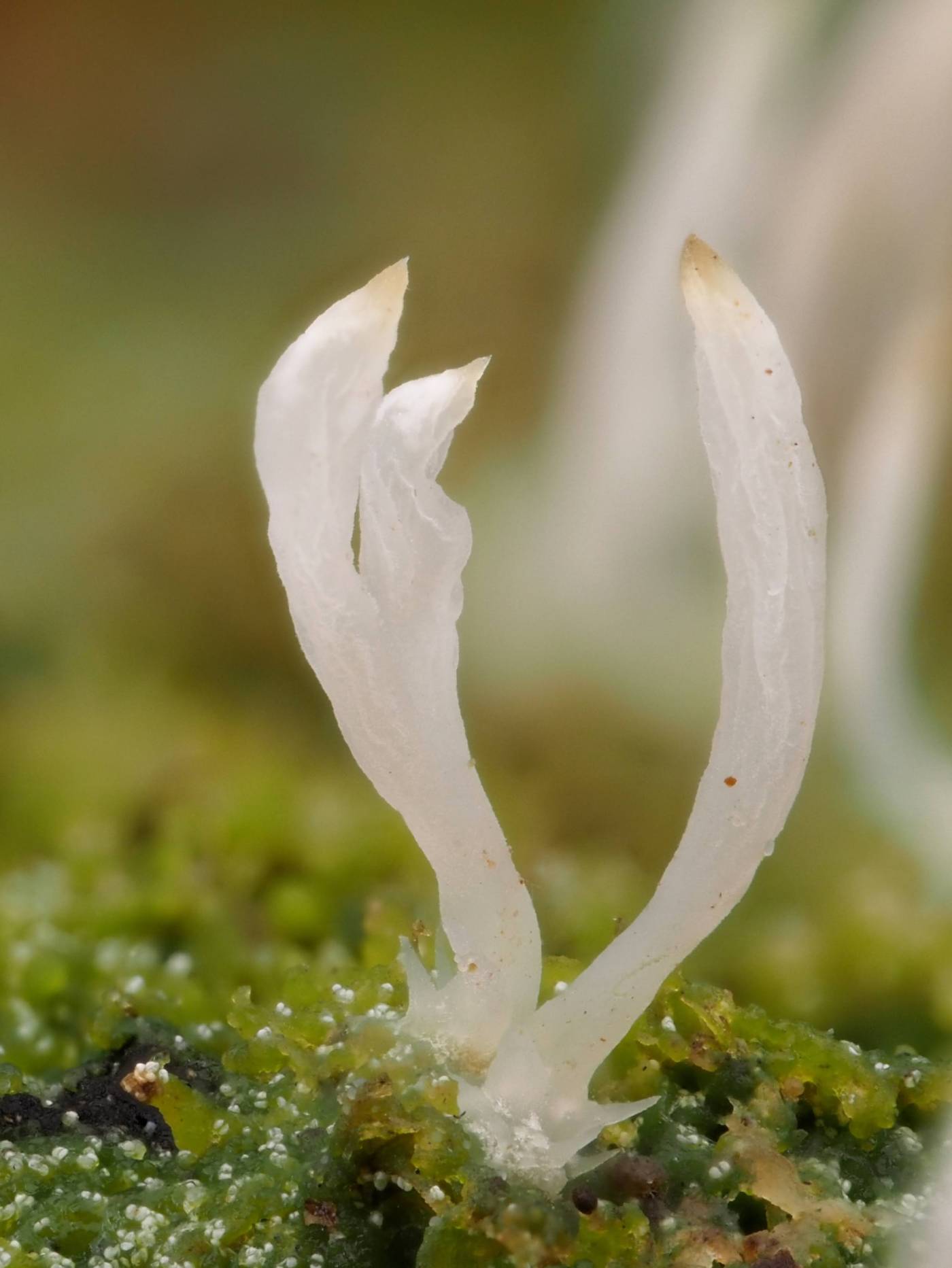
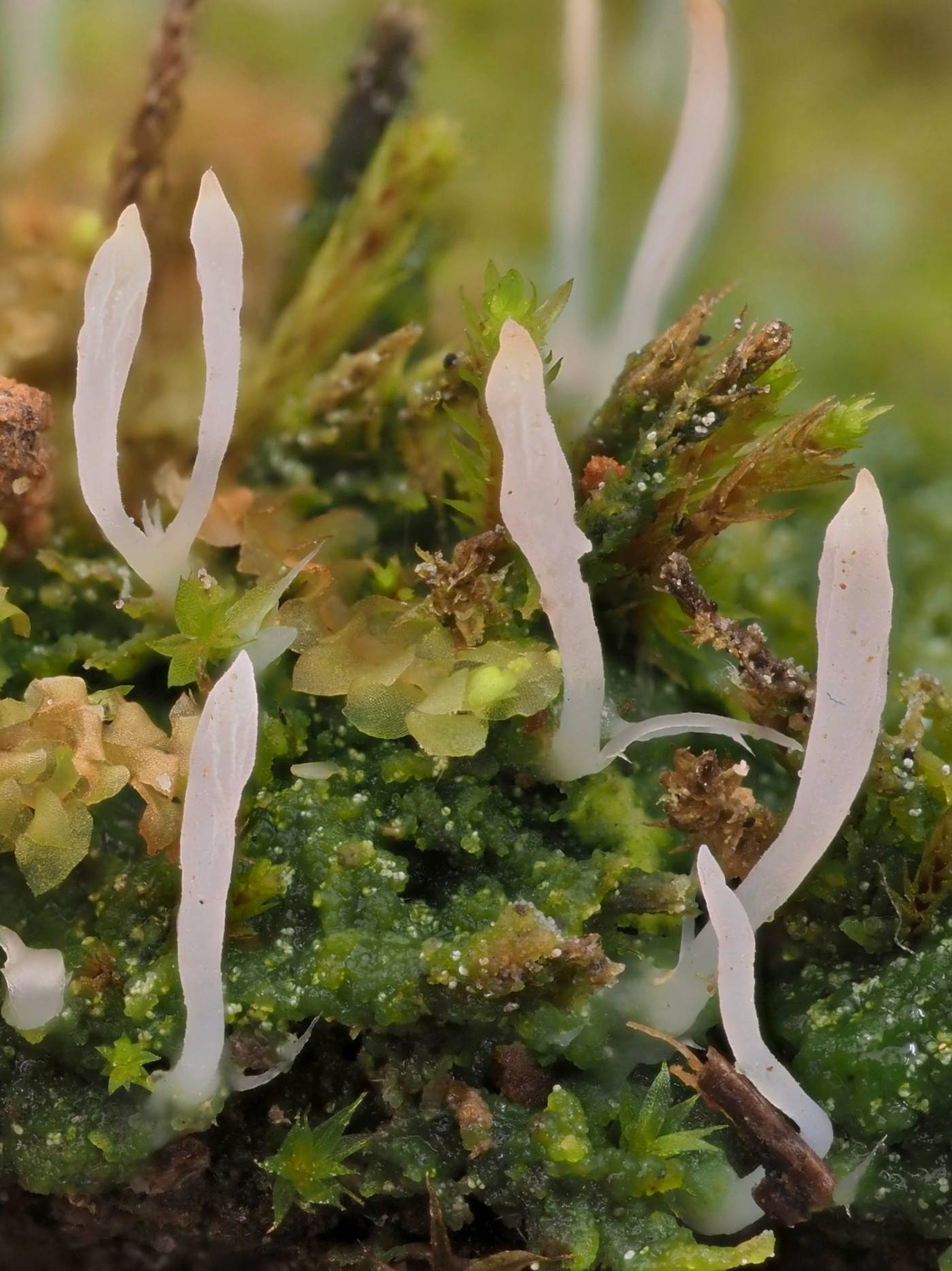
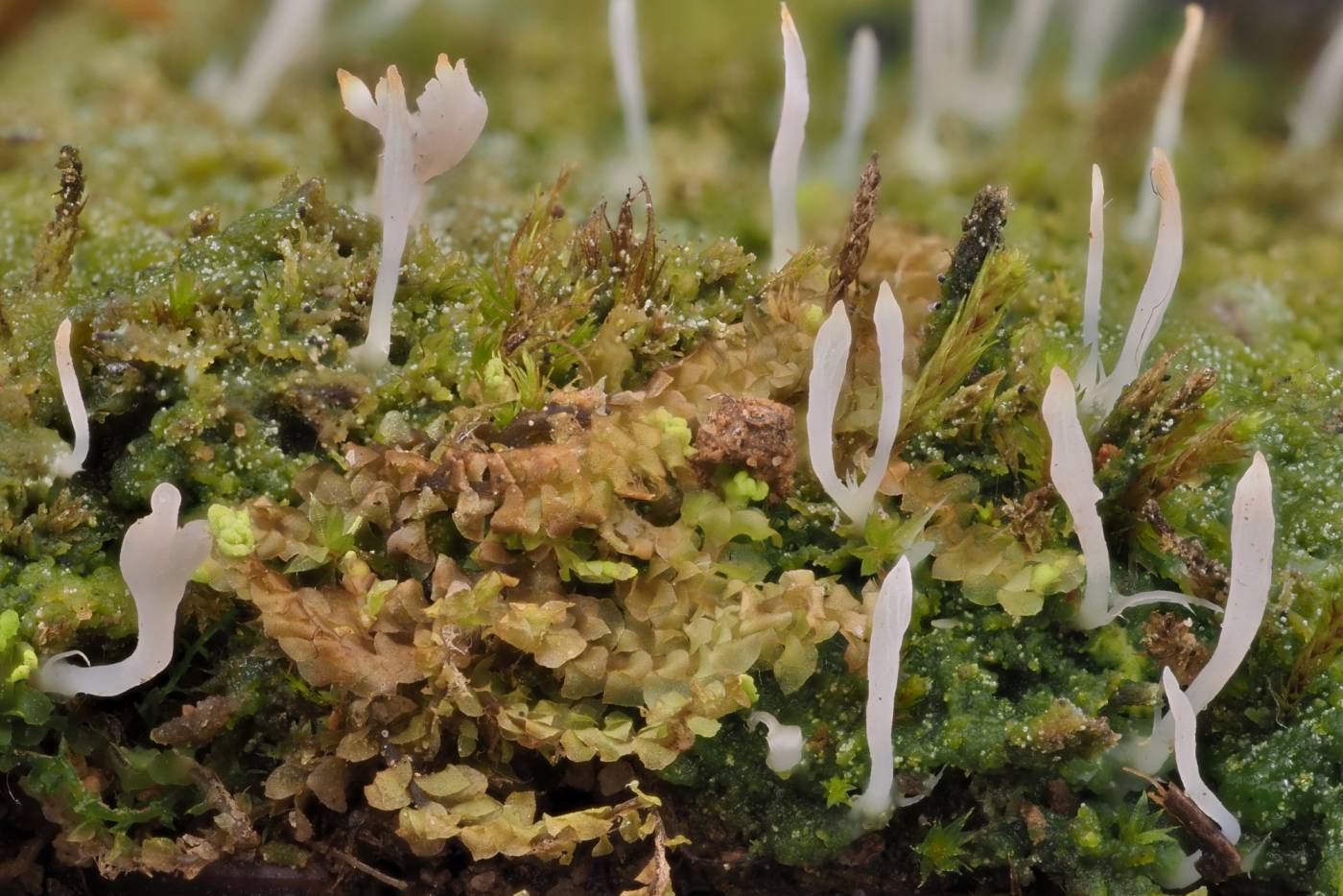
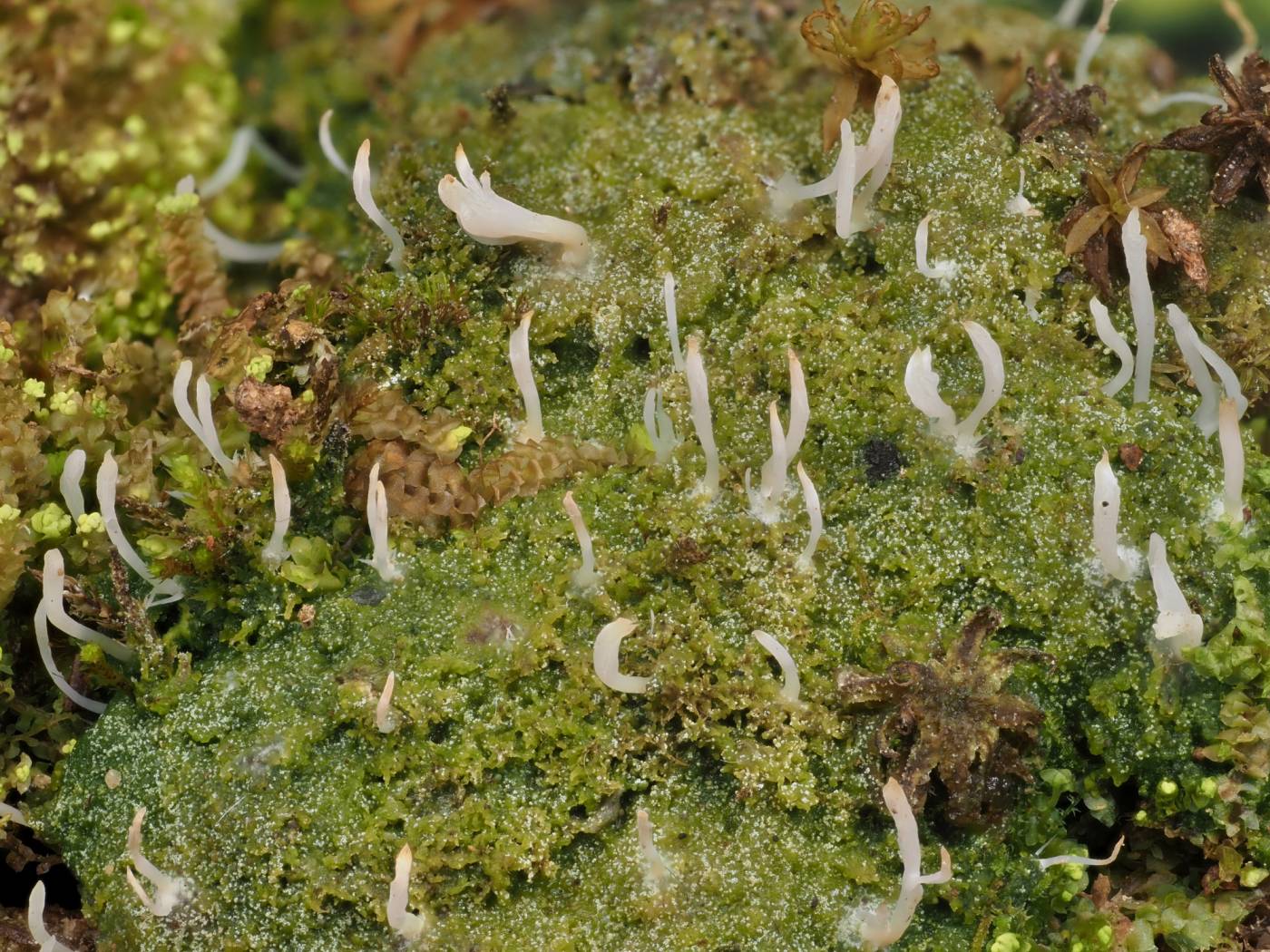
One of the four known Czech basidiolichens, which is difficult to find and identify when sterile. Although it produces fruiting bodies abundantly, this typically occurs only in autumn. The so-called basidiocarps are white to cream-coloured, simple to slightly branched, with pointed apices that may be ochre to brown.
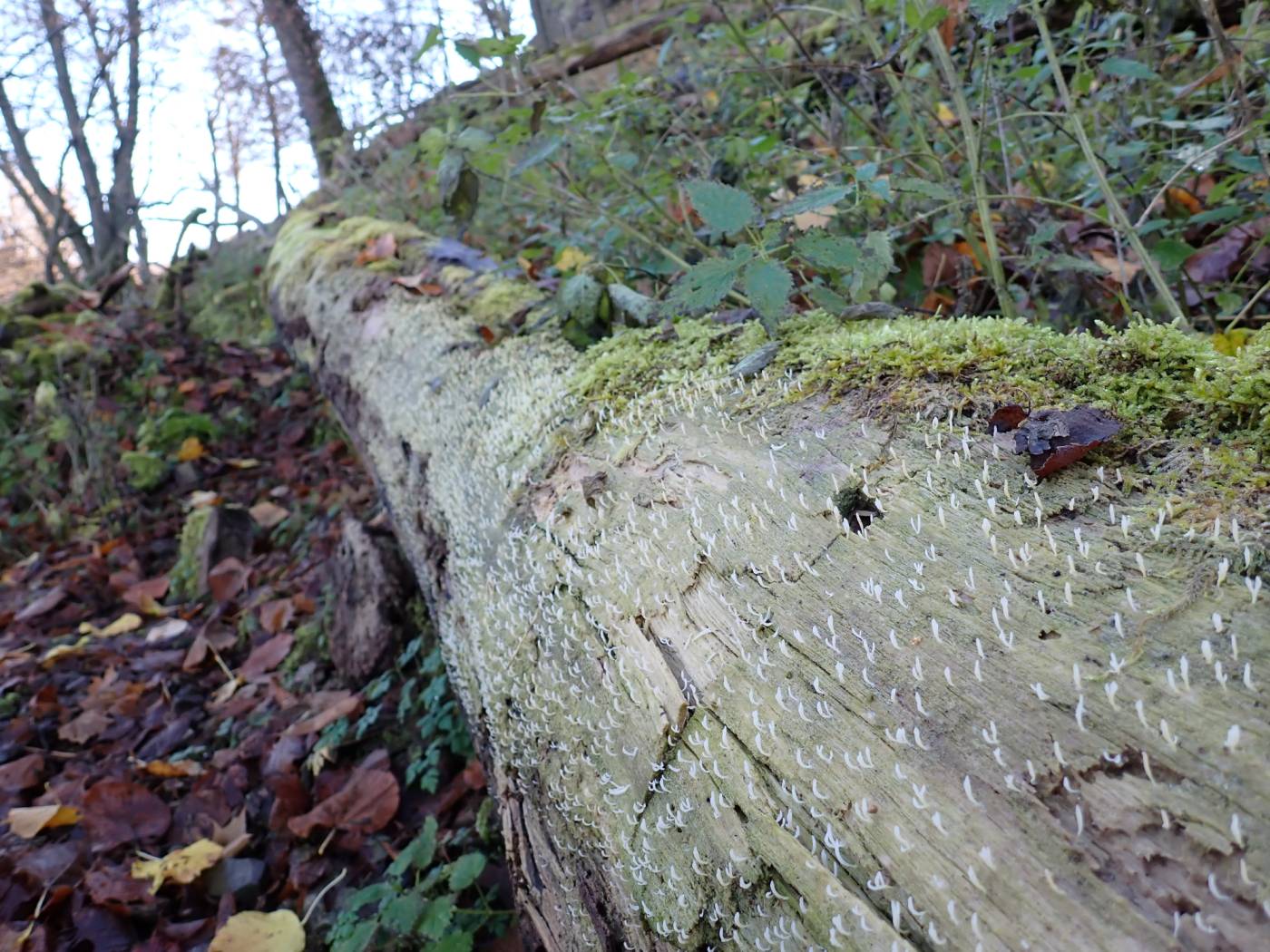
This species is confined to soft, decaying wood, typically of large fallen trunks. However, it can also occur on stumps, and records from soil and peat are also known (Malíček et al. 2025). It shows a strong preference for old-growth and primeval forests, especially beech forests under Czech conditions. Nonetheless, it has also been found in moist managed forests (e.g. spruce stands) with sufficient deadwood. Multiclavula mucida is a subcosmopolitan but rather rare species of temperate and boreal forests. In the Czech Republic, it occurs mainly in submontane and montane areas. So far, it has been recorded in the Šumava Mountains, Křivoklát region, Český les Mts, Novohradské hory Mts, and the Beskydy Mts.
Literature: Malíček J., Janošík L., Mikulášková E. & Palice Z. (2025): Basidiolichen Multiclavula corynoides new to the Czech Republic and a remarkable occurrence of Multiclavula mucida on soil. – Czech Mycology 77: 27–36.
taxonomic classification:Basidiomycota → Agaricomycetes → Cantharellales → Clavulinaceae → Multiclavula
Red List (Liška & Palice 2010):EN – endangered
Red List (Malíček 2023):C3 – endangered
Occurrence in the Czech Republic
All records: 42, confirmed 42. One click on a selected square displays particular record(s), including their source(s).