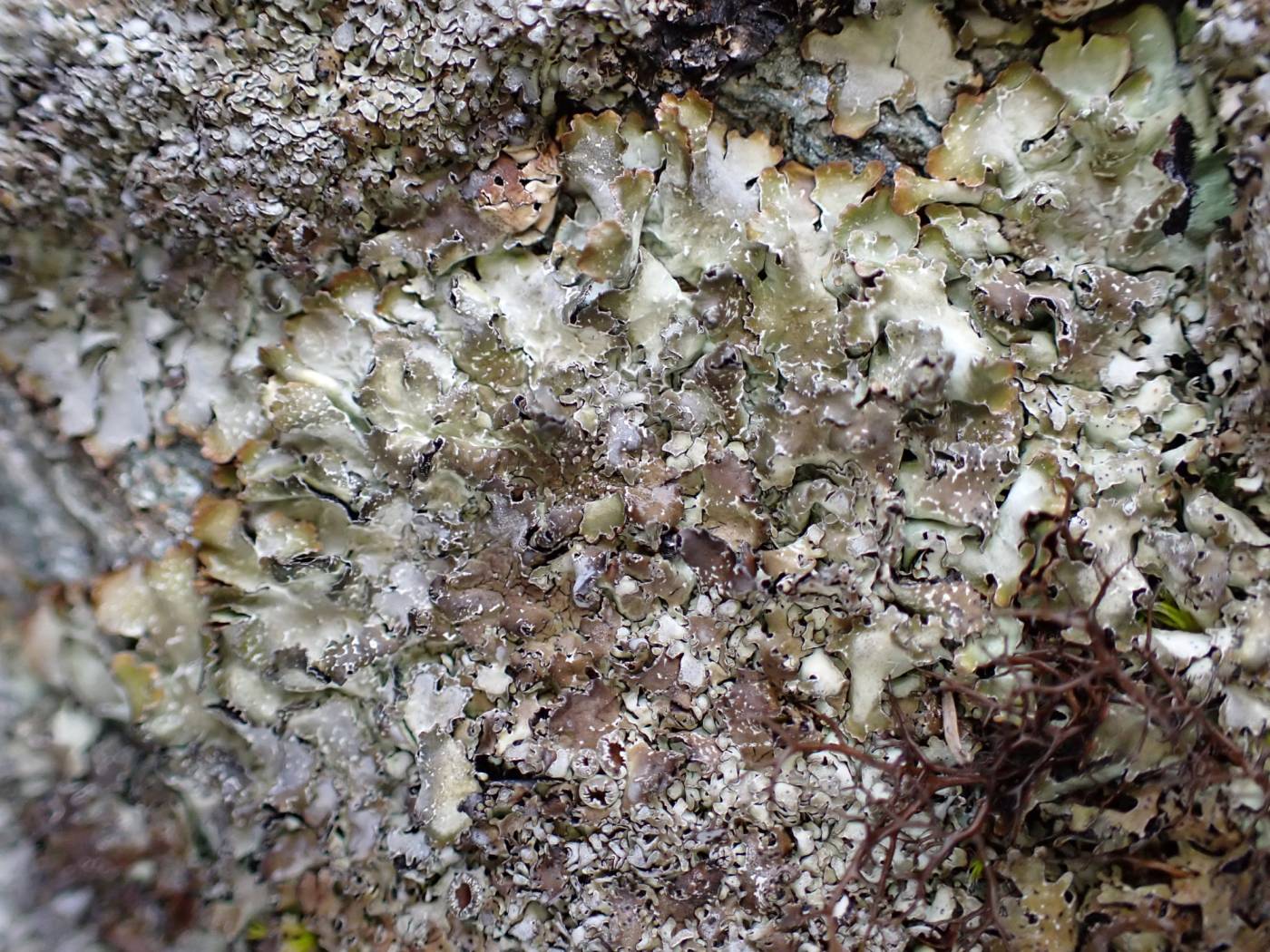
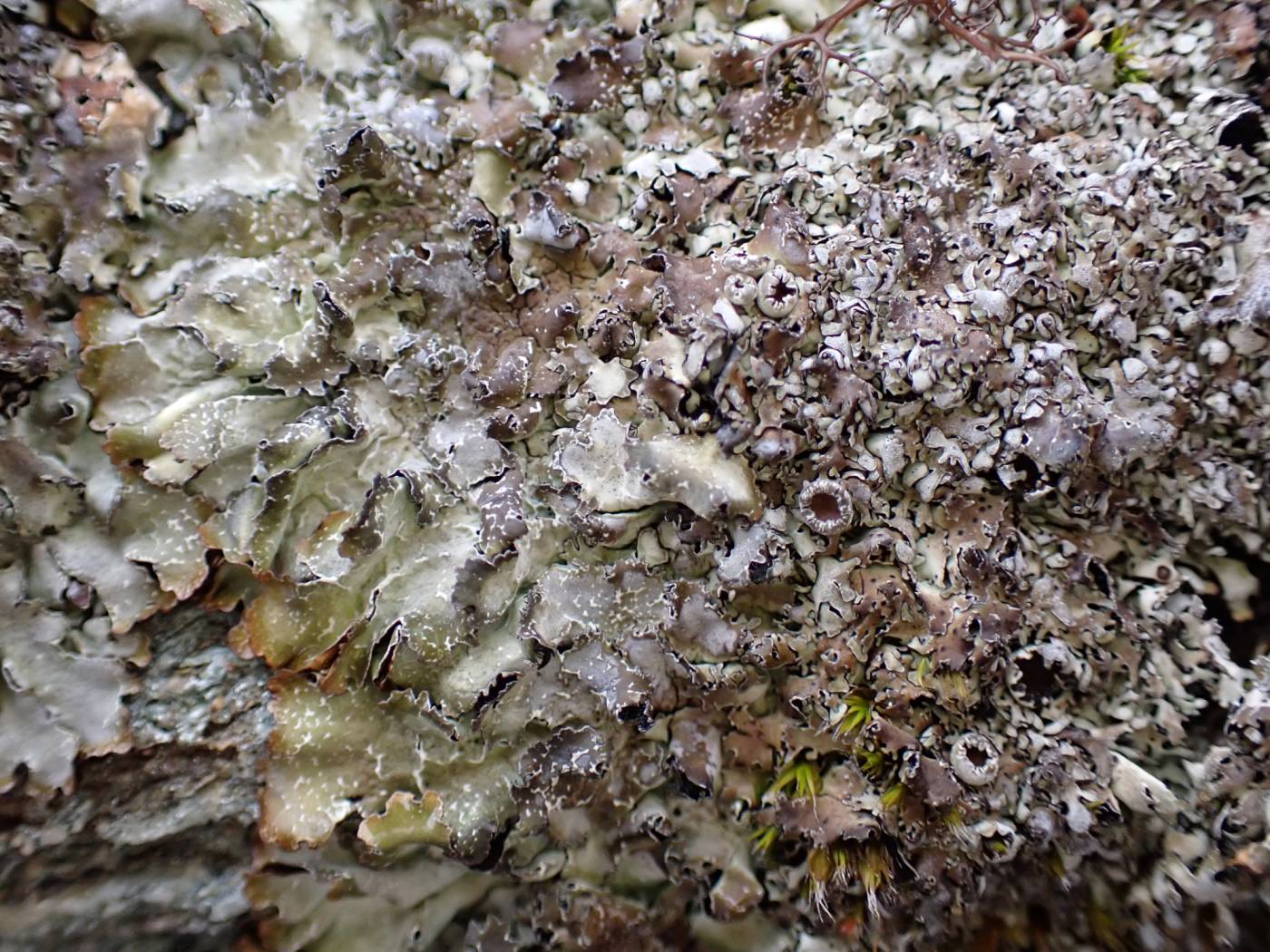
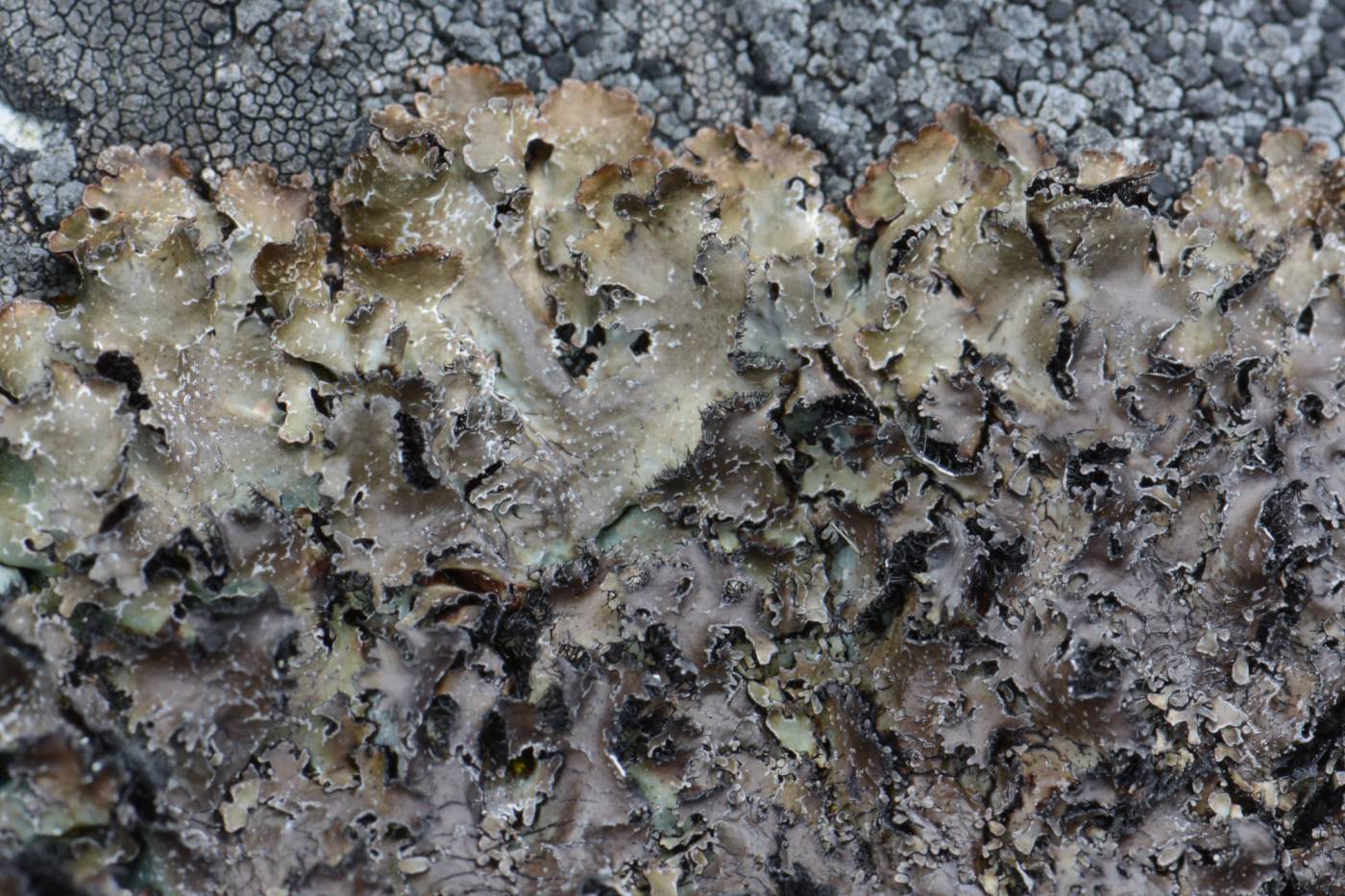
Well-developed thalli of this species usually have broader, often brown-coloured lobes and numerous isolated pseudocyphellae scattered over their surface. It differs from the morphologically very similar P. discordans primarily in its chemistry: the medulla contains salazinic acid (K+ yellow to red, Pd+ yellow) rather than protocetraric acid. Differentiation from P. pinnatifida can be very difficult, especially in small or incompletely collected thalli. Moreover, the two species are more or less chemically identical.
The species grows on siliceous stones and rocks. It is widely distributed in Europe, particularly in the northern and western parts of the continent. A revision of material from the main Czech and Slovak herbaria did not reveal any morphologically typical Czech specimen. The occurrence of P. omphalodes s. str. in the Czech Republic has therefore not yet been confirmed, although it cannot be entirely excluded.
Literature: Malíček J. & Ludvíková J. (2026): Does Parmelia omphalodes s. str. occur in the Czech Republic? – Bryonora 77: 1–13. /// Ossowska E., Guzow-Krzemińska B., Kolanowska M., Szczepańska K. & Kukwa M. (2019): Morphology and secondary chemistry in species recognition of Parmelia omphalodes group – evidence from molecular data with notes on the ecological niche modelling and genetic variability of photobionts. – MycoKeys 61: 39–74.
taxonomic classification:Ascomycota → Lecanoromycetes → Lecanorales → Parmeliaceae → Parmelia
Red List (Liška & Palice 2010):NT – near threatened
Occurrence in the Czech Republic
All records: 11, confirmed 0. One click on a selected square displays particular record(s), including their source(s).