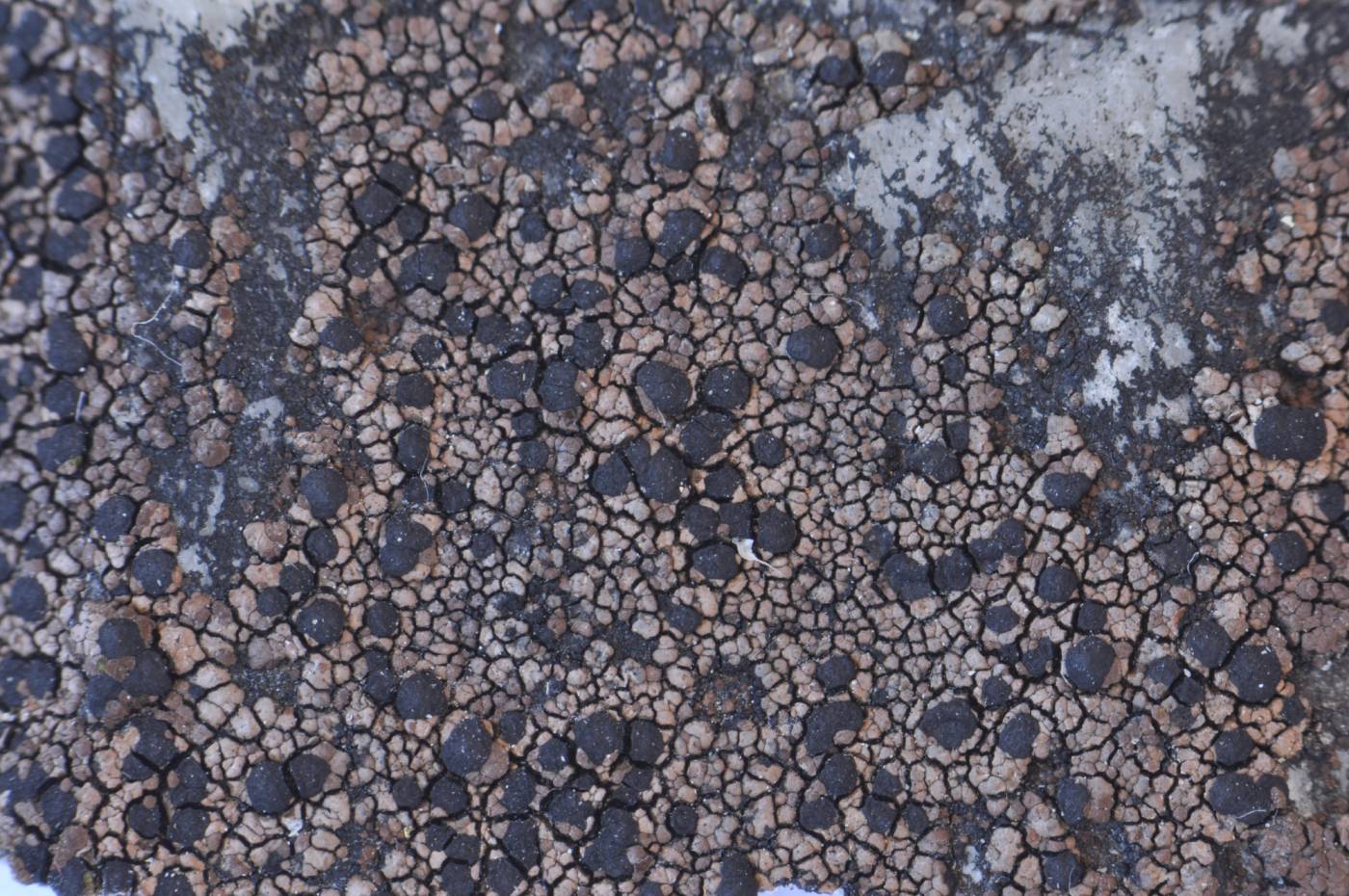
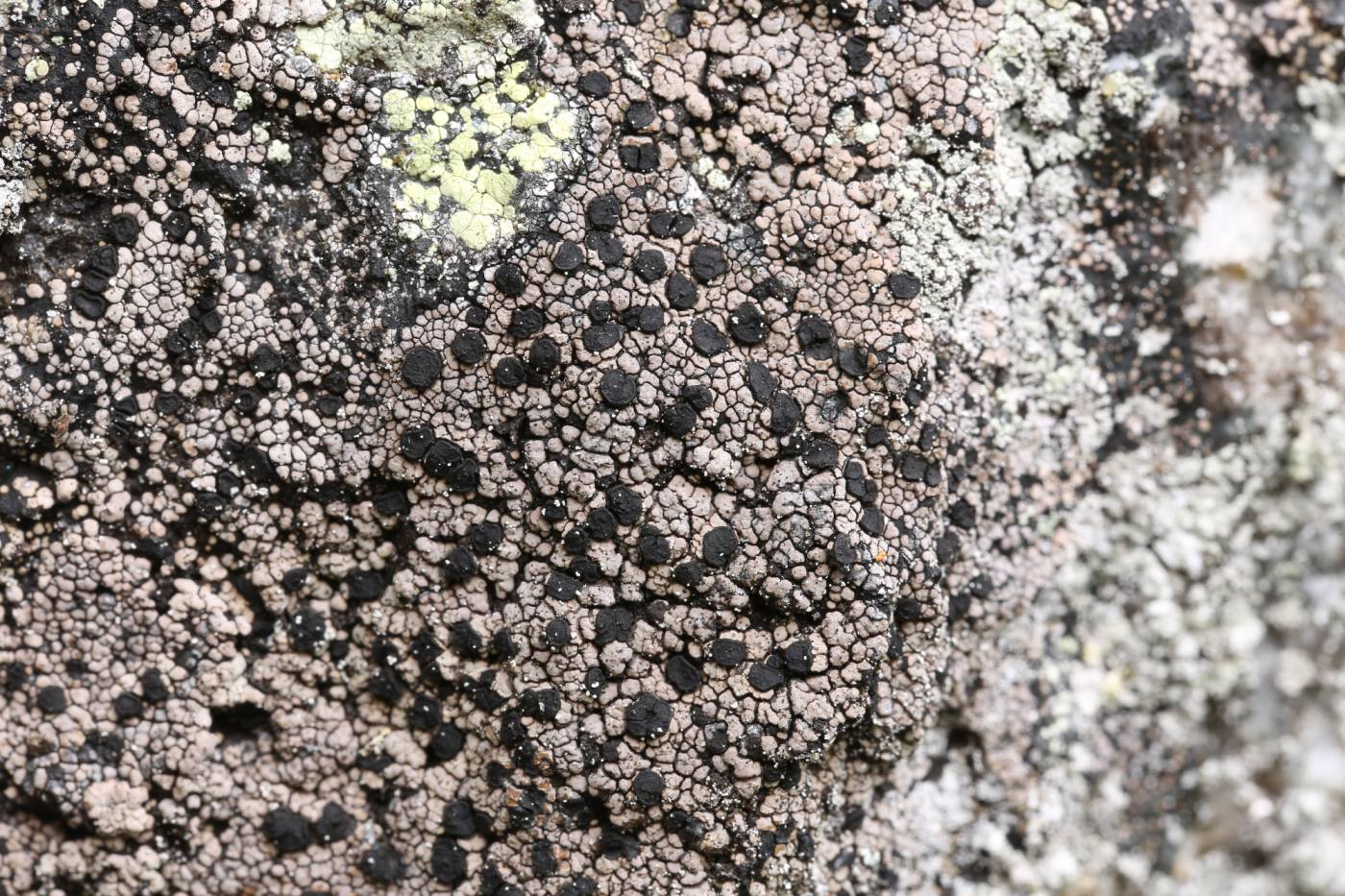
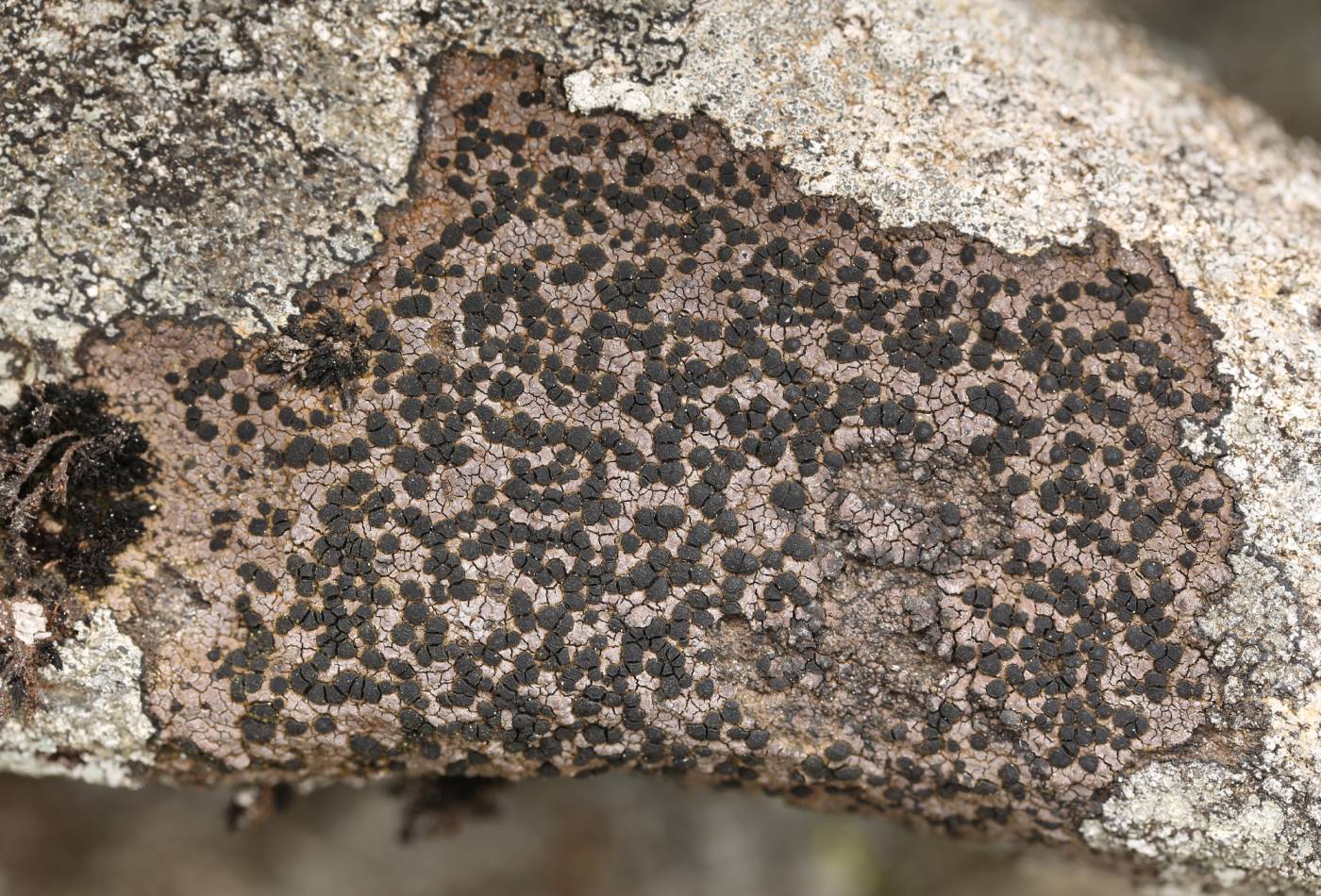
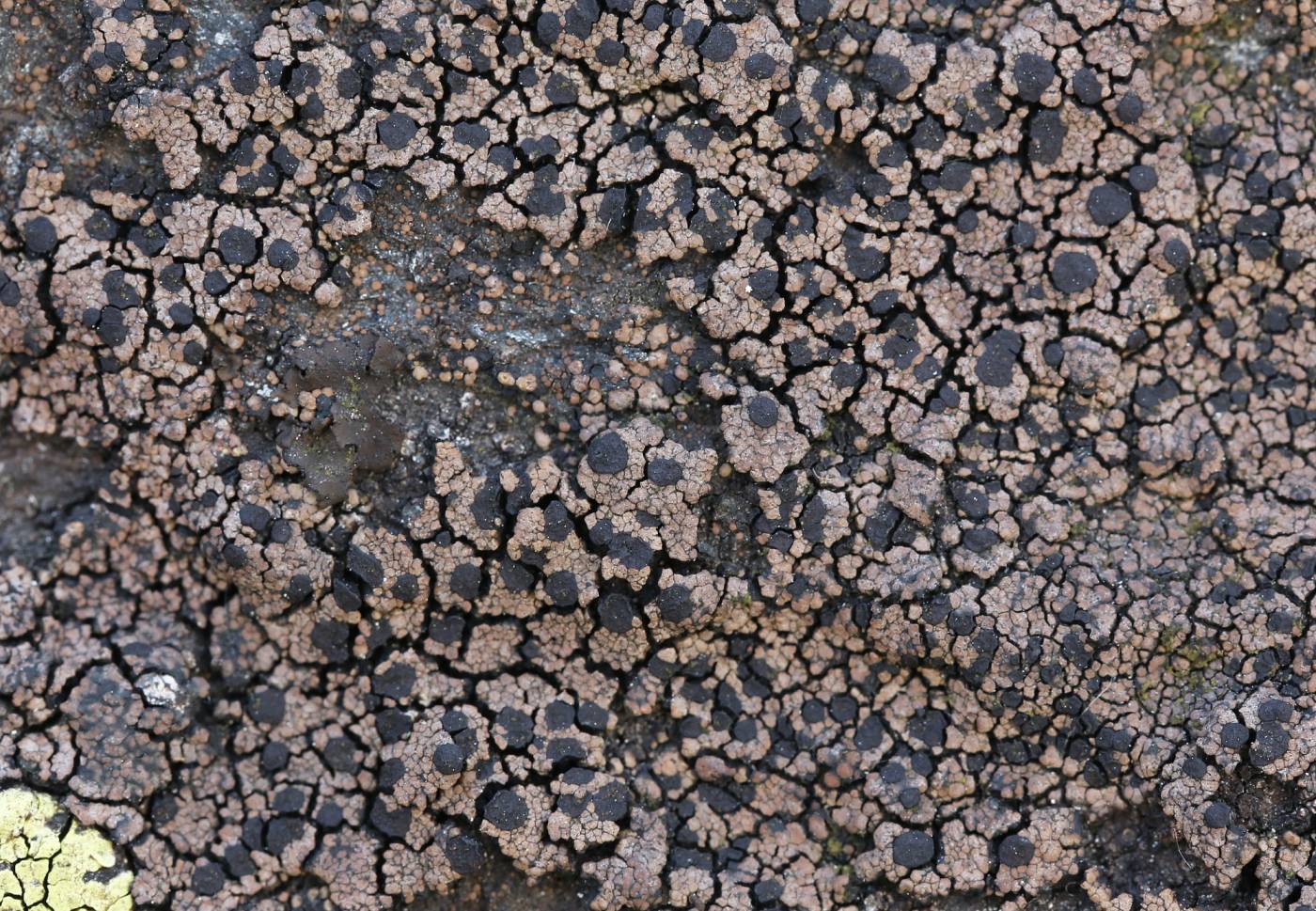
Rhizocarpon badioatrum has a brown to light brown thallus with numerous black apothecia with lecanorine margin and 1-septate brown ascospores. Secondary metabolites are absent, or it rarely produces stictic acid. Its distribution area is Holarctic. It is an early colonizer of smaller stones (Nimis et al. 2018). In the Czech Republic, the lichen is quite rare, occurring from foothills to high mountains, where it commonly grows on siliceous rock outcrops, screes or exposed solitary boulders at humid and cold places. It has been found, e.g., in the Jeseníky, Krkonoše, Novohradské hory, Slavkovský les, Šumava Mts and Žďárské vrchy Hills.
Recently, a similar species R. vulgare has been described from northern Europe and Slovakia, and it will likely occur in the Czech Republic as well. It differs in often forming more rounded, convex, and greyish areolae; in having a more narrow and more sharply delimited epihymenium with a less intense K+ red reaction; and in containing diffractaic acid.
Literature: Nimis P. L., Hafellner J., Roux C., Clerc P., Mayrhofer H., Martellos S. & Bilovitz P. O. (2018): The lichens of the Alps – an annotated checklist. – Mycokeys 31: 1–634. Timdal E., Möller E. J. & Bendiksby M. (2024): Rhizocarpon vulgare, a new species in the R. badioatrum species complex. – Graphis Scripta 36: 89–105.
taxonomic classification:Ascomycota → Lecanoromycetes → Rhizocarpales → Rhizocarpaceae → Rhizocarpon
Red List (Liška & Palice 2010):NT – near threatened
Red List (Malíček 2023):C3 – endangered
Occurrence in the Czech Republic
All records: 25, confirmed 18. One click on a selected square displays particular record(s), including their source(s).